


CargoBeamer Secures 65 Million Capital from OIC
Feb 8, 2025 at 7:10 PM
Powerfleet recommends proactive driving training
Feb 11, 2025 at 4:53 PM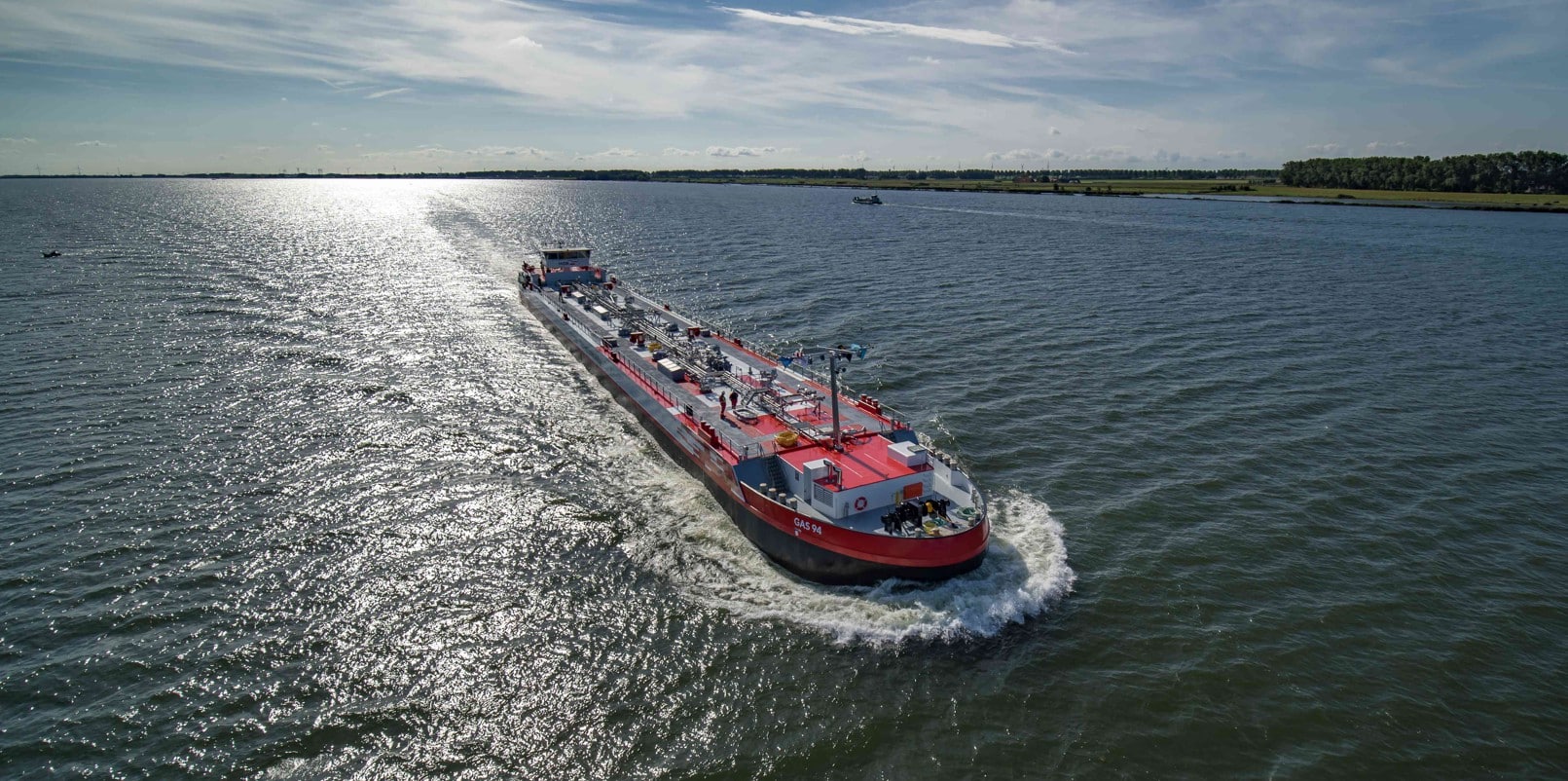
The demand planning presented yesterday by the Federal Ministry for Digital and Transport (BMDV) for inland shipping has sparked criticism, but as a result, it has also created a sense of optimism among ports, inland shipping and logistics companies, as well as in industrial circles. They criticize, on the one hand, that the federal government’s ideas do not adequately consider the central challenges and potentials of the waterway system.
(Duisburg) However, in the solidarity agreed upon on the sidelines of an event in Duisburg, all parties involved now want to work even more vigorously to strengthen this mode of transport. Among the central concerns of the industry for a future-proof transport carrier are a comprehensive traffic forecast and a modal split that realistically incorporates capacities and bottlenecks. Also in focus is the desire for a more precise and holistic analysis of the situation at all sea and inland ports of the North and Baltic Seas as well as the Rhine corridor, in order to steer investments in infrastructure purposefully.
In light of the published study, numerous representatives from shipping, logistics, and industry met in the Ruhr area on Thursday to discuss the waterway as a driver for economic strength and location attractiveness under the motto “This is how we make Germany fit for the future.” Schmid Mobility Solutions, in cooperation with the Duisburg-Ruhrort Shipping Exchange, invited prominent speakers from ThyssenKrupp Steel Europe, BASF, Air Liquide, Currenta, Rhenus, Evonik Industries, duisport, and HGK Shipping, as well as guests from industry, ports, shipping companies, and logistics providers to the Duisburg Haniel Campus. The event aims to serve as the kickoff for a series of discussions that will increasingly focus on the importance of inland shipping and the systemic relevance of waterways for industry and trade in the hinterland of ports, especially along the Rhine, as well as for the energy transition.
Further Development of the Waterway System
The experts emphasized in their presentations where they see a need for improvement in the federal paper and with what ideas new impulses can be given for the further development of the waterway system. The current demand planning is too stuck in old patterns and considerations regarding the current goods mix. In reality, especially with regard to the future transformation of the economy and the resulting demand for renewable energies, the concepts designed have already progressed much further. The ramp-up of a hydrogen-based economy as well as the parallel transport of carbon dioxide residues from factories to offshore fields and the ship designs developed for this purpose are exemplary of the new business models of the traditional but always flexible industry that responds to customer needs.
Energy Transition Unthinkable Without Inland Shipping
For these reasons, duisport CEO Markus Bangen emphasizes: “The energy transition is unthinkable without inland shipping. Hydrogen will be transported in significant quantities in the coming years in the form of ammonia. Regardless of possible pipeline projects, the inland vessel is the transport medium of choice. The EU Commission has also long recognized the importance of waterways for the future viability of the economic location and supports numerous projects with funding.”
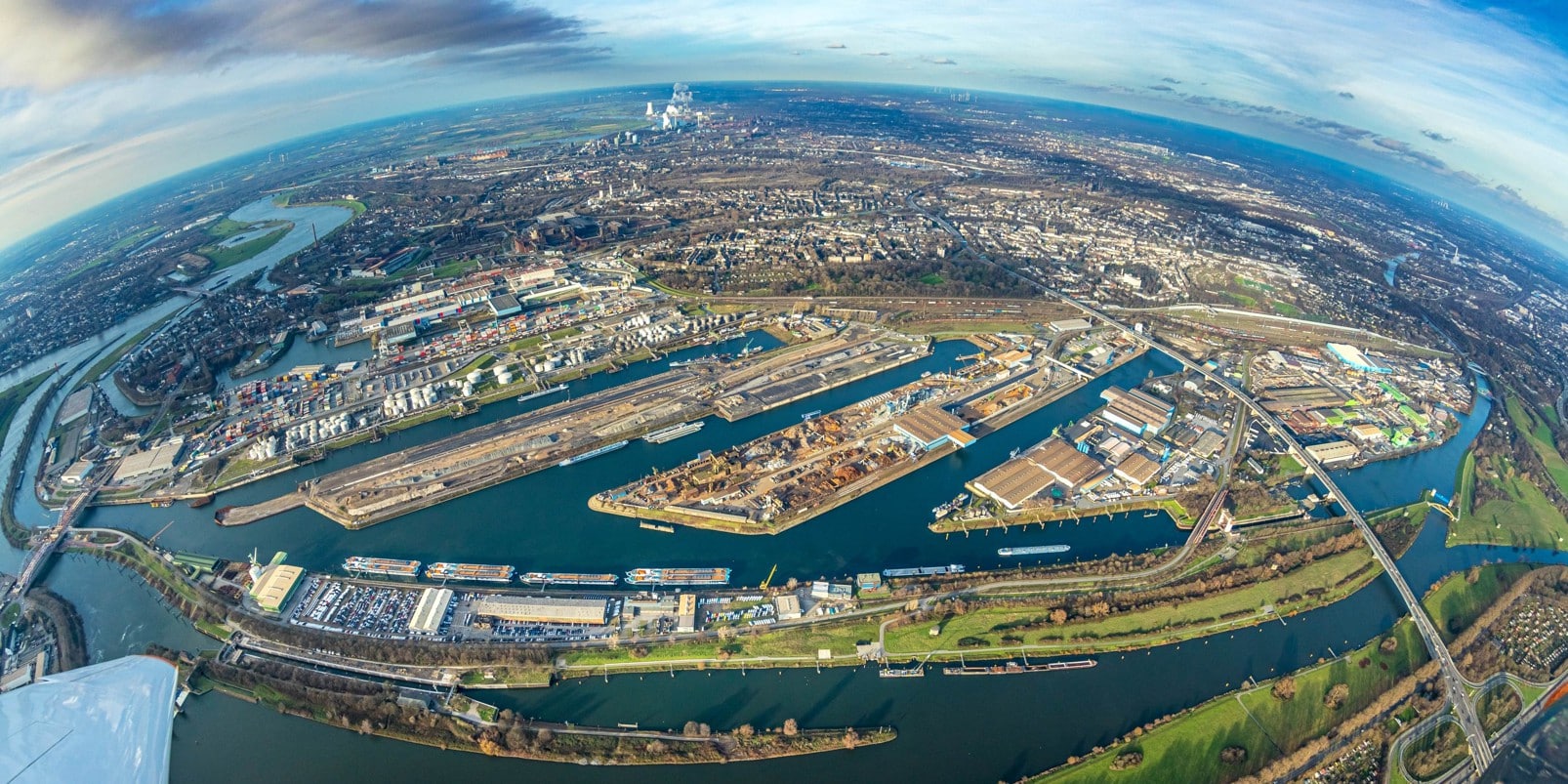 Logistics hubs like duisport significantly contribute to strengthening the competitiveness of the location Germany © duisport
The planning currently published by the federal government relies on a modal split that clearly favors road and rail transport until 2040. Steffen Bauer, CEO of HGK Shipping, therefore criticizes in the context of the study: “The current planning of the BMDV does not do justice to the real challenges and opportunities of the energy transition and requires a methodological adjustment. A forward-looking demand planning must consider the situation holistically in order to do justice to the waterway system and the inland vessel as a sustainable transport carrier of the future.”
Only the companies duisport and HGK Shipping predict a transport volume of between 20 and 25 million tons of CO2 and ammonia annually on the waterways. HGK Shipping CEO Steffen Bauer further explains: “The prosperity of our country primarily arises from an attractiveness of the location for industry and trade. Without a functioning logistics system with modern infrastructure and a smart modal split, this is not feasible. Only when the real developments in the market and the requirements of the shipping economy are understood and incorporated can the individual transport carriers be developed according to their respective strengths and thus significantly contribute to the decarbonization of our local economy.”
Need for a High-Performance Waterway
All participants in the discussion round reaffirmed the necessity of a still high-performance waterway system for the preservation and strengthening of Germany’s economic location. They called for a more concrete consideration of the advantages of this modality in the concepts of the upcoming federal government.
Title photo: © HGK / Caption: Only with a significant contribution from inland shipping to the future modal split and modern fleets like that of HGK Shipping is the energy transition in the Federal Republic conceivable.