


Logivest with Outlook on Germany’s Logistics Real Estate Market
Jan 7, 2025 at 4:06 PM
Waldbach Group Acquires Isseltrans Freight and Logistics
Jan 9, 2025 at 5:28 PM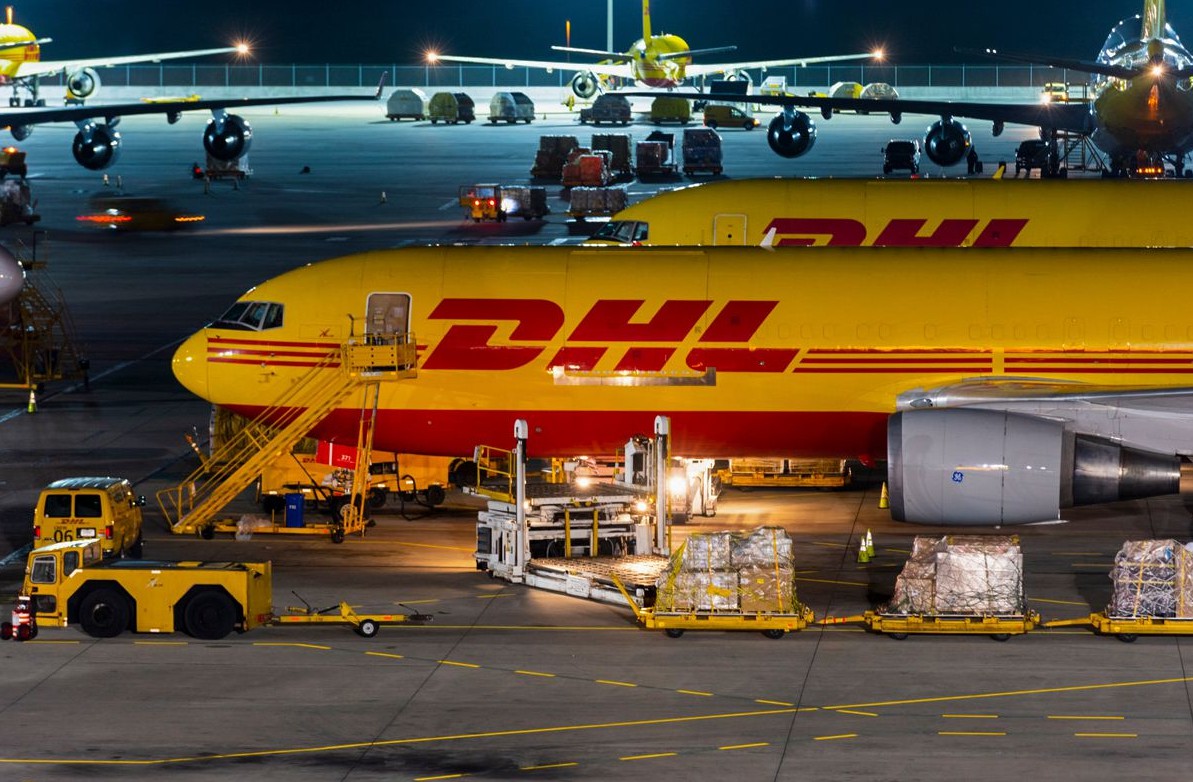
Deutsche Post AG has come a long way in the past 30 years – from a national postal service provider to the world’s leading logistics company, DHL Group. A milestone was January 1, 1995: At that time, Deutsche Post became a public limited company. The three public companies, postal services, telecommunications, and Postbank, which had emerged from the former Deutsche Bundespost, were privatized.
(Bonn) What is normal for many today – the DHL Group has been part of the German DAX 40 companies for many years – was a controversial decision in politics and society back then. Today, it can be said that the path taken ensured that the company could withstand the emerging European competition. Through international acquisitions, it rose to become a global player as DHL Group. While the focus in the 1990s was on letter business, today it is primarily packages and freight – from online orders to medicines or computer chips to machines and components. The company transports them by land, sea, and air.
“The postal reforms of the 1990s in Germany, especially the transformation of Deutsche Post into a public limited company, were far-sighted, courageous political decisions,” says Tobias Meyer, CEO of DHL Group. “Today we are present in over 220 countries and territories. At the same time, we have remained true to our home market and our roots – with our business area Post & Package Germany.”
Acquisition of DHL in 2002 creates global network
Deutsche Post became internationally present primarily through the acquisition of DHL in 2002, which was previously a US company. This step allowed Deutsche Post to significantly expand its international network and strengthen its presence in the global logistics market. DHL was already an established player in the international express and logistics business, enabling Deutsche Post to offer its services worldwide.
DHL Group later demonstrated its global significance, among other things, during the Corona pandemic: During this time, the company not only maintained global supply chains but also delivered over two billion urgently needed vaccine doses to 175 countries.
Measures for transformation into a public limited company
Looking back: Many decisions had to be made in Germany for the privatization in 1995. A particular hurdle was civil service law. It had to be clarified how civil servants would transition to a public limited company and their continued employment.
In addition to these complex legal changes, there were also adjustments in the linguistic area; old official terms had to be “translated” into generally understandable language: The “post office” became the branch, the “ministerial councilor” was now called the department head, and “regulations, decrees, and official gazettes” were completely abolished. All with the aim of taking the next reform step a few years later: the IPO, which took place in November 2000.
And thus Wolfgang Bötsch, the last Federal Minister for Post and Telecommunications, was right with his assessment in an interview with the magazine Wirtschaft & Markt in 1995: “Privatization was necessary to be able to compete in the dynamically developing global communications market. Companies with a bureaucratic structure, bound by administrative and civil service principles, would have been a hindrance because they are inflexible.”
The path to becoming a public limited company – 1990 to 1995
The privatization was preceded by Postal Reform I, which was the division of the former Deutsche Bundespost into the three public companies Deutsche Bundespost Postal Service, Deutsche Bundespost Telecommunications, and Deutsche Bundespost Postbank in 1990. During this time, from 1990 to 1995, the then postal management focused on abandoning the bureaucratic structure in favor of a competitive divisional organization with clear leadership structures. The divisions of letter mail, freight mail, and post offices underwent a comprehensive transformation: In the letter area, a new five-digit postal code system was introduced in 1993. A year later, the first of a total of 82 modern letter centers was completed. A new package distribution network consisting of 33 “freight mail centers” was also gradually put into operation starting in 1994. And in the post offices, a new “Open Service Concept” was introduced, and the first partner branches began operations.
Today 82 billion revenue per year
The measures showed effect: In 1994, the last year before the transformation into a public limited company, a positive result from ordinary business activities was achieved for the first time in total Germany since reunification, namely 257 million DM. The revenue was around 25 billion DM, of which letter mail accounted for 57 percent and the package area (freight mail) for 16 percent. Today, DHL Group generates nearly 82 billion euros in revenue, with around 80 percent coming from abroad.
Photo: © DHL