


MANSIO and KRAVAG Launch Truck Parking Sharing
Oct 8, 2024 at 7:56 PM
Craiss Expands Location in Austrian Weiz
Oct 10, 2024 at 1:27 PM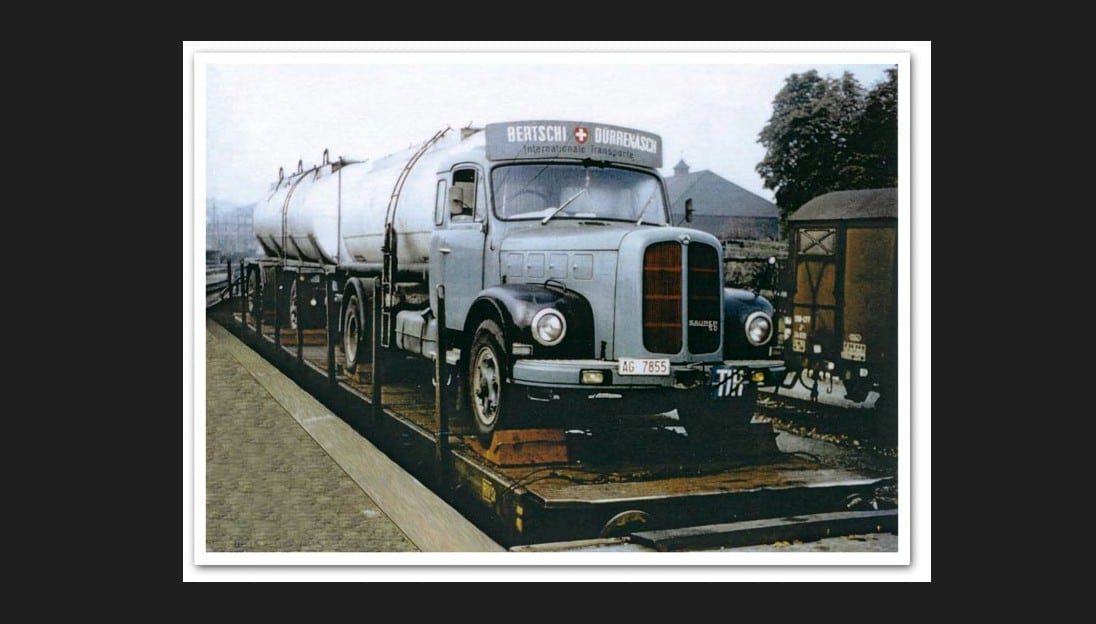
The Bertschi Group celebrates six decades of pioneering work in combined transport. An anniversary that coincides with the global effort towards sustainability. Today, intermodal freight transport is an indispensable means for sustainable and efficient transport in the chemical industry. However, when Bertschi loaded its first tank car for chemicals onto the train in 1964, it was a groundbreaking innovation in Europe.
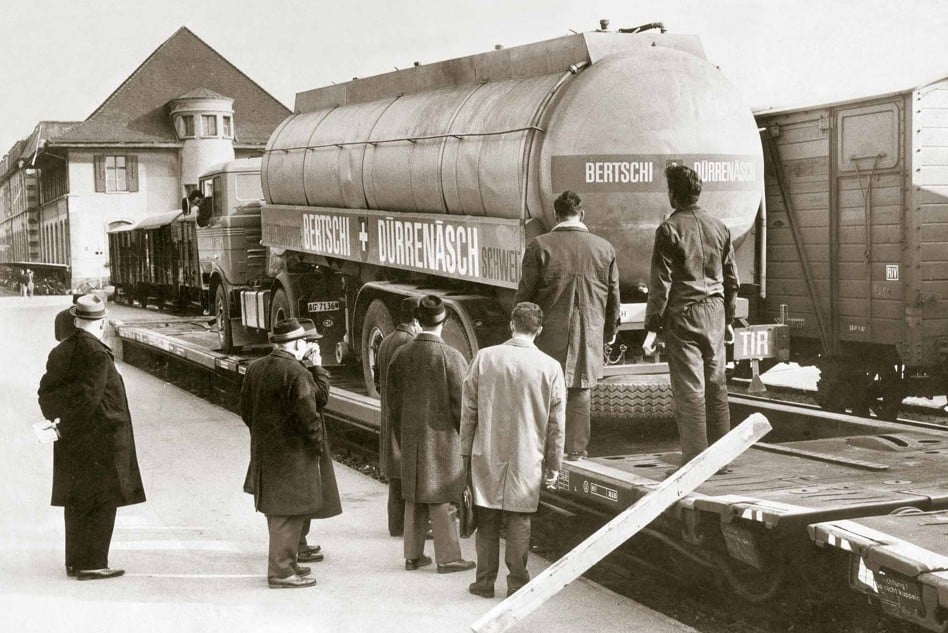
(Dürrenäsch) More than 60 years ago, the company was looking for a winter-safe route to efficiently transport chemical products from Germany over the Alps to Italy. At that time, there were no winter-safe mountain passes or road tunnels through the Alps. Many chemical goods had to be transported by the time-consuming sea route to Italy during winter. Company founder Hans Bertschi saw the solution in loading his tank cars onto flat wagons of the railway, as there was already a railway tunnel through the Gotthard that allowed for safe transport in winter – a revolutionary idea for that time. After intensive discussions, the innovative concept was implemented year-round from autumn 1964 in close collaboration with the Swiss Federal Railways (SBB).
When Bertschi tank cars were first loaded onto the rails between Basel and Lugano, it marked the beginning of intermodal transport in Europe. “This pioneering achievement is deeply rooted in the DNA of our company and has become a hallmark of Bertschi,” says Hans-Jörg Bertschi, Executive Chairman of the Bertschi Group. “The same forward-looking entrepreneurial spirit that has shaped our past continues to enable us to offer exceptional global supply chain solutions that meet the evolving needs of our customers,” he adds. “This also includes our current focus on the decarbonized chemical industry of the future. It involves new and complex supply chain solutions for renewable raw materials that will replace today’s oil and gas deliveries.
Foundation of Hupac in 1967
1967 marks the founding of Hupac
Bertschi’s pioneering role in intermodal transport was further solidified with the founding of Hupac AG in 1967, together with the SBB and three other transport companies. Today, the network not only covers all of Europe but extends to China. “Over 80% of our transports in Europe are now handled intermodally, which corresponds to a saving of 300,000 tons of CO2 per year compared to pure road transport,” explains Jan Arnet, CEO of the Bertschi Group. This shows that intermodal transport has become an indispensable building block in moving the economy towards sustainability,” he continues.
This statement is particularly relevant in light of the European Union’s Green Deal, which aims to reduce transport-related greenhouse gases by 90% by 2050. In intermodal transport, Bertschi is already ahead of these goals with several projects by combining electrically operated trains with electric trucks or through the use of HVO fuels for the first and last mile. This approach will enable CO2-neutral supply chains.
Continuous Development of Infrastructure is Essential
However, such transport concepts critically depend on a well-developed, safe, and reliable rail network. “Investments and the continuous development of this infrastructure are therefore essential,” concludes Hans-Jörg Bertschi. As a market leader in sustainable intermodal chemical logistics, the Bertschi Group is aware of its responsibility to lead by example and drive the industry forward by continuing the pioneering legacy of Hans Bertschi, who revolutionized European logistics 60 years ago.
Title photo: © Bertschi / Intermodality à la 1964