


Ralph Leyendecker is Managing Partner at Bricklog Switzerland
Sep 26, 2024 at 5:31 PM
Swiss Logistics Innovation Day of VNL Focuses on AI
Sep 26, 2024 at 6:44 PM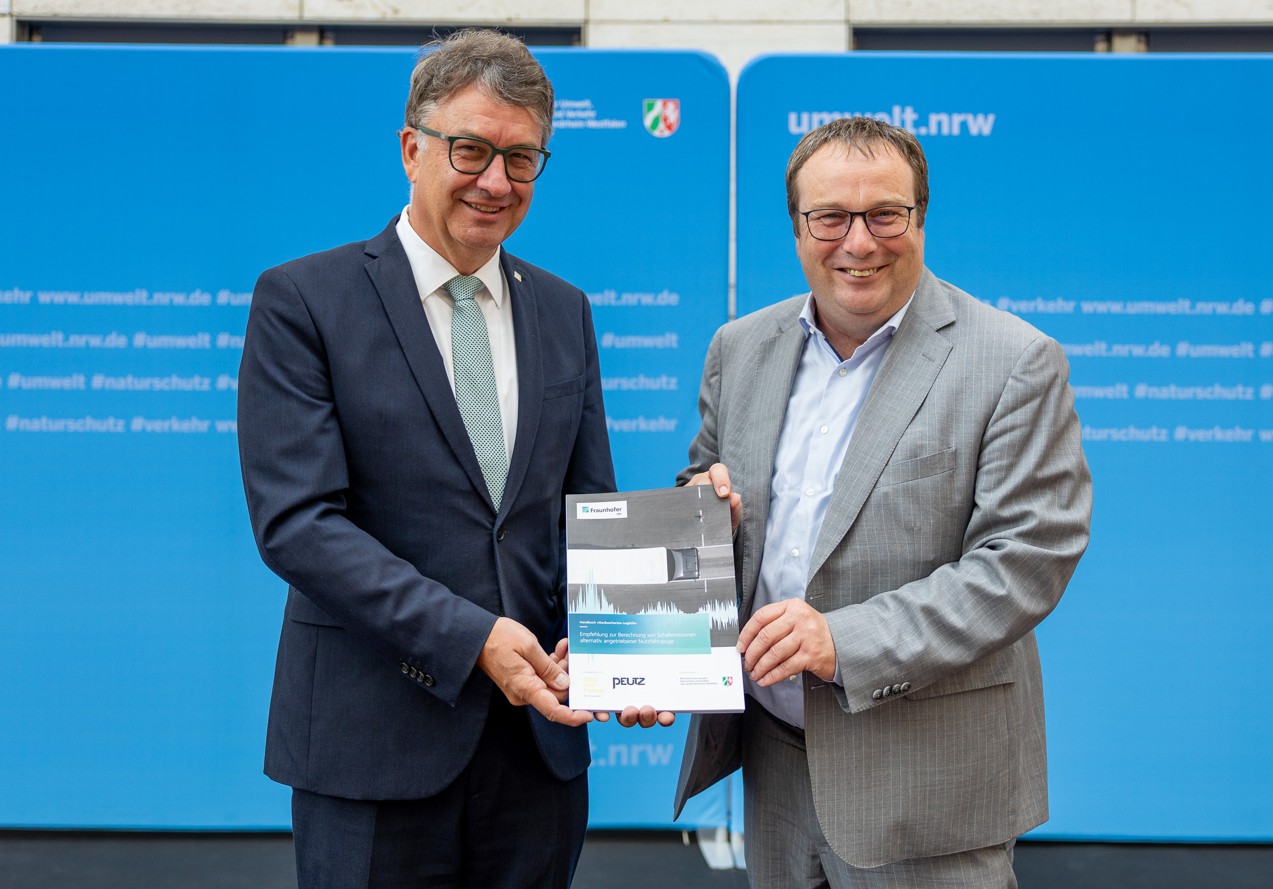
Going to the supermarket and finding a wide range of goods is a given for people in cities. The logistical supply for this comes with significant traffic volumes that are constantly increasing. One possible solution: Shifting transports to early morning and night hours to alleviate daytime traffic. The “Handbook of Quiet Logistics” provides reliable data for shifting to less congested daytime hours through the use of alternative drives and was handed over on September 25, 2024, by the Fraunhofer Institute for Material Flow and Logistics IML to the Ministry of Environment, Nature Conservation and Transport of North Rhine-Westphalia.
(Dortmund) Nighttime peace is a highly valued and legally protected good. A large part of the population feels disturbed and harassed by traffic noise. With the new EU fleet consumption regulation, more and more commercial vehicles with alternative drives are coming onto the market that operate more quietly. However, local authorities have so far lacked reliable values regarding the sound emissions of these commercial vehicles. As part of the mobility study “Quiet Logistics,” which was funded by the Ministry of Environment, Nature Conservation and Transport of North Rhine-Westphalia with 506,700 euros, researchers from Fraunhofer IML examined commercial vehicles with alternative drives (battery-electric, gas, hydrogen) for their sound emissions during delivery processes at retail locations and developed recommendations for the use of the new data and the implementation of quiet logistics.
The “Handbook of Quiet Logistics” thus fills a knowledge gap and provides concrete values for emission approaches that enable an assessment of quiet delivery situations. The central result of the mobility study is the newly collected sound emission values for alternatively powered commercial vehicles, which have not been the focus of previous standard works. These demonstrate that the commercial vehicles are significantly quieter. Thus, the mobility study forms the basis for verifying specific quiet logistics projects in terms of sound emission protection.
Environment and Transport as Joint Impulses
“My goal is to establish a mobility policy in which the environment and transport serve as joint impulses for the urgently needed nature and climate protection, for more sustainability, and a higher quality of life,” explained Oliver Krischer, Minister for Environment, Nature Conservation and Transport of North Rhine-Westphalia during the handover.
Subsequently, Prof. Uwe Clausen, director of the Fraunhofer IML, provided an overview of city-compatible freight transport: “Shifting transports to early morning and night hours offers logistical advantages and relieves urban traffic during the day. Thus, we create incentives to increasingly use commercial vehicles with battery-electric or hydrogen drives to make freight transport in cities quieter,” emphasized Clausen.
During the event, a quiet truck and quiet logistics equipment were presented, followed by a panel discussion on the topic “Efficient and Quiet Logistics as a Key to More Livable Cities” with various stakeholders from municipalities, trade, logistics service providers, research, and politics.
Currently, Fraunhofer IML is building on the study results of the first phase in the follow-up project. The state of North Rhine-Westphalia is funding this research work with around 565,000 euros. By the end of the project in March 2026, knowledge gaps, especially regarding the influence of employee behavior during loading and unloading processes and the equipment used at the branches in practice, are to be closed.
North Rhine-Westphalia is a Pioneer
With the continuation of the research project, North Rhine-Westphalia remains a pioneer in quiet logistics. With the insights gained from the mobility studies, the implementation of quiet logistics throughout Germany is supported, leading to the reduction of applicable reference values and significantly lowering noise emissions for citizens and the environment.
Download the “Handbook of Quiet Logistics” here
Photo: © PK-Media Consulting GmbH / Image Caption (l. to r.): Prof. Uwe Clausen (Director of Fraunhofer IML), Oliver Krischer (Minister for Environment, Nature Conservation and Transport of North Rhine-Westphalia)