


UTA Edenred and MAN Collaborate Digitally
Sep 17, 2024 at 4:13 PM
EIPL presents new partner portal for pharmaceutical logistics
Sep 17, 2024 at 5:10 PM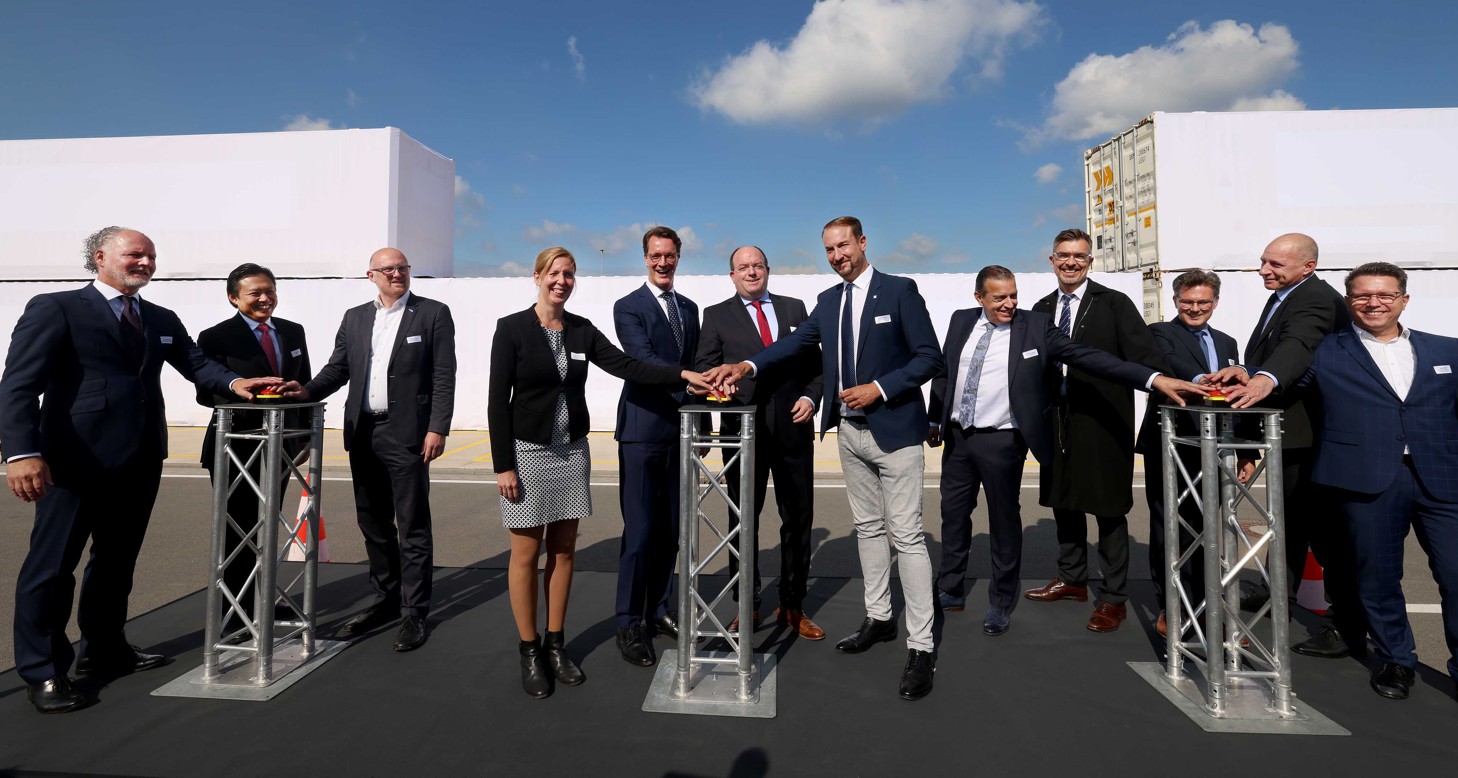
It is one of the most significant milestones in the over 300-year history of the Port of Duisburg: The Duisburg Gateway Terminal (DGT) on the former coal island was ceremoniously opened at the beginning of the week. At 12 o’clock, North Rhine-Westphalia’s Prime Minister Hendrik Wüst, Duisburg’s Mayor Sören Link, representatives of the four DGT shareholders duisport, HTS, Hupac, and PSA, as well as the Fraunhofer UMSICHT research institute, pressed the symbolic start button in the presence of around 250 invited guests.
(Duisburg) Hendrik Wüst, Prime Minister of North Rhine-Westphalia: “Where coal was handled for more than 100 years, a climate-neutral container terminal now stands. The Duisport Gateway Terminal is an outstanding example of successful structural change in the Ruhr area: The implementation from idea to completion in just a few years shows that we are making progress in North Rhine-Westphalia. It takes will and courage to implement the necessary changes quickly – this has been achieved in Duisburg. By switching to climate-neutral freight transport, the terminal is also a milestone on our way to becoming a climate-neutral industrial nation. With the opening of the Duisport Gateway Terminal, we demonstrate how industry and climate neutrality can successfully work together.”
Mayor Sören Link: “Duisburg will play an increasingly central role in the German energy transition in the future. This is already evident here at the port: Where millions of tons of coal were once handled, the Duisburg Gateway Terminal makes a pioneering contribution to CO2 reduction. With the help of hydrogen technology, the logistics of the future is being created. All involved partners can be rightly proud of this.”
Tenth Container Terminal in the Port of Duisburg
The DGT is not only the tenth container terminal in the Port of Duisburg, but it will also be the largest in the entire European inland area upon full completion.
“When all parties – companies, planners, authorities, politics, and citizen associations – work together and seek solutions, we are successful. The result of such a collaborative success project can be seen here today,” emphasize the managing directors of Duisburg Gateway Terminal GmbH, Christoph Kahlert and Sven Zölle.
“With the Duisburg Gateway Terminal, we are increasing the handling capacities in the Port of Duisburg by around 850,000 TEU per year. This further strengthens our position as one of the most important logistics hubs in Europe and reinforces our role as the backbone of industry in North Rhine-Westphalia,” says duisport CEO Markus Bangen.
“The Duisburg Gateway Terminal sets standards in terms of productivity and market proximity: With 730-meter-long handling tracks, fully digitized processes, and a central location in the heart of Europe, the facility provides essential prerequisites for the success of combined transport,” says Michail Stahlhut, CEO of the Hupac Group. “Whether ARA ports, Rhine-Alps corridor, or Eastern Europe – logistics across Europe benefits from the new terminal.”
Marc Heuvelmann, Director of HTS Intermodaal B.V.: “The good location, size, and climate neutrality offer excellent opportunities for the logistics and transport sector. The terminal is an asset for logistics in and around Duisburg.”
Vincent Ng, Regional CEO of PSA Europe & Mediterranean and PSA Middle East South Asia: “The opening of the Duisburg Gateway Terminal is a milestone for the Port of Duisburg, and PSA is honored to celebrate this success together with our valued partners duisport, Hupac, and HTS. By integrating innovation, technology, and sustainability initiatives, this inland terminal will become a world-class facility and pave the way for a more efficient and environmentally friendly port and supply chain network for the hinterland.”
Model Project for the Future of Logistics
The Duisburg Gateway Terminal is a model project for the future of logistics in many respects: All goods movements on the site, which is the size of 33 football fields, are digitally controlled. The project “enerPort II” plays a crucial role in this. As part of the initiative, which involves both the economy and science, a concept for the complete energy transformation of the terminal is being realized in the Port of Duisburg.
With “enerPort II,” it will be demonstrated for the first time that even a terminal of this size can be operated completely climate-neutral with local generation of heat and electricity. A sustainable energy system will be installed at the DGT, which connects renewable energies, energy storage, consumers, and various hydrogen technologies. Key components include a photovoltaic system, fuel cell systems, and hydrogen engines for electricity generation, as well as battery storage. An intelligent local energy network connects the various energy facilities and storage systems to supply consumers at the terminal – including shore power, charging stations, and crane systems. Furthermore, future supply to adjacent neighborhoods will also be theoretically considered.
Project enerPort II Sets Standards
“What is outstanding about enerPort II is both the cooperation between science and industry and the bold step into implementation. We are already gaining valuable experience in planning and operating future energy systems,” says Prof. Dr.-Ing. Anna Grevé, Head of Electrochemical Energy Storage at Fraunhofer UMSICHT. The Oberhausen institute is jointly leading the research project with duisport.
Other partners include Westenergie Netzservice GmbH, Rolls-Royce Power Systems AG, Netze Duisburg GmbH, Stadtwerke Duisburg AG, and Stadtwerke Duisburg Energiehandel GmbH. The project enerPort II is funded by the Federal Ministry for Economic Affairs and Climate Action (BMWK) as part of the “Hydrogen Technology Offensive.”
Photo: © duisport/Marco Stepniak / Caption: Together they signaled the start of the Duisburg Gateway Terminal (from left to right) Lars Nennhaus (duisport), Vincent Ng (PSA), Mayor Sören Link, Prof. Dr. Anna Grevé (Fraunhofer UMSICHT), NRW Prime Minister Hendrik Wüst, Markus Bangen, Prof. Dr. Manfred Renner (Fraunhofer UMSICHT), Henk Heuvelman (HTS), Michail Stahlhut (Hupac), Christoph Kahlert (DGT), Marcel Heuvelman (HTS), and Sven Zölle (DGT)