


LIP leases logistics property to L.I.T. Group
Sep 10, 2024 at 7:22 PM
SBB Cargo reports loss of CHF 42.6 million
Sep 10, 2024 at 7:51 PM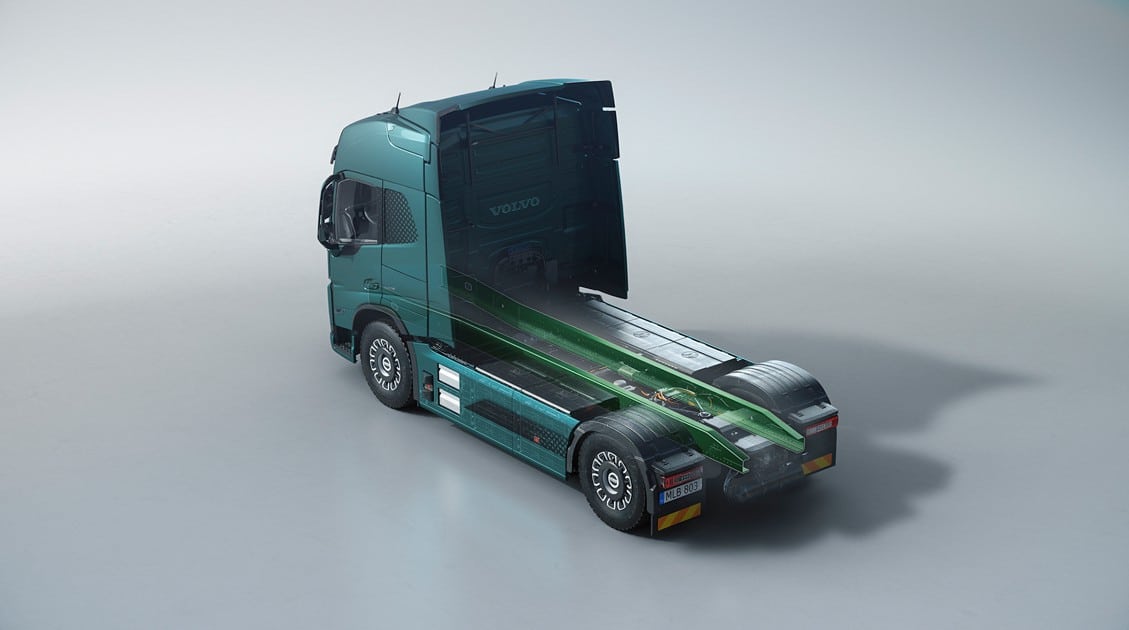
Volvo is now increasingly relying on low-CO2 steel in its trucks. As the world’s first truck manufacturer to introduce this type of steel in its electric trucks in 2022, the company is now expanding the use of low-CO2 steel to the entire powertrain.
(Ismaning) The new steel is produced by the Swedish steel company SSAB and is called SSAB Zero. It is made from recycled material and produced using fossil-free electricity and biogas. This reduces CO2 emissions by about 80% compared to the production of conventional steel using fossil energy.
Next year, the frame carriers of around 12,000 Volvo FH and Volvo FM models will be made from low-CO2 steel. This will lead to a saving of 6,600 tons of CO2 equivalents**. In the future, as the availability of low-CO2 steel increases, it will be used in more truck models as well as in other parts of the truck.
Replacing other materials with lower-emission alternatives
“This is another step towards our vision of zero emissions. Steel is one of the main materials in our trucks. We also plan to replace other materials such as aluminum and plastics with low-emission alternatives – and we are proud to be a leader in the industry when it comes to sustainable materials in our trucks,” says Jan Hjelmgren, Senior Vice President Product Management and Quality at Volvo Trucks.
Trucks are half made of steel
The potential for reducing CO2 emissions is significant, as almost half of a truck is made of steel (47% of a Volvo FH diesel truck), and it accounts for about 44% of the CO2 emissions from production (from cradle to gate) of the total 21 tons of CO2 equivalents for the Volvo FH diesel.
The Volvo Group is working with several suppliers to produce low-CO2 steel. Low-CO2 steel will be an important addition to the traditional and recycled steel used in Volvo trucks. Volvo Trucks is committed to the Paris Agreement and aims to eliminate greenhouse gas emissions in its supply chain by 2040 at the latest.
“We are continuously striving to further minimize our climate footprint and are also moving towards a more sustainable circular economy, both in our operations and in our vehicles. Many of our production facilities, transport operations, and dealers are powered by renewable energy,” says Jan Hjelmgren.
Facts:
The main materials in a Volvo FH diesel truck are steel (47%), cast iron (26%), polymers (11%), and aluminum (8%). They account for approximately 44%, 26%, 14%, and 8% of the CO2 emissions from production (from cradle to gate) of a total of 21 tons of CO2 equivalents for the Volvo FH diesel.
* Low-CO2 steel is steel with a significant CO2 reduction (80% or more) from cradle to gate
** CO2 equivalents include all greenhouse gas emissions including, for example, methane
Photo: © Volvo Trucks