

Working Group within Open Logistics for eCMR
Aug 22, 2024 at 4:32 PM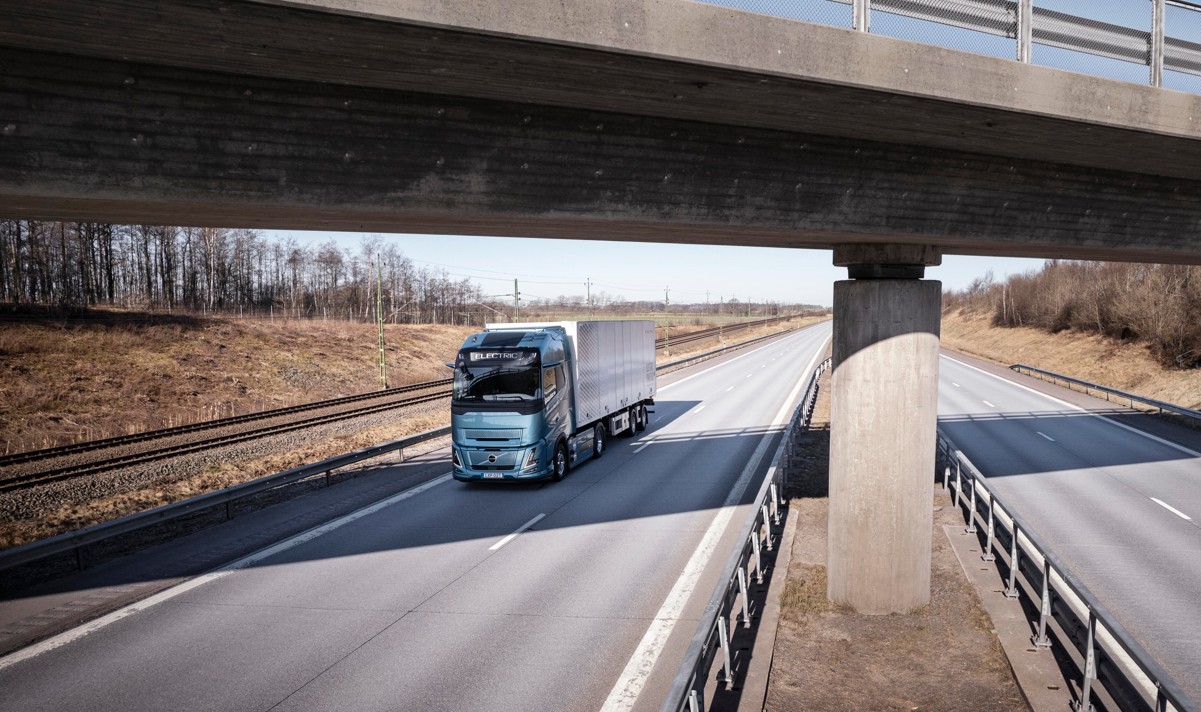
DSV Orders 300 Heavy Electric Trucks from Volvo Trucks
Aug 22, 2024 at 5:15 PM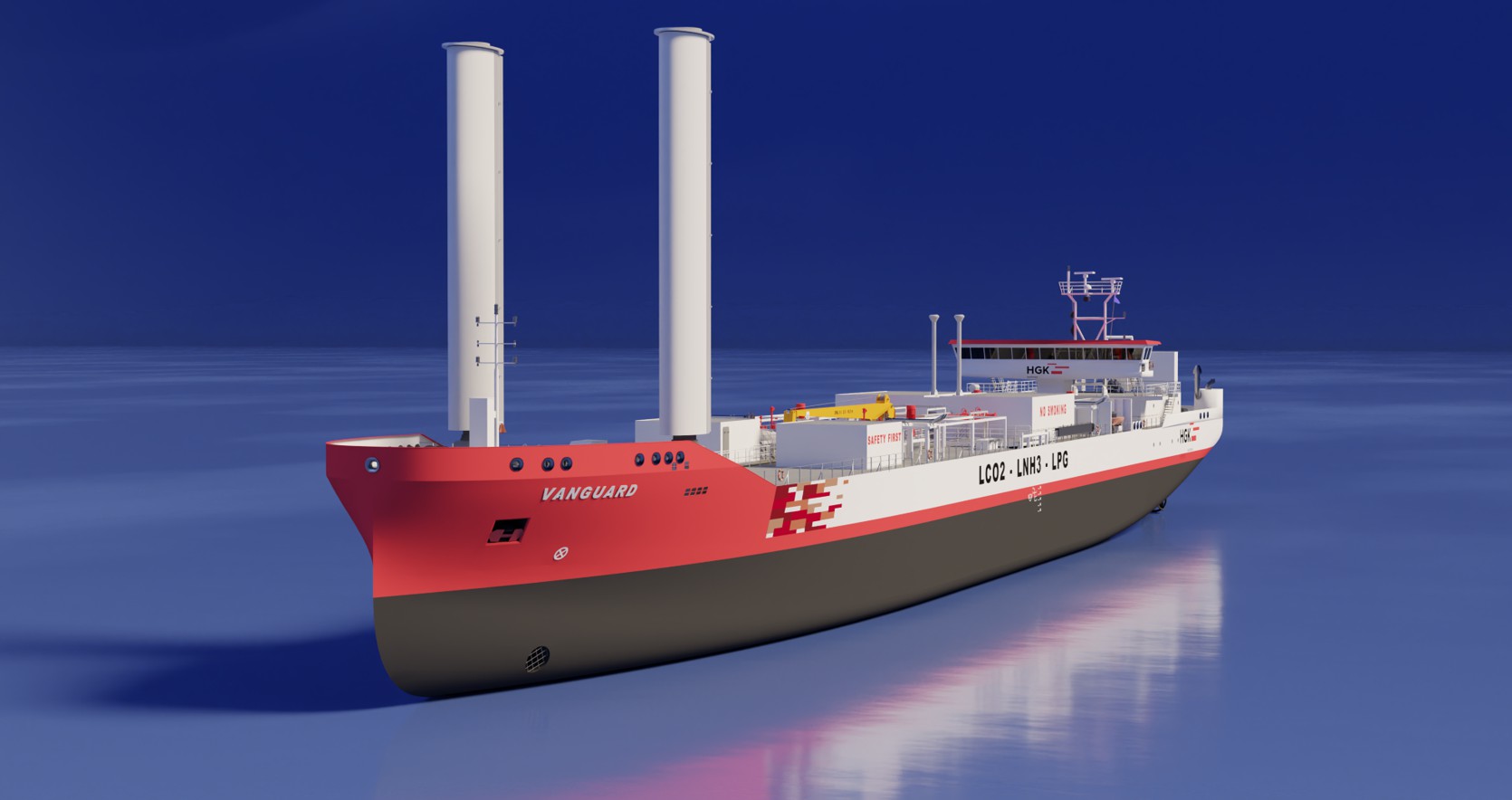
HGK Shipping has designed an innovative river-sea coastal motor vessel to meet the demands of the industry in an increasingly hydrogen-based economy. Under the project name “Vanguard,” the largest inland shipping company on the continent has designed the first river-sea gas tanker in Europe for the transport of cold liquefied ammonia (NH3) and liquefied CO2 (LCO2).
(Duisburg) The “Vanguard” is 125 meters long and 17.50 meters wide. Its tanks can transport cold liquefied ammonia and liquefied carbon dioxide, among other substances. However, the state-of-the-art ship design by HGK Shipping will not only operate on rivers; the “Vanguard” can also operate in European coastal waters and beyond. By eliminating transshipment between transport modes, this transport solution creates significant added value. This applies to traffic for the anticipated delivery of hydrogen, for example from Spain and Portugal, as well as for the transport of captured CO2 to the designated offshore fields, which are often located in the North Sea.
To make transport as sustainable and resource-efficient as possible, a Wind Assisted Propulsion System (WAPS), a type of sail, supports the diesel-electric “Future-Fuel-Ready” drive. In addition, the diverse experiences from other HGK Shipping designs for low-water optimization have been integrated into the “Vanguard” concept.
Increasing decarbonization is changing freight flows
Steffen Bauer, CEO of HGK Shipping, places the innovative ship concept within his plans for corporate development: “The increasing decarbonization of production processes is changing freight flows. This creates opportunities for our industry and for HGK Shipping to offer the economy new, readily available transport solutions. The ‘Vanguard’ provides the industry from Scandinavia to the Iberian Peninsula, with the seaports as gateways to the European waterway network, additional capacities for the safe and more climate-friendly transport of liquefied ammonia and carbon dioxide.”
In particular, the Rhine, which is navigable for the “Vanguard” up to the Upper Rhine, offers a powerful alternative for the industry concentrated along this river to the missing or only future pipeline structures, according to the HGK Shipping CEO. To support the “European Green Deal” with its planned transition of production processes, including the use of “green” ammonia, from a logistical perspective, HGK Shipping is therefore continually setting new standards in inland shipping with its ship designs.
“The newly designed river-sea gas tanker and the concept of further ‘Vanguard’ successors planned according to customer needs optimally utilize the technological possibilities for a seamless transition between coastal waters and the waterway system in the hinterland,” emphasizes Wolfgang Nowak, managing director of the HGK Shipping subsidiary Amadeus responsible for this business. “Avoiding a stop at the seaports reduces transshipment risks on one hand and offers our customers potential savings in terms of time and costs on the other.” For a quarter of a century, Amadeus has been leveraging the advantages of coastal motor vessels within the HGK Shipping cosmos.
Supporting the industry in the transport of carbon dioxide residues
The project “Pioneer,” communicated in April 2024, and now the “Vanguard” project complement each other in their planning for application on various waterways and enable large transport volumes. The underlying ship concepts support the industry in the transport of carbon dioxide residues, which are captured and collected in liquid form as LCO2 in various production processes. With the help of the methods “Carbon Capture and Storage” (CCS) and “Carbon Capture and Utilization” (CCU), CO2 emissions can be avoided or reused in chemical processes. The second important area of application for these newly developed gas tankers is the delivery of the hydrogen derivative ammonia for its further processing, the so-called cracking of NH3, to supply the markets with sustainable, green energy.
Photo: © HGK Shipping