

System Integrator Inther Group Optimizes BMW Warehouse in Dingolfing
Jun 12, 2024 at 3:23 PM
Hugelshofer Logistik AG Wins the Swiss Logistics Award 2024
Jun 14, 2024 at 6:53 AM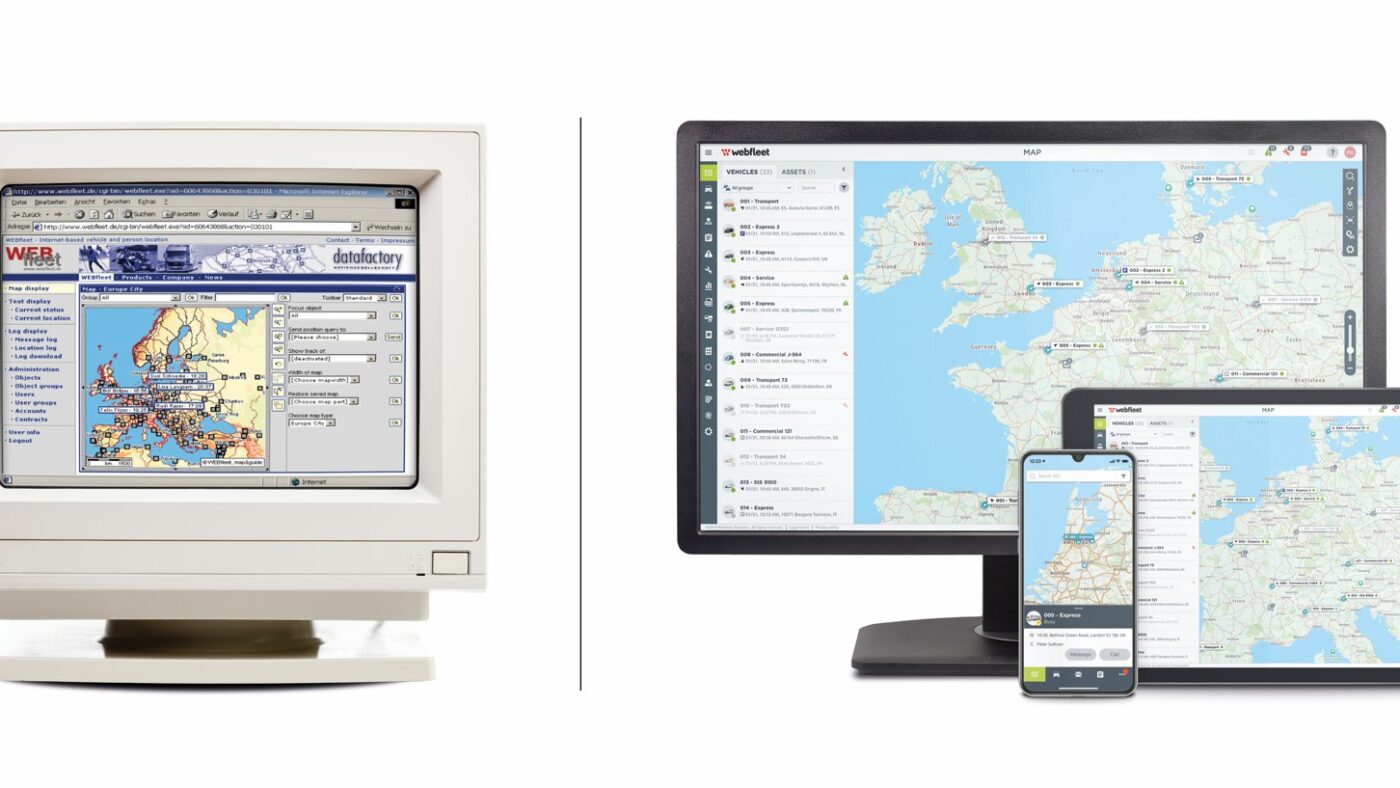
Webfleet, a pioneer in vehicle telematics and fleet management, is celebrating its 25th anniversary. Founded in Leipzig, the company has continuously positioned itself at the forefront of technological developments in the industry since 1999 and has significantly shaped the development of fleet management technologies over the past decades. Today, Webfleet is part of Bridgestone and, with more than 60,000 customers worldwide, is one of the leading providers of fleet management solutions.
(Leipzig) “Telematics has revolutionized the transport industry – and Webfleet has been there from the beginning, shaping it,” says Wolfgang Schmid, Webfleet Head of Central Region at Bridgestone Mobility Solutions. “Looking back, the management of fleets has fundamentally changed in recent years. Initially, fleet companies focused solely on tracking and tracing vehicles. Now comes the next level: connected data. Fleet management systems are becoming increasingly smarter. They connect vehicles, drivers, and headquarters, collect new data, and combine this data in entirely new ways. This allows for improvements in fleet and transport performance or makes them more efficient. This is already being successfully implemented in practice.” Schmid continues: “A vehicle generates a multitude of data that goes far beyond mere location determination and route guidance.”
In particular, vehicle, trailer, or tire data can provide additional information and insights. The increasing connectivity of these various data sources through a modern telematics solution like Webfleet enables fleet companies to continuously evolve and optimize important processes. Fleet managers are thus able to manage their fleets more efficiently and productively and strategically plan the composition of their fleets. Additionally, drivers can be supported, and their work environment can be made simpler and safer.
“The big trend is to connect the data even more. Artificial intelligence will ensure that vast amounts of data are processed into concrete proposals that can then be evaluated and realized by fleet managers,” adds Schmid. “Telematics always pays off when it comes to the challenges that fleets bring. In particular, AI-capable solutions and electric vehicles will have a significant impact on fleet management in the future. We clearly see that collaborations with other companies open up new possibilities, allowing us to offer our customers new services and business models to best support them in this fast-paced time,” Schmid further explains.
The Development at a Glance
1999: Webfleet, one of the first SaaS fleet management solutions in the world, hits the market
Founded in 1994, DataFactory AG launches Webfleet 1.0 – the first central fleet management solution with a visual user interface. The software-as-a-service solution offers fleets previously unknown scalability without the need for local installation. Fleet companies quickly recognize the opportunities that this innovative solution provides.
2001: Fleet managers and drivers come closer together
Webfleet, Blaupunkt, and Siemens jointly launch one of the first connected navigation systems that combines location tracking with driver communication. Fleet managers and drivers can now work more closely together to act more effectively, dynamically, and quickly.
2005: Leading the first wave of Track & Trace
TomTom acquires DataFactory and combines the Webfleet fleet management solution with TomTom and LINK vehicle tracking devices. With connected navigation and order management, fleet companies gain a wealth of new information to make the right decisions faster.
2006: Europe’s number one
Webfleet grows through international expansions, acquisitions, and partnerships. With the introduction of TomTom WORK, Webfleet becomes the leading fleet management solution in Europe.
From 2010: Continuous innovation and growth
The Driver Terminals PRO 7100 and 9100 feature improved route guidance and faster route calculation to save time on the road. Through a sleek, user-friendly interface, drivers gain access to a range of features and tools that make their work safer and easier. Vehicle data is used for fuel optimization, environmentally conscious driving, and driver training. With OptiDrive, Webfleet introduces a comprehensive concept that helps drivers continuously improve their performance, make their trips safer, reduce fuel consumption, and make their driving behavior more sustainable.
2019: Webfleet becomes part of Bridgestone
Another milestone in the company’s history: Together with Bridgestone’s modern tires, tire solutions, and retail network, Webfleet is now a key component in a comprehensive fleet offering.
2020: Take-off for electromobility
At the beginning of the 2020s, more and more companies recognize the advantages of electric vehicles. With Webfleet’s fleet management solution, users can identify which vehicles in their fleet can be replaced by electric models, how to keep track of combustion engine vehicles alongside the electric fleet, and develop an efficient charging strategy that optimizes return on investment.
2024: Mobility solutions for the future
With state-of-the-art technologies, Webfleet supports fleet operators yesterday, today, and tomorrow in their challenges. The integration of tire sensors, dashcams, AI, and IoT are fixed parameters for efficiency, safety, and sustainability in the fleet industry of the future.
Photo: © Webfleet