


ZetesMedea Optimizes Warehouse Operations at GUD in South Africa
Jun 11, 2024 at 6:04 PM
Cooperation Established to Promote Open Source
Jun 11, 2024 at 6:51 PM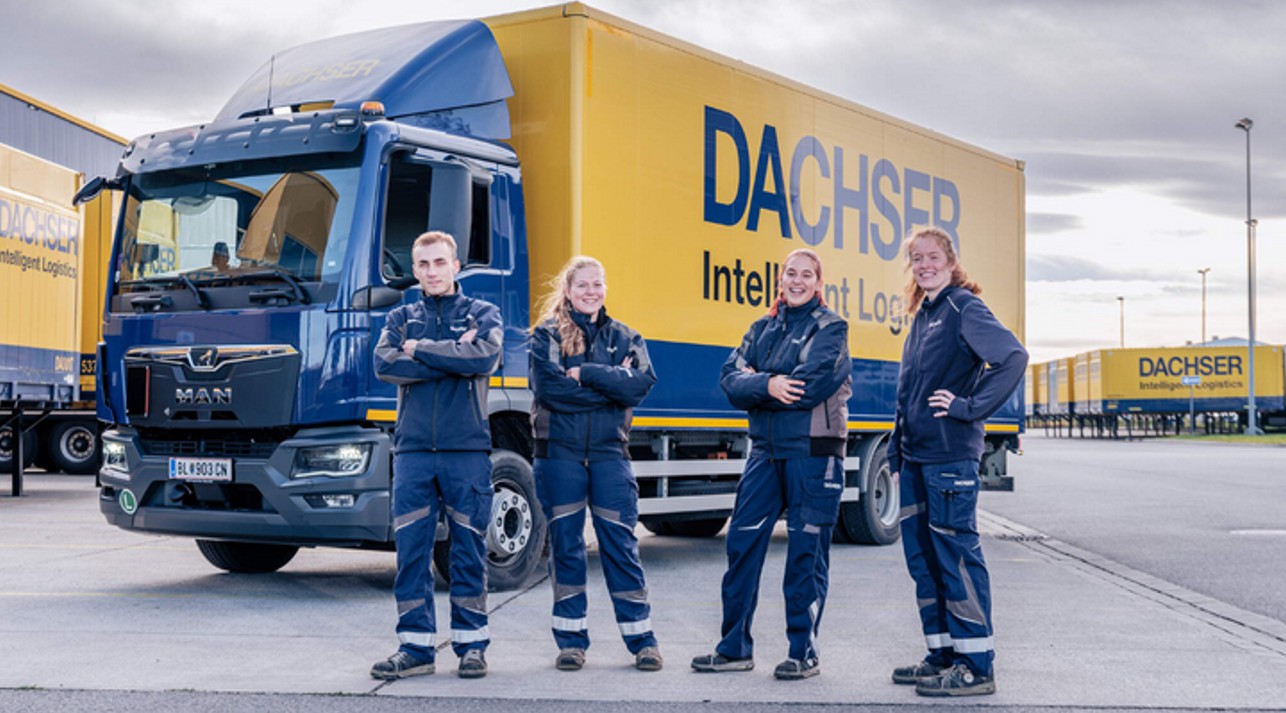
The shortage of drivers and skilled workers is a pressing issue for the economy, particularly in logistics. It is considered one of the critical bottlenecks for future growth. Ten years ago, DACHSER Service and Training GmbH launched a sustainable qualification initiative. Today, DACHSER is one of the largest trainers of professional drivers in Germany.
(Kempten/Without professional drivers, almost nothing runs smoothly. The wheels of the economy would come to a standstill, and the shelves in supermarkets and department stores would remain empty. However, the logistics industry is facing a shortage of new drivers. The consortium study “Addressing Capacity Shortages in Logistics with a Focus on Driving Personnel,” published in early 2023, estimates the deficit in Germany at over 70,000 skilled workers. Additionally, around 20,000 more positions at the wheel could remain unfilled each year. The causes are diverse: unattractive working hours, hardly competitive salaries, and a lack of societal appreciation. The result: the transport industry suffers from an image problem, and the profession of driving is often perceived negatively. A report by the International Road Transport Union (IRU) sees the driver shortage, with more than three million unfilled truck driver positions in 36 surveyed countries, as a problem that extends across Europe and the world.
“The shortage of skilled workers is a general market development affecting the entire logistics industry,” says Alexander Tonn, COO Road Logistics at DACHSER. “We must make increasingly greater efforts to fill vacant positions.” Therefore, DACHSER has been addressing this issue for ten years by founding the “DACHSER Service and Training GmbH” as one of the first logistics companies to launch a qualification initiative. The goal: to attract young people to the profession of driving, inspire them, train them, and secure them for the market in the long term – ideally later as independent transport partners.
“Appreciation, perspectives, personal responsibility, and salary are the most important levers to make the profession more attractive,” said Hendrik Jansen, Managing Director of DACHSER Service and Training GmbH, who has been accompanying the initiative since its inception.
Finding and Inspiring Drivers
Since then, around one hundred trainees have started their qualification journey to become professional drivers each year. “We have professionalized the training and the professional development, the TQ1, and put all processes related to the world of drivers to the test,” says Jansen. This also included hiring fleet managers in every German DACHSER branch, who play a key role within the concept and specifically address the concerns of drivers.
“At DACHSER, employees at all operational levels have significance and their own value. This appreciation and work culture is also reflected at the level of professional drivers in modern, pleasant workplaces. This includes addressing topics such as healthy nutrition, exercise, and addiction prevention,” Jansen explains. Value stream analyses, which DACHSER regularly conducts in its branches, map all processes related to the daily work of drivers and show optimization potential and development opportunities. Here, too, the concerns of drivers are always explicitly included.
Bringing About Change in Attitudes
“Finding good driving personnel is one side of the coin. Equally important is keeping good people and continuing to motivate them,” Hendrik Jansen notes. It is also necessary to consider a changed attitude of people towards work. “Today, topics like work-life balance, changed communication, or meaningful and purpose-driven work are at the forefront. And these are exactly the levers we are addressing: If we manage – and this applies not only to DACHSER – to bring about a change in our approach to our drivers, then we will achieve a cultural shift and a corresponding greater appreciation for this profession and the people who practice it.”
Even if this alone will not solve the structurally induced and globally occurring driver shortage, DACHSER Service and Training GmbH has set a sign. “Future-proof logistics depends on the quality of the service and the people who provide it day after day,” says Alexander Tonn. “We want to empower them, provide them with the best conditions, and appreciate them in their work. The foundations for this are laid in training and further education. This is where we focus our initiative.”
Photo: © DACHSER