
Social Innovation Lab “Echo Labs by DACHSER & FERCAM”
Jun 4, 2024 at 7:16 PM
DAKOSY Supports Hamburg Police in Hazardous Goods Detection
Jun 5, 2024 at 7:15 PM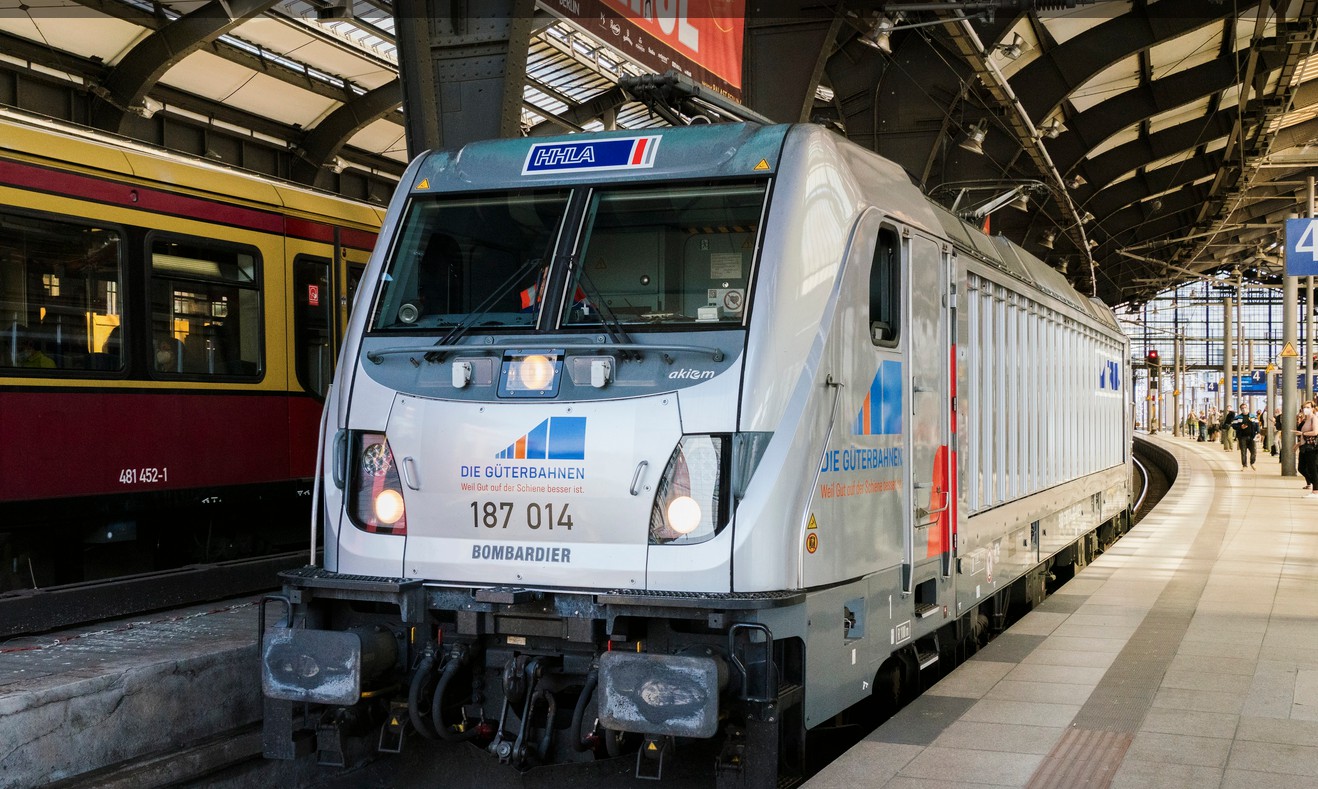
The inauguration of the new leadership of the Federal Ministry of Transport after the next federal election could be overshadowed by a nasty inheritance from the traffic light coalition: the beginning of a chain of extreme increases in track prices for rail freight and long-distance passenger transport, which would completely stall the transport transition. Without a change in the legal regulation, track prices in rail freight transport are expected to rise by about 50 percent at the end of 2025.
(Berlin) The source is application documents from the infrastructure subsidiary of Deutsche Bahn, which were submitted to the Federal Network Agency for approval. Ludolf Kerkeling, Chairman of the Board of the FREIGHT RAILWAYS, comments: “This increase is unjustifiable. It would mean the end for rail freight transport as we know it. Price is the most important reason for the shipping industry to transport goods by rail instead of by road. Despite known weaknesses, the traffic light coalition has left the track pricing system, last revised in 2016, untouched. With the partial restructuring of DB financing, it is now setting the fuse of a commercial time bomb for the timetable year 2026, which begins on December 14, 2025. We demand that the government defuses this situation by law this spring.”
The fees charged by all railway companies for the use of the railways (“track prices”) are intended to cover the ongoing costs of operating the railway network. A German specialty is that, in addition, a reasonable profit oriented towards the capital employed by DB InfraGO may be included in the prices. The amount of the fees must be approved in advance by the Federal Network Agency each year. Last week, DB InfraGO submitted the so-called “upper limit” of its total costs, including profit, for the next timetable year starting on December 14, 2025, to the Federal Network Agency for approval.
Essentially a guaranteed annual profit option
It became known that, in addition to inflation-related increases, the quasi-guaranteed annual profit option is set to rise by more than double compared to the upcoming timetable year 2025 – and this is despite the fact that it will increase next year even with deteriorating performance. For the timetable year 2026, DB InfraGO AG is applying for a potential profit of 1.4 billion euros with 6.8 billion euros in network operating costs. This imbalance is made possible because the federal government is increasingly shifting its infrastructure financing for rail towards equity increases instead of construction cost subsidies and plans to provide another 20 billion euros in equity for the rail network over the next four years.
Kerkeling: “This is initially not to be criticized; on the contrary, the money is urgently needed for the too small and damaged rail network. However, the federal government must interrupt the automatic link that, as a result of a higher capital endowment of DB, track prices rise even though the quality and capacity of the rail network are even declining.” Recently, the federal government also cut the track price subsidies granted since 2018. The economic position of the freight railways has thus deteriorated in competition despite the recently implemented significant increase in truck tolls. “The federal government must now take a stand. If politics wants to bring more traffic from the road to the rail as announced, it must immediately cut the link between equity levels and profit shares in track prices in the railway regulation law.
Call for reinstatement of track price subsidies
In the short term for 2025, the federal government must help by reinstating the track price subsidy from the current 229 million to the usual 350 million euros so that the already approved increase in track prices can be compensated. Any further measures must include changing the track pricing system itself – whether through a legal determination of prices similar to that for trucks or a completely new calculation system for track prices,” Kerkeling said.
Photo: © The FREIGHT RAILWAYS