


Kukla Group Expands Management in the Holding
May 30, 2024 at 5:15 PM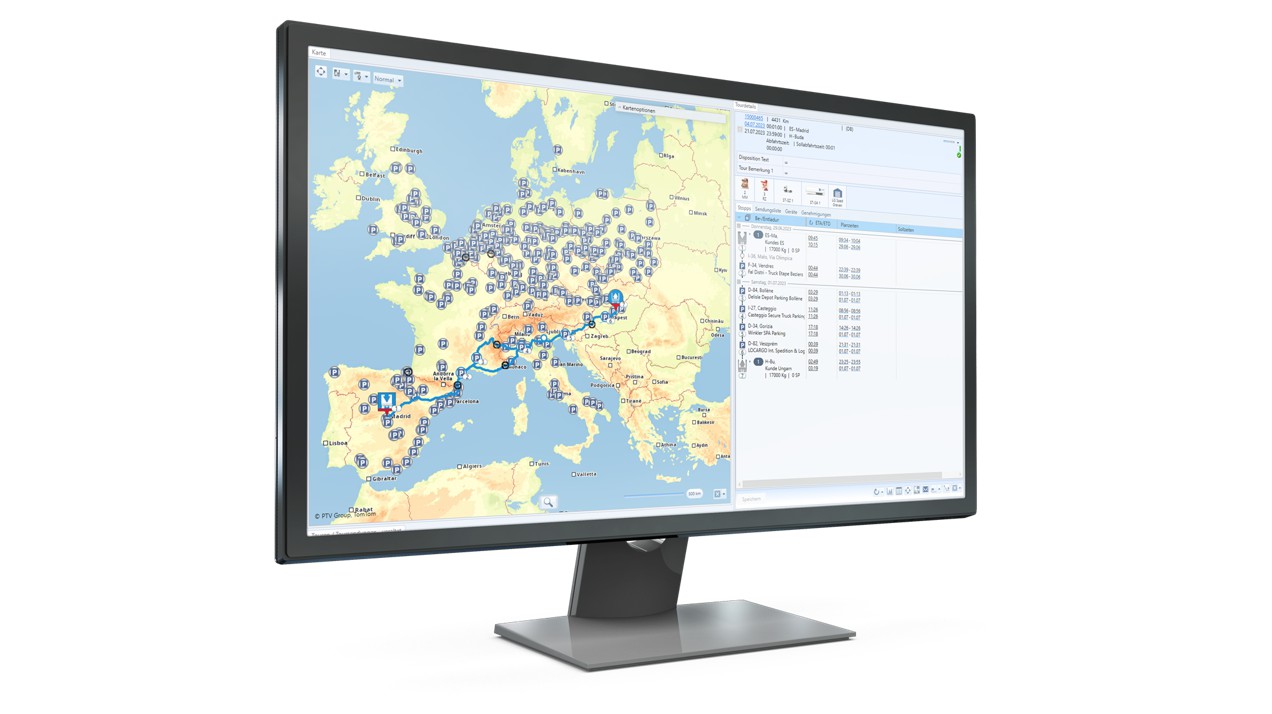
LIS Integrates Parking Search in TMS WinSped
May 30, 2024 at 5:45 PM
The cooperation in the maritime economy between Lithuania and Germany continues to grow. This is one of the results of the German-Lithuanian Maritime Forum in Klaipėda. Marina Basso Michael, Regional Director Europe at Port of Hamburg Marketing, emphasized the special role of the relationships between Germany and Lithuania in these geopolitically challenging times.
(Hamburg/Klaipėda) Marina Basso Michael: “As ports and shipping companies, we face very similar challenges. There is a need to transition our economy to a more sustainable business model based on new technologies. As Europeans, we are also called upon to stand together in the face of increasing risks in an increasingly unstable world.”
The already very intensive relationships between the two countries were also confirmed by Algis Latakas, General Director of the Klaipėda Port Authority. “The connection between the two countries goes beyond the increased cargo volume in recent years and the regular maritime services; it is strengthened by numerous German companies that have maintained solid relationships with Lithuanian companies for many years. These connections are further enriched by various cooperation projects and memoranda. An example of the durability of these relationships is the DFDS ferry service, which has been operating between Klaipėda and Kiel for over three decades. The German-Lithuanian Shipping Forum, taking place in Klaipėda, underscores the strategic nature of this partnership,” said Latakas.
Several Connections Between Klaipėda and Germany
The Port of Klaipėda has several shipping routes connecting the ports of Klaipėda and Germany. In 2023, cargo flows to and from Germany accounted for more than 13 percent of the total port throughput from Klaipėda, with 4.4 million tons. Of this, 2.4 million tons were roll-on/roll-off goods, 1.1 million tons were containers, and 0.3 million tons were agricultural products.
In 2022, the ports of Klaipėda and Hamburg signed a cooperation memorandum in which they committed to deepening their port relations, exchanging experiences in developing maritime infrastructure, and launching joint projects. In the same year, the Port of Klaipėda became a member of Port of Hamburg Marketing, gaining access to analytical data, market expertise, and promotional opportunities in German and international markets.
An important component between the ports is also the ferry connections. Ferry shipping in the Baltic Sea currently faces a whole range of challenges. The region is negatively affected by the war in Ukraine, rising interest rates, and the economic situation. The risk of economic fluctuations in such important markets as Sweden, Germany – generally in Northern and Western Europe – forces all parties to seek new solutions. On the other hand, shipping must adapt to the growing demands of environmental protection in the future and seek both short- and long-term solutions for CO2 reduction.
Growing Demands and Requests
“We are observing the growing demands and requests for sustainable and intelligent solutions for transport and complex supply chains. As a leading company in the RoRo sector, we are looking for new ways to serve our customers more sustainably and efficiently. We believe that cooperation with the ports of Hamburg, Kiel, and Klaipėda on the path to more environmentally friendly solutions will represent great value not only for our customers but also for local communities and the world in general. I can say that DFDS has already made significant strides in this direction by operating one of the largest fleets of e-trucks in Europe and aiming to have six environmentally friendly ferries by 2030,” says Aleksej Slipenciuk, Route Director at DFDS.
In 2023, the company was able to reduce the CO2 emissions of its ships by 5.4 percent compared to 2022. In 2024, DFDS will further expand its leading position in Europe regarding the number of available electric trucks. It will expand its already ordered fleet of 125 electric trucks by an additional 100 Volvo electric trucks. Since June of last year, three electric trucks have been in operation in the Klaipėda region, while ten electric trucks are being used in Germany, specifically in Cuxhaven and Neuenkirchen.
Kiel – Klaipėda Ferry Connection Since 1993
DFDS also operates one of the most important ferry connections between the PORT OF KIEL and the PORT OF KLAIPEDA. This connection has been in place for many decades. In 1993, the ferry connection was first launched by the Lithuanian shipping company (LISCO UAB) with the “Siauliai”. Since then, this Baltic Sea route has gained increasing significance and is now one of the busiest routes between Germany and the Baltic States. With the “Aura Seaways,” the operator DFDS will deploy one of its larger ropax ferries on this route at the beginning of 2024, followed by increasing cargo volumes. With a shore power infrastructure at all ferry terminals, the Port of Kiel plans to supply the ferries on the Kiel-Klaipeda route with green electricity in the future. “The connection between Kiel and Klaipeda is a rock in the surf, especially in these difficult geopolitical times. Over three decades of good cooperation – and a route that underscores its relevance not only through growing cargo volumes but also through the sheer need for a reliable maritime connection between Germany and Lithuania,” emphasized Dr. Dirk Claus, CEO PORT OF KIEL.
The geographical location, the permanent water depth for seagoing vessels, and the direct connection to the regional rail and road network make the Kiel seaport attractive for both freight and passenger traffic, with a focus on routes towards Scandinavia and Lithuania as well as the cruise industry. In 2023, the port recorded a historic high in both passenger numbers (+22 percent) and freight (+3 percent).
Photo: © HHM