


Cloud4Log Platform Surpasses 100 Participants
Apr 16, 2024 at 7:59 PM
Michael Otto with Balance at the Start as CEO of Trans.eu
Apr 16, 2024 at 8:57 PM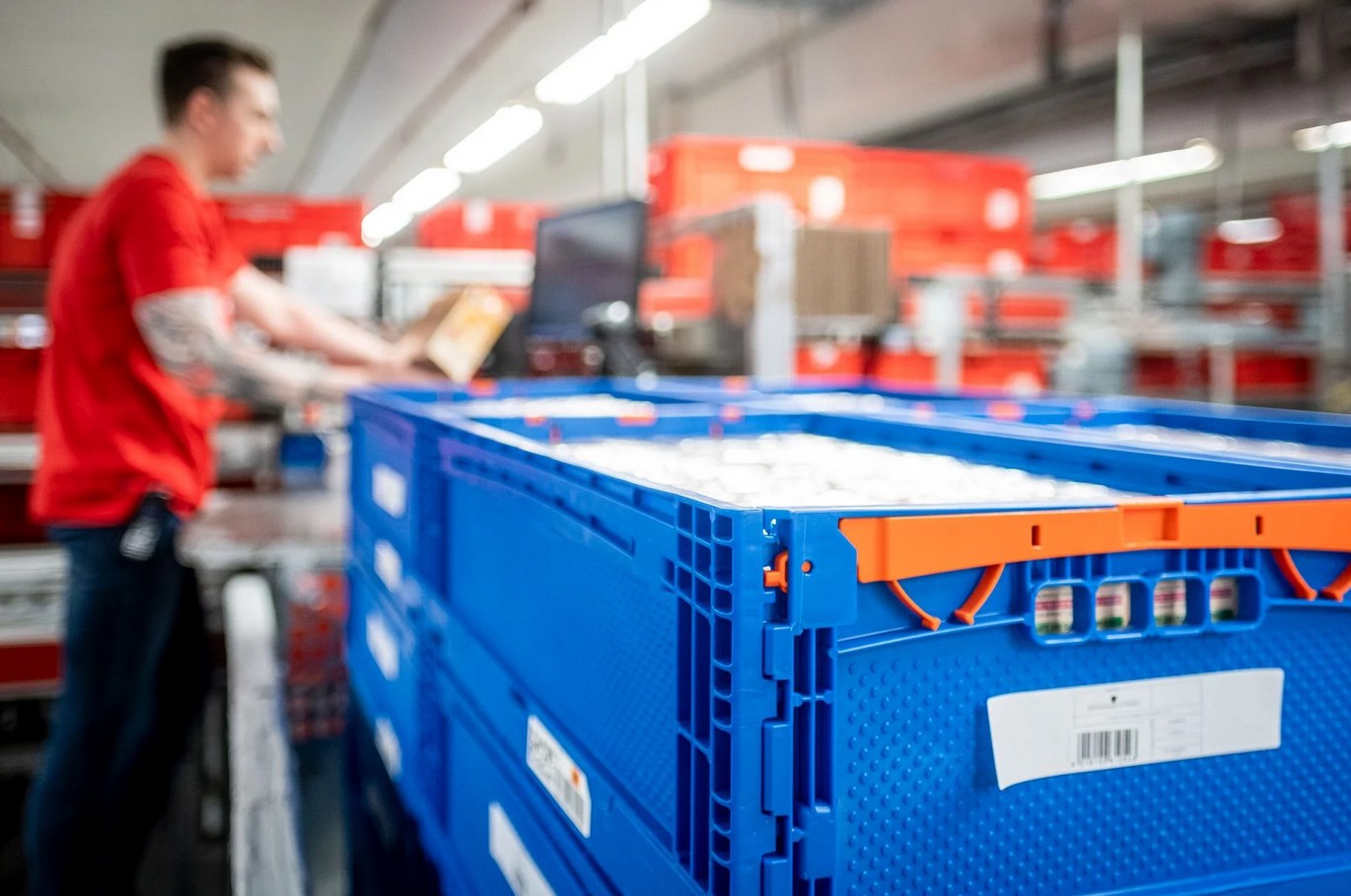
Forum Rezyklat publishes an analysis on the substitution of single-use transport packaging with suitable reusable systems. Packaging is indispensable in the supply chain: It meets important requirements, particularly product protection throughout the various stages of the supply chain, from production to the point of sale.
(Köln) At the same time, a wide variety of products and demand-oriented replenishment require numerous handling, picking, and repacking processes. The products pass through many hands and may also be repackaged into logistical containers. Especially in conjunction with increasingly sophisticated automation technology, single-use transport packaging is not consistently used across all process points and, in the worst case, is disposed of directly at the first handling stage. This quickly leads to large amounts of unnecessary recyclable materials, with valuable materials and resources being lost. “At the latest at this point, a decision must be made on whether the use of reusable transport packaging is already more ecologically and economically sustainable in production. Resources and processes can thus be saved and optimized,” recommends Matthias Haubenreißer, Senior Manager Supply Chain Management at GS1 Germany. In the Forum Rezyklat, he and other experts jointly analyzed the advantages of reusable versus single-use transport packaging.
Insights from practice for practice
In the Forum Rezyklat, stakeholders from the value creation cycle of packaging come together to find common solutions for similar challenges: These include answers to finite resources, rising energy prices, legal requirements, and customer needs.
Furthermore, the currently emerging Packaging and Packaging Waste Regulation (PPWR) in the European Union sets the future political framework for the design and use of packaging. A central objective of the PPWR is the establishment of a circular economy in the packaging segment. In addition to the demand for minimization and reuse, reusable systems are the focus of the regulation.
Many brand manufacturers and retail companies have already set the goal of minimizing their CO2 emissions and saving resources, seeing potential in the use of reusable packaging. The present exemplary analysis draws insights from the use of the GS1 Smart-Box, a standardized reusable transport container that has been in circulation since 2021. However, the results obtained can essentially also be transferred to other reusable transport boxes that are already widely used in companies and industries.
Reusable packaging reaches its full potential with broad commitment
The analysis confirms the experts’ assumptions that there is relevant measurable potential in considering replacing single-use transport packaging with reusable alternatives.
“Of course, it is always important to consider the effects on the entire supply chain processes and to include factors such as the utilization of a reusable transport box, especially in connection with the transport distance traveled, and the lifespan of the container in the calculation of sustainability effects,” notes Marco Quast from HBI Health & Beauty International.
In the end, the experts agree, the implementation – that is, the introduction of a reusable alternative to single-use transport packaging – always depends on a sensible establishment in the market and, of course, on achieving economies of scale for the companies in the value chain. Standardization of cross-company reusable transport containers could be a possible lever for this, but it requires either a sustainable commitment from all involved supply chain partners or corresponding – preferably international – regulations to achieve broad acceptance and implementation in practice. Only in this way can a cross-company reusable transport box become a meaningful sustainable tool to save materials and thus conserve resources, establish a circular economy, and increase process efficiency.
Interaction between consumer packaging and transport packaging
According to the analysis, a family of reusable transport containers is successful when the interaction between consumer packaging and transport packaging is as optimal as possible. This means that it should enable effective utilization of the reusable transport packaging and thus also the best possible utilization of the pallet in terms of optimizing transport and storage capacities. Only in this way would resources for transport packaging and transport – and thus emissions and costs – be minimized throughout the entire supply chain. This would significantly contribute to creating long-term cross-industry acceptance. Here, too, standardization plays an important role.
The analysis results are available here free of charge
Photo: © GS1 Germany