


ParkDepot relies on tour optimization solution from PASS
Oct 31, 2023 at 5:15 PM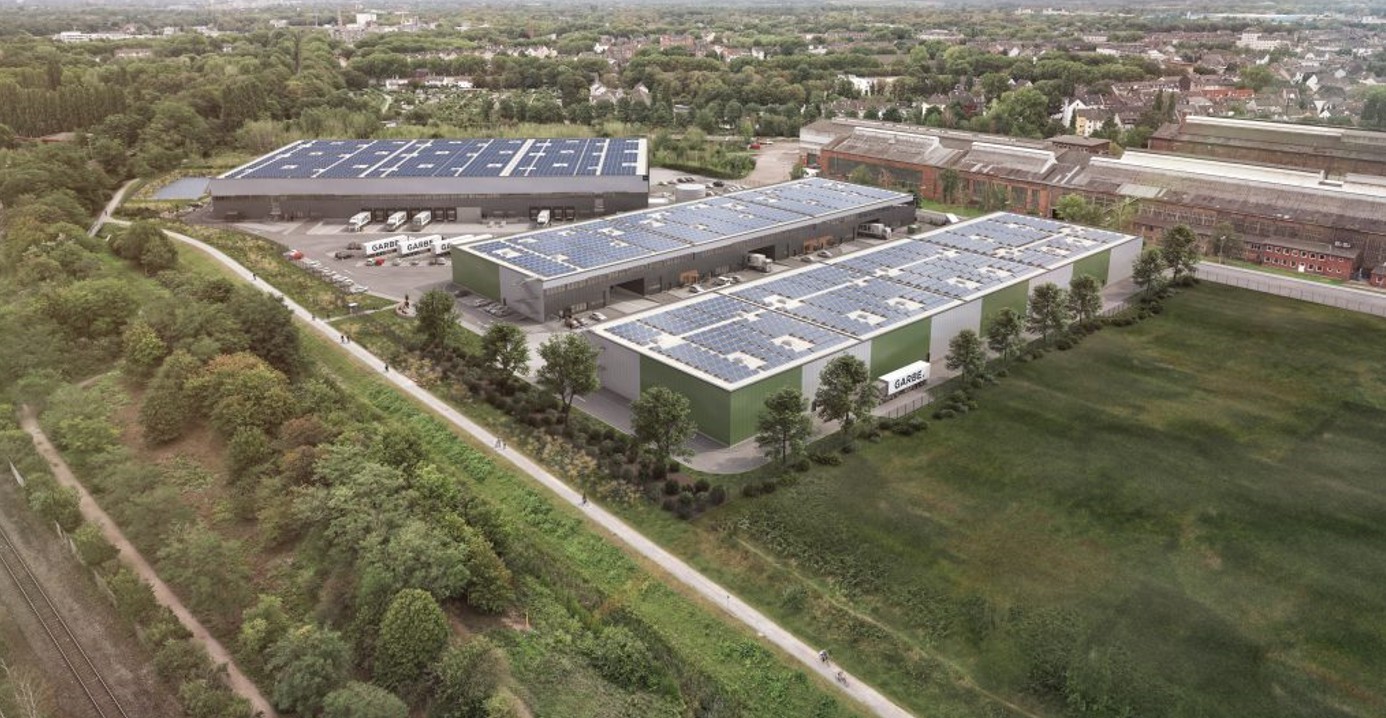
Garbe begins the redevelopment of its brownfield site in Duisburg
Nov 2, 2023 at 5:59 PM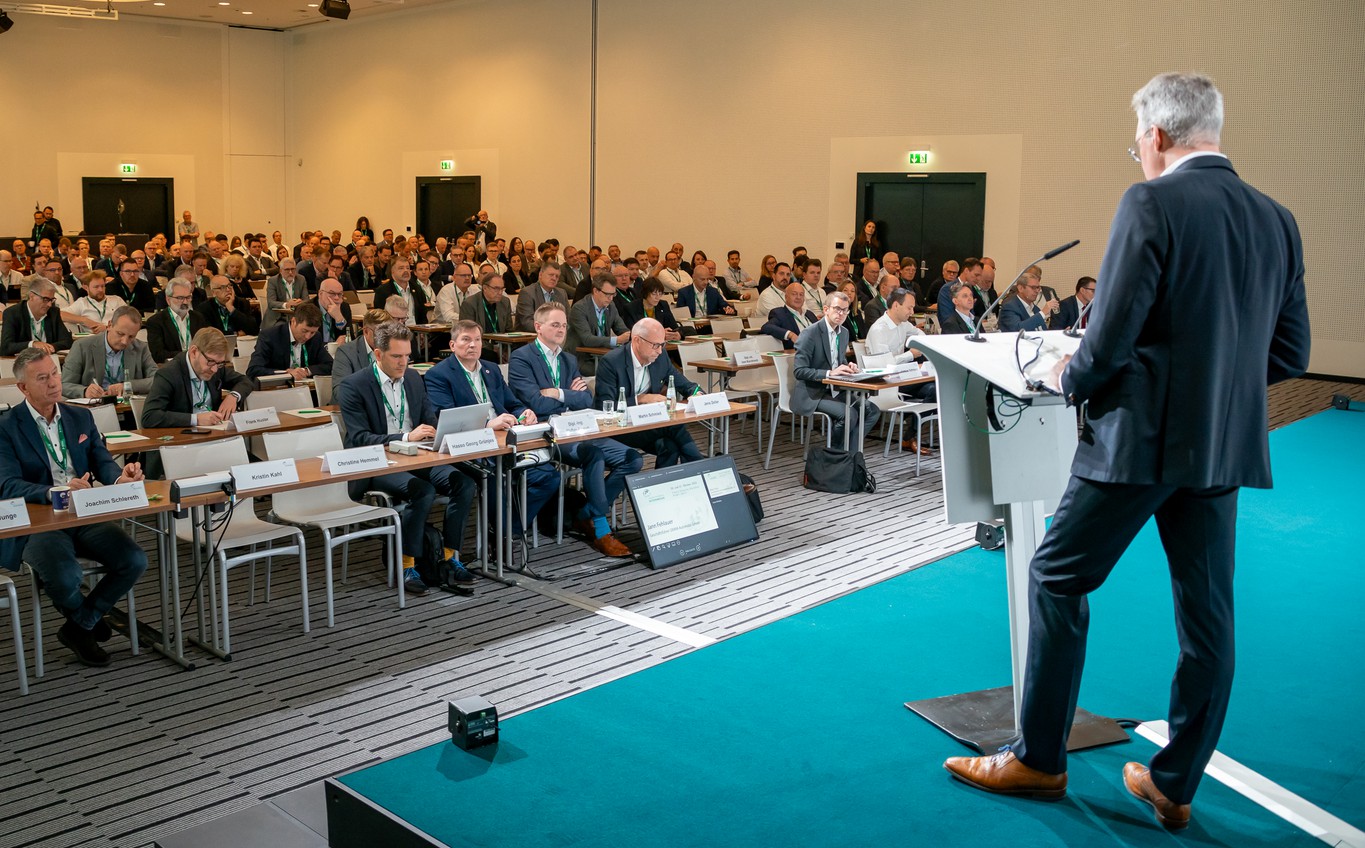
At the 5th DEKRA Future Congress Commercial Vehicles on October 30 and 31, 2023, in Berlin, experts and practitioners from politics, industry, research, and the transport sector discussed the potentials of innovative technologies surrounding the commercial vehicle of tomorrow. The focus of the presentations and panel discussions included topics such as automated driving as a contribution to reducing the number of traffic accident victims, the potentials of alternative drives for climate protection in freight transport, digital solutions for everyday logistics and load securing, strategies and concepts for more sustainability on the “Last Mile,” cyber security in the office and in vehicles, and artificial intelligence in the transport sector.
(Stuttgart/Berlin) Whether it’s the long-term traffic forecast from the Federal Ministry for Digital and Transport for Germany or the “Transport Outlook” from the International Transport Forum with a global focus, to name just two examples: Freight transport on the road is expected to increase significantly by 2050. This poses numerous challenges for commercial vehicle manufacturers and their suppliers, for the entire transport and logistics industry, as well as for politics and science. This is true in terms of efficiency and environmental compatibility as well as regarding road safety.
These challenges were thoroughly discussed at the DEKRA Future Congress with around 350 participants in three parallel thematic strands: commercial vehicle technology, digitalization, and the last mile. “A future-proof freight transport remains essential for our economies and for society as a whole,” said Jann Fehlauer, Managing Director of DEKRA Automobil GmbH, at the opening. Once again, the event underscored its position as a central platform for the entire transport and logistics industry. First held in this form in 2015, the congress has emerged from DEKRA’s and ETM Verlag’s long-standing event series. It consolidates all topics that concern the various stakeholders and participants around commercial vehicles. “Given the transformation of road freight transport, it is crucial that all stakeholders work together to set the right course,” emphasized Jann Fehlauer.
Politics and business must engage more
A central focus of the congress was the question of what requirements for transport and logistics companies are associated with the transition to alternative drives. In this context, Hartmut Höppner, State Secretary in the Federal Ministry for Digital and Transport, reminded the audience in his keynote of the federal government’s climate protection law. According to this law, greenhouse gas emissions must be reduced by 65 percent by 2030 compared to 1990 levels. For the year 2040, a reduction target of at least 88 percent applies, and climate neutrality should be achieved in Germany by 2045. “The transformation can only succeed through a joint effort of politics and business,” said Höppner. At the same time, the transition to climate-friendly solutions also offers opportunities for the transport sector and is associated with competitive advantages. It is important to actively shape the change now. “Doing nothing solves no problems,” the State Secretary reminded.
A long way to climate neutrality
That there is still a long way to go to achieve climate neutrality was highlighted by Martin Schmied, head of the Department of Environmental Planning and Sustainability Strategies at the Federal Environment Agency. He particularly pointed out that the current climate protection measures decided by politics in the area of alternative drives in road freight transport, such as vehicle promotion, infrastructure development, and regulations like the CO2 toll, will not achieve the declared emission targets. “According to the federal government’s projection report, there is already an expected gap of 28 million tons of CO2 equivalents for the year 2030,” Schmied explained. Climate protection is more than ever a societal task, and the goals can only be achieved through a combination of energy transition and transport transition.
The environmental and transport expert provided initial insights into an unpublished study from his agency, which compares the environmental balance of alternative drives with that of conventional fuels. One result: “E-mobility already has a significant climate advantage over vehicles with internal combustion engines, which will increase in the future.”
Ingo Scherhaufer receives European Safety Award for Commercial Vehicles 2023
Ingo Scherhaufer has been awarded the European Safety Award for Commercial Vehicles 2023. The Head of Active Safety at Daimler Truck received the award, which has been jointly presented annually since 1990 by the European Association for Accident Research and Accident Analysis (EVU), the expert organization DEKRA, and the German Road Safety Council (DVR). The official award ceremony took place during the DEKRA Future Congress Commercial Vehicles in Berlin.
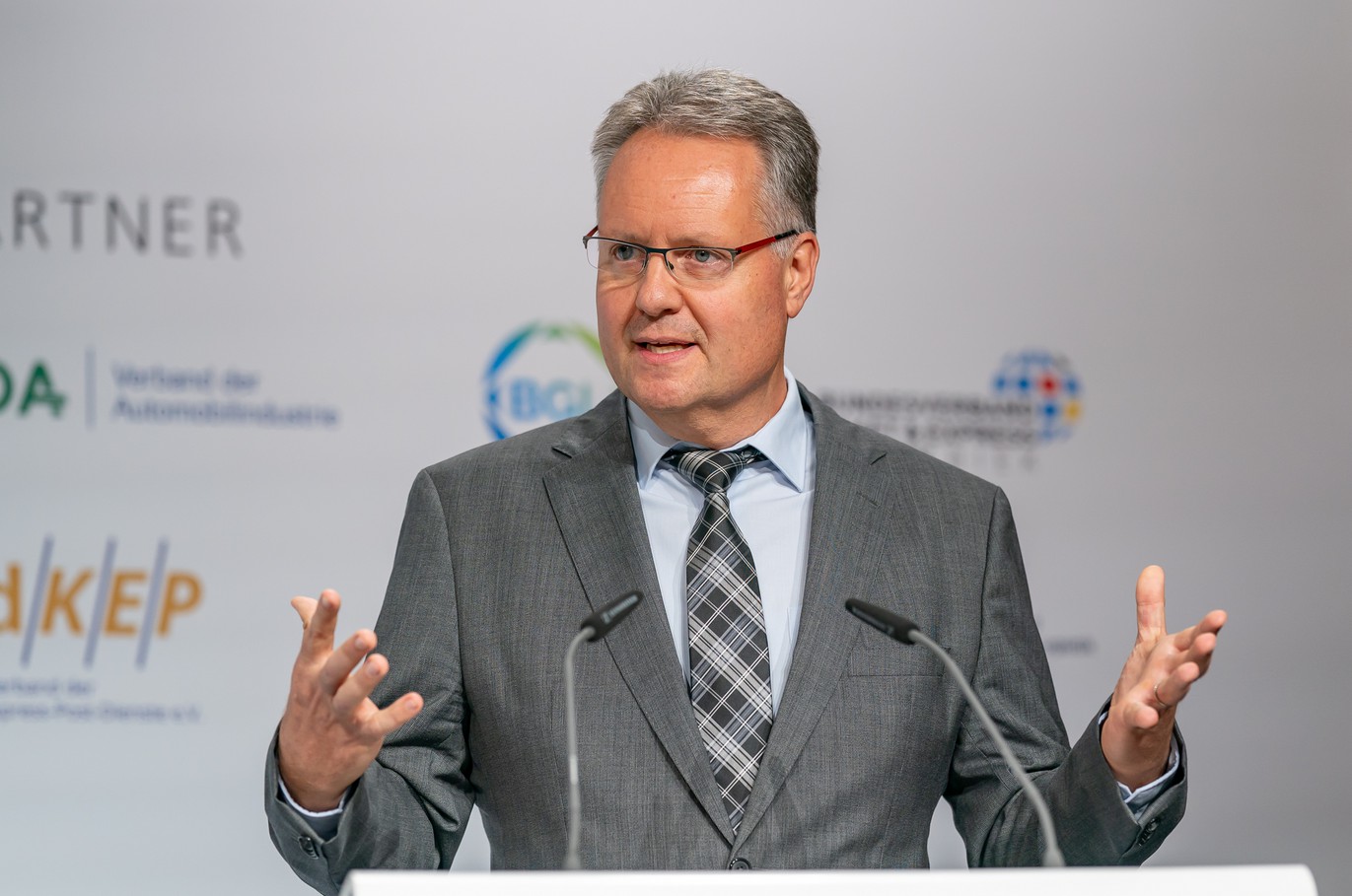
Ingo Scherhaufer owes the received Safety Award for Commercial Vehicles 2023
Technology openness without trench warfare
Thomas Fabian, Commercial Vehicle Director of the European Automobile Manufacturers Association ACEA, made it clear: “Manufacturers have done their homework; the vehicles necessary for the transition are ready.” Politics must now focus on decarbonization instead of risking losing focus due to new regulatory provisions like the Euro 7 emissions standard. A significantly faster development of a comprehensive Europe-wide charging infrastructure is also urgently needed. He spoke for the representatives of renowned vehicle manufacturers present, including Joachim Schlereth, Head of Sales and Services for Trucks at Mercedes-Benz and Fuso Germany, who presented the battery-electric long-distance truck eActros 600 from Mercedes-Benz Trucks.
For Frank Huster, Managing Director of the DSLV Federal Association of Freight Forwarders and Logistics, e-mobility in road freight transport has indeed arrived. In the end, however, vehicle purchases must be economically viable for the entrepreneur over the total operating period. Predictions about the development of electricity prices are impossible.
Battery-electric solutions, as was made clear at the DEKRA Future Congress Commercial Vehicles 2023, are certainly only one of many variants on the path to decarbonization. As numerous presentations underscored, in light of the increasingly visible climate change, gas drives, alternative fuels, and hydrogen drives must also be considered.
In addition to the question of drives, various speakers also addressed the challenges and opportunities that arise for suppliers from the electrification, automation, and digitalization of commercial vehicles for their own product portfolio. For example, Dr. Huba Németh, Director of Advanced Engineering at Knorr-Bremse Systems for Commercial Vehicles GmbH, explained the company’s modular approach regarding so-called fail-operational and safety-critical systems in fully automated driving. Other speakers from suppliers and trailer manufacturers such as SAF-Holland, Kögel, Schmitz Cargobull, Krone, or BPW Bergische Achsen demonstrated the concepts they are using to respond to the upheaval.
Extensive testing of automated systems
Safety of commercial vehicles also took a significant place at the congress. “Vehicle development has made great strides in this area over the past decades,” emphasized DEKRA Managing Director Jann Fehlauer. Driver assistance systems such as lane-keeping assistants or emergency braking assistants can save lives. It is crucial that they are widely used in the fleet, fully utilize the technical possibilities, cannot be manipulated, and function reliably over time. Therefore, before approval and series production, the systems must be thoroughly tested and evaluated. And that is precisely what is happening, among other things, at the DEKRA Technology Center in Klettwitz, Brandenburg, as Uwe Burckhardt, Head of Testing and Events at DEKRA Lausitzring, explained in his presentation.
Largest test site for automated driving at Lausitzring
In recent years, the expert organization has created the largest independent test site for automated and connected driving in Europe, covering an area of around 550 hectares at Lausitzring. The latest milestone was the inauguration of special city courses at the end of June 2023 to test automated driving functions in urban environments as realistically as possible. “With the help of state-of-the-art technology, we can put vehicles into almost infinitely complex situations to expose their automated driving functions to maximum testing challenges,” Uwe Burckhardt detailed. In so-called swarm tests, up to twelve moving objects can be used in the vicinity of the test vehicle. Such objects can represent various other vehicles as well as pedestrians and can be controlled with centimeter precision. According to DEKRA experts, this makes it possible to reproduce the same test procedures repeatedly, allowing systems and functions to be tested under identical conditions. For example, the reaction of an emergency braking assistant to a traffic jam or a suddenly crossing pedestrian, the behavior of a turning assistant with a cyclist in the blind spot, or the reliability of highly and fully automated vehicle systems of the future.
Added value through intelligent telematics
At the 5th DEKRA Future Congress Commercial Vehicles, experts and practitioners from industry and research also extensively examined the status and further developments regarding digitalization and the last mile. Central questions included: What new services increase the efficiency of tachographs? How can artificial intelligence optimize route planning in commercial vehicle fleets? How can load securing be improved through the digitalization of individual processes? What is the state of the tank and charging infrastructure for the last mile? Last but not least, the topic of cyber security was omnipresent in Berlin. Because the desired increase in efficiency can only be truly realized if the data is secure and protected from attacks during transport. The Future Congress also presented promising solutions in this regard.
Photos: © DEKRA