


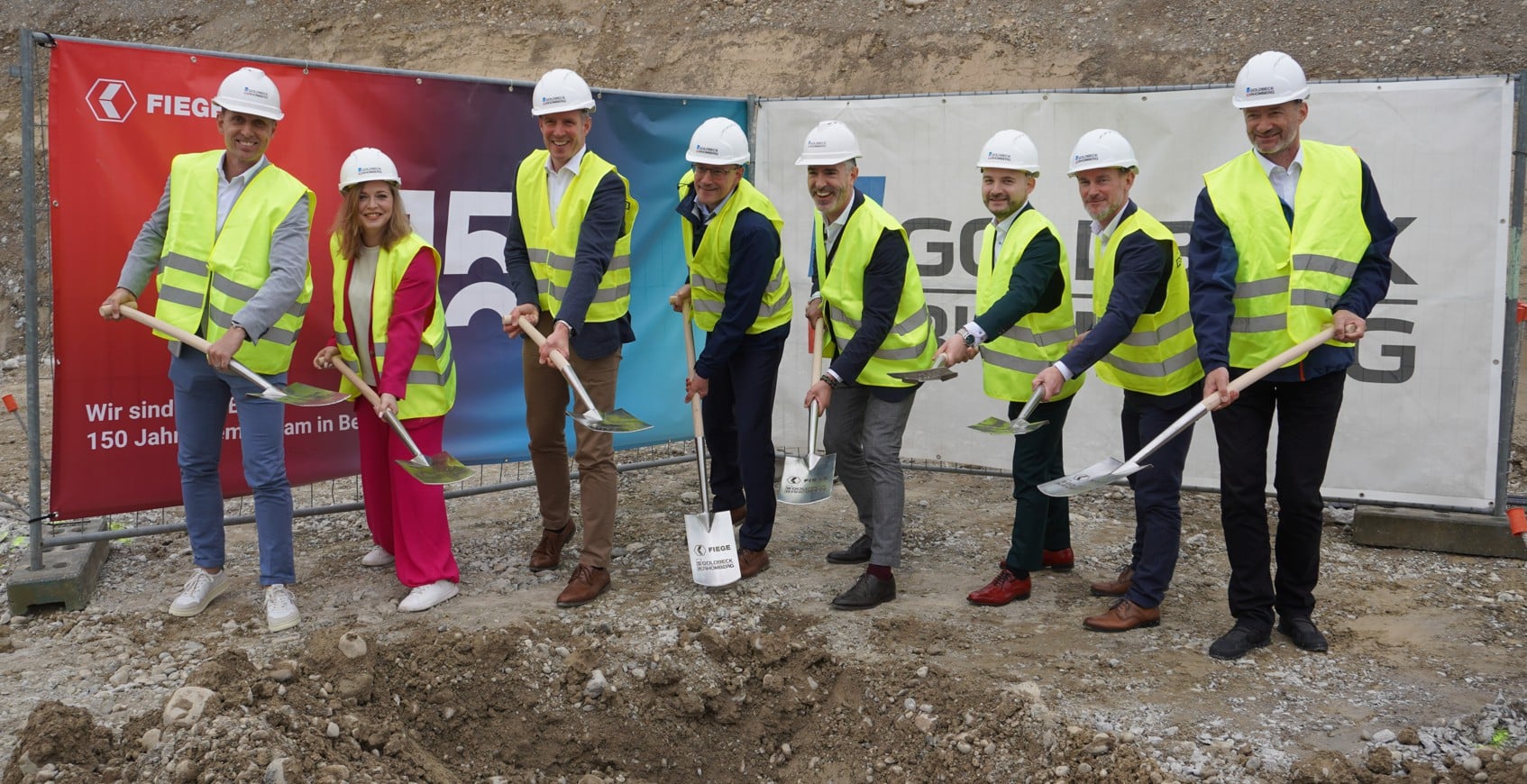
FIEGE Breaks Ground for Logistics Center in Bülach/Switzerland
May 25, 2023 at 7:27 PM
LAST MILE CITY LOGISTICS Starts in Berlin in One Month
May 25, 2023 at 7:50 PM
The logistics industry is the third largest economic sector in Germany and thus one of the most important driving forces of economic success. At the same time, few other sectors are growing as rapidly and quickly as this one. However, what is crucial for success are employees in almost every position. Although a secure future is predicted for the logistics industry, fewer and fewer workers are enthusiastic about the logistics profession.
Above all, the image of the industry is causing a decreasing number of skilled workers to be found in the job market. The logistics sector is currently evolving in line with industry, the world of work, and Logistics 4.0, so that the use of the latest technologies and the implementation of forward-looking concepts significantly improve working conditions.
DEKRA Arbeit GmbH has examined the challenges associated with logistics in terms of personnel recruiting and shows how companies in logistics can overcome these challenges.
What does logistics actually mean?
The field of logistics is complex and one of the most diverse industries. The main tasks in the logistics profession involve planning and coordination, controlling and monitoring the flow of goods, managing goods-related information, and effectively carrying out all necessary processes.
Thus, the logistics industry deals with specific tasks such as transportation and shipping and ensuring the availability of goods. It is also important for numerous companies worldwide that goods are at the right place at the right time. Here too, the logistics industry bears responsibility. Ultimately, a well-functioning logistics industry benefits not only businesses but also end and private customers, who benefit from a seamless value chain when ordering and shopping online.
To break down the complexity of the logistics industry and tackle the associated challenges, the profession and the job market of logistics is divided into four sub-areas, each of which focuses on different aspects, brings different tasks, but always works hand in hand.
The sub-areas and professional fields of the logistics industry:
Procurement Logistics: At the beginning of the value chain is procurement logistics, which ensures that materials, raw materials, and components are procured and made available for production.
Production Logistics: Production logistics in the logistics industry involves planning, processing, and optimizing production and transport routes.
Distribution Logistics: Distribution logistics takes care of the reliable delivery and shipping of goods or even information, ensuring that products arrive at their destination on time and undamaged.
Disposal Logistics: In almost all steps of the logistics industry, packaging materials and other waste are generated. The task of disposing of and recycling these materials properly is handled by disposal logistics, which contributes to cost reduction, emission minimization, and environmental protection through continuously optimized workflows.
Opportunities for a career in the logistics industry include:
- Logistics Buyer
- Logistics Manager
- Supply Chain Manager
- Dispatcher
- Logistics Controller
- Key Account Manager Logistics
- Traffic Manager
- Logistics Engineer
- Dangerous Goods Officer
- IT Specialist Logistics
- SAP Consultant Logistics
- Communications Manager Logistics
The Logistics Industry of the Future
After the automotive industry, the logistics sector is the largest economic area. The management of goods and products, as well as storage, has gained even more significance in recent years. A look into the logistics industry of the future shows that both the effort and the work are increasing. This is primarily due to digitalization and globalization. Planning, control, and implementation are becoming increasingly important in the logistics industry due to the expanding digital processes. A highly efficient logistics structure and corresponding competencies are essential for companies to maintain their competitiveness in the international sector. Regardless of whether it is procurement, production, distribution, or disposal logistics: today’s and future challenges in logistics can only be mastered with a solid personnel foundation.
What does the job market in logistics look like?
Whether in the warehouse, IT, or on the road: the logistics industry is already facing a shortage of workers, and many companies are struggling to fill open positions. The issue of skilled labor shortages runs like a common thread through all areas. According to a survey by the Federal Association of Logistics (BVL), 90% of respondents indicated that this is very noticeable. The majority see the image of the logistics industry, characterized by poor working conditions and inadequate pay, as the cause. In particular, IT specialists are desperately sought after by more than 50% of companies.
However, the logistics industry has become extremely exciting in recent years due to extensive optimization, the integration of forward-looking technologies for networking and automating logistics processes, as well as the creation of new fields of work and job profiles. Around 200 training occupations and more than 100 degree programs related to the logistics industry offer excellent employment and career opportunities. Even for career changers, interesting opportunities arise in the logistics job market.
Career through Continuous Education
Often, workers start in a lower or middle job profile and can continue their successful career in the logistics industry through continuous education. Companies today are particularly focused on ensuring health-friendly workplaces and promoting their staff in all respects. The logistics industry has also reinvented itself in terms of salary.
Photo: © DEKRA Arbeit GmbH