
Geis Group Acquires Majority Shares in Quehenberger
May 4, 2023 at 6:28 PM
Arvato invests in solar energy for logistics facilities in the USA
May 6, 2023 at 7:54 PM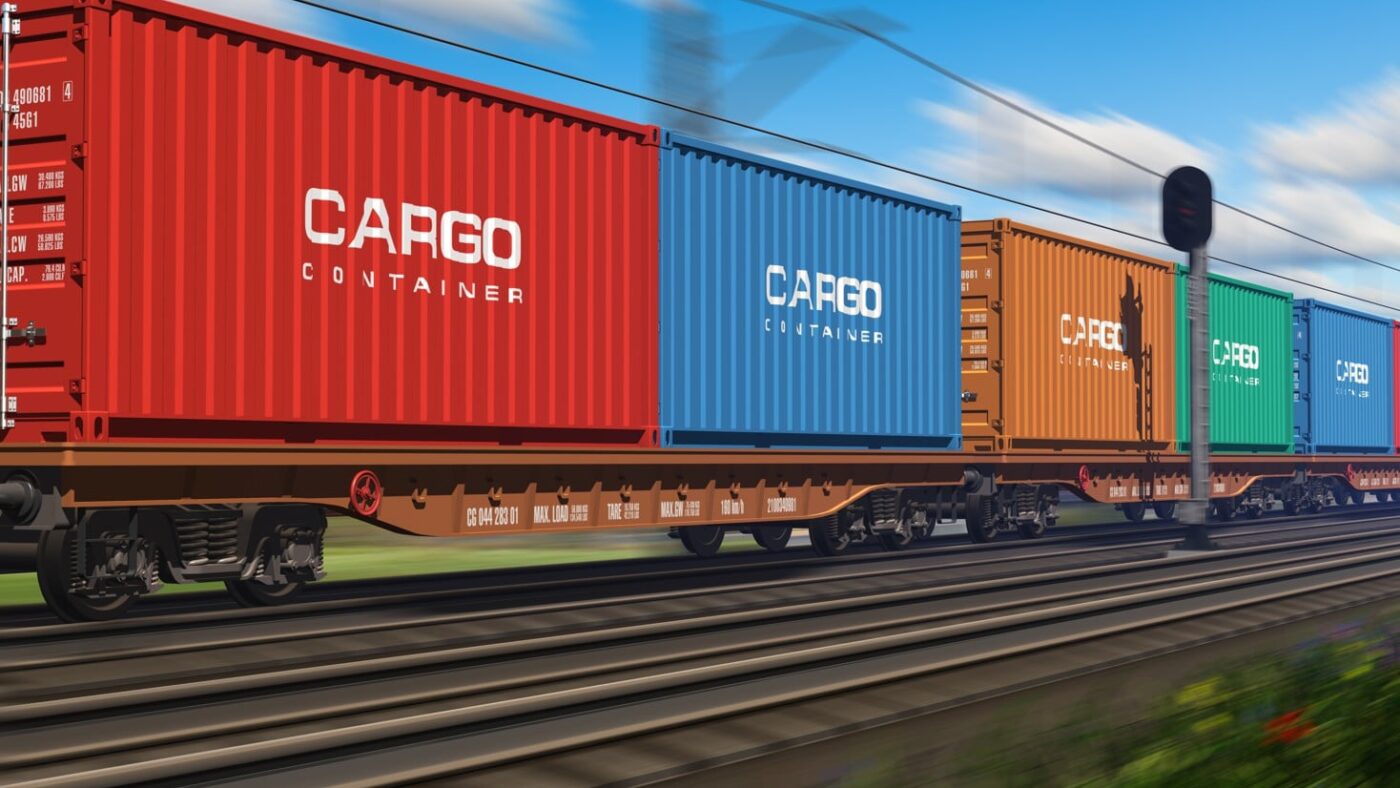
Full train services can be the better choice compared to trucks even on routes up to 150 km. This is demonstrated by a seaport pre-carriage concept over this distance, implemented by the intermodal service provider Robert Kukla. A manufacturer from Brandenburg was able to increase its exports in this way and stabilize ramp utilization.
(Munich/Wittenberge/Hamburg) At the beginning of the project, there was an order from a well-known shipper to shift the seaport pre-carriage of a manufacturer from Brandenburg to Hamburg, located 150 km away, from road to rail for ecological reasons.
An assessment by Dirk Wessels, Managing Director of Robert Kukla Hamburg, revealed further need for improvement, even beyond the desired shift: “Ramp utilization was not optimal due to dependence on traffic conditions on the highway and the availability of empty containers in the seaports. Only about half of the 20 planned loadings could be carried out daily. Logistics thus became a limiting factor for production.”
The concept developed by Wessels consists of several components. It includes two weekly round trips by full train between Wittenberge and the seaports of Hamburg and Bremerhaven – with full containers going and empty containers returning. The remaining 50 km to the manufacturer are covered by two CNG-powered trucks operating in a shuttle service. This makes the transport solution completely sustainable.
Seaport Depot Moves Inland
A significant change in this context occurred for the seaport empty depot. “We have relocated this to the terminal in Wittenberge to stabilize the availability of empty containers. If necessary, we can now also provide them within three hours,” says Wessels about the flexibility.
With up to 700 parking spaces for 40-foot containers, the terminal operated by ElbePort Wittenberge also serves as a temporary storage facility. Ship delays repeatedly necessitate adjustments to the pre-carriage of the current ship departure. “The empty container depot in close proximity also enabled optimized ramp utilization and adherence to booked slots,” describes Wessels the central role. The two CNG-powered trucks shuttle between Wittenberge and the manufacturer every hour and a half. Due to the short distance, there are no more delays, and the available ramps can be utilized with over 20 loadings per day. Previously, the empty containers arrived by truck directly from the seaport and were not always on time for loading due to traffic jams at the terminals in the seaport and the traffic situation on the route.
Capacity Bottleneck Resolved
“The bottleneck at the ramp has been eliminated,” Wessels is pleased to report. Thus, the manufacturer was able to stabilize its exports and grow in a more predictable manner. From Wessels’ perspective, this result can also serve as a model for other short-distance transports: “This system has proven to be a sustainable, stable, and resilient transport solution.” According to Wessels’ estimates, considering such concepts with a dedicated full train is also worthwhile on shorter routes, as it allows for the outsourcing of empty containers to the immediate vicinity of the manufacturer, thereby realizing a predictable loading capacity. Alternatively, it is also possible to consolidate the produced quantities of various manufacturers in the same region.
Photo: © Loginfo24