


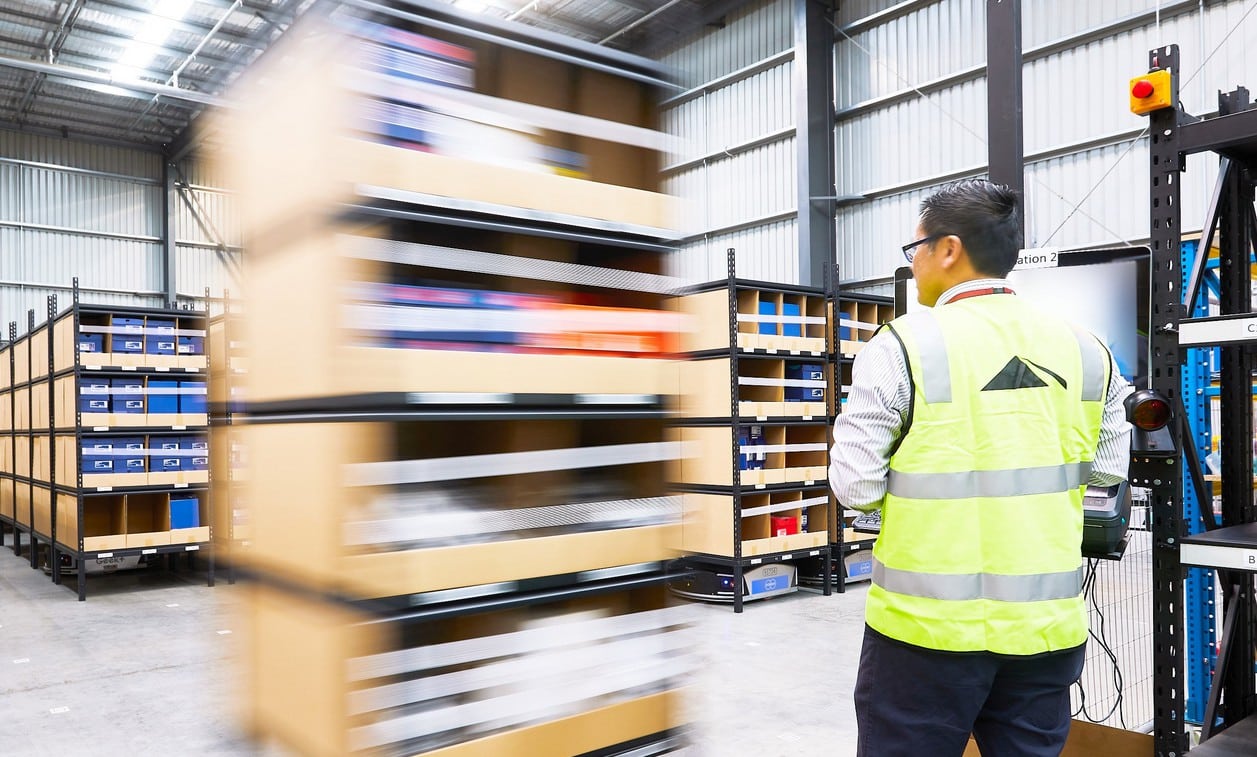
Körber Supply Chain Takes Next Step in E-Fulfillment
Mar 19, 2023 at 12:11 PM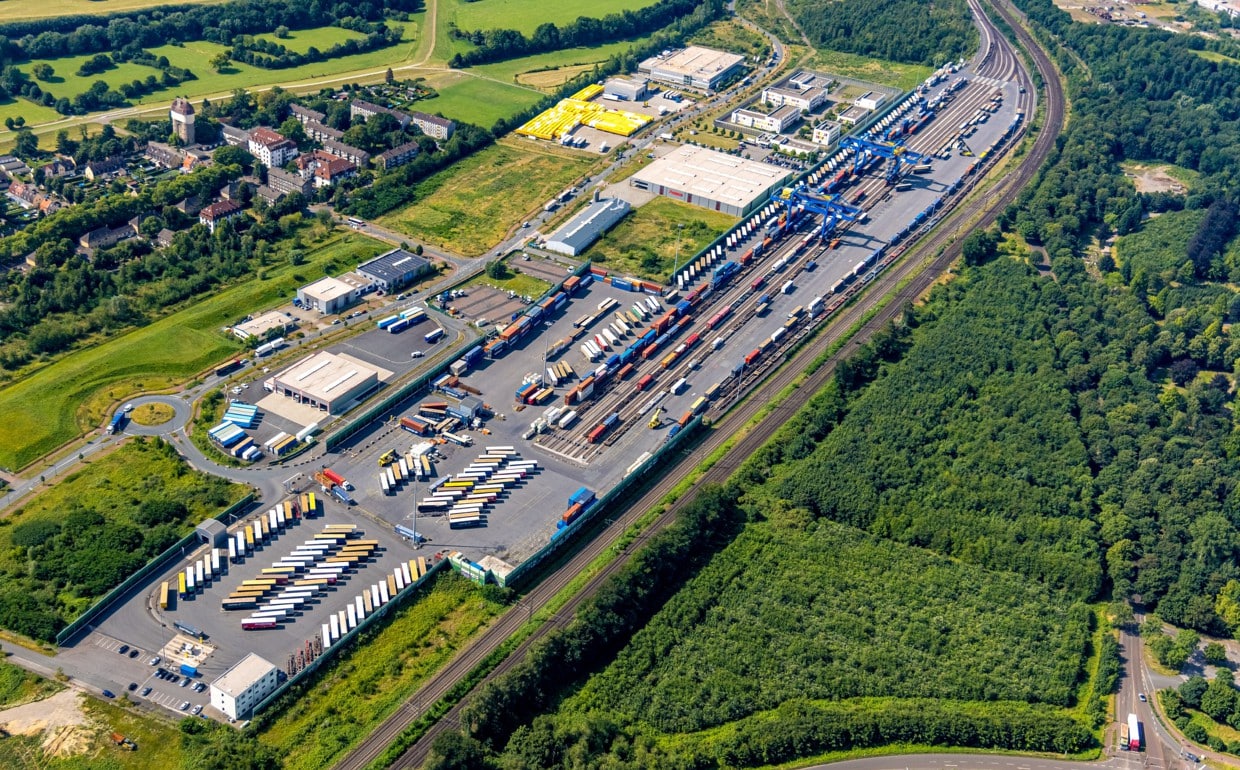
duisport, Samskip and TX Logistik operate logport III in Duisburg
Mar 20, 2023 at 10:15 AM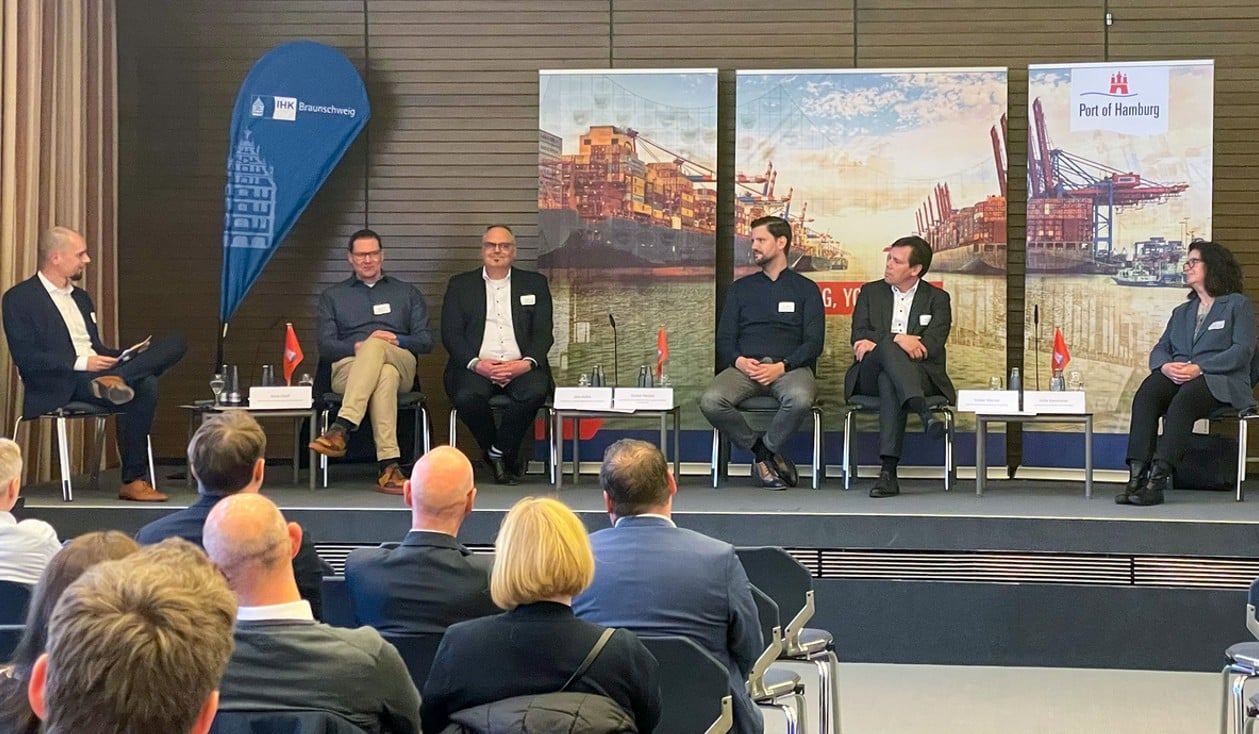
According to the latest transport forecast from the Federal Ministry for Digital and Transport (BMDV), the market share of inland shipping in transport volume is expected to stagnate. However, the volume is set to increase, as the forecast commissioned by the ministry indicates. The information event “Sustainable Inland Shipping in the Tension Between Market and Politics” organized by the IHK Braunschweig and Hafen Hamburg Marketing e.V. (HHM) demonstrated that the potential of inland shipping is underestimated in this study.
(Hamburg/Braunschweig) Markus Heinen, Western Representative at HHM, stated that transport policy should enable the advantages of individual modes of transport to be combined and synergies to be utilized. It is essential to create the right framework conditions.
Stefan Heidler, Head of Transport & Customs at New Yorker, also pointed out that inland vessels are not only suitable for transporting bulk goods. They can also transport containers very effectively. “We successfully use inland vessels in our fast-moving business,” emphasized Heidler.
Not Just Bulk and Heavy Goods
This was also underscored by Jens Hohls, Managing Director of Hafenbetriebsgesellschaft Braunschweig mbH: “The inland vessel is a classic all-rounder. Due to its ability to transport large weights, it is most economical for transporting large quantities. This does not have to be bulk or heavy goods. General cargo can also be transported well by inland vessels. In our ports, we are well prepared for such cargo,” said Hohls.
Inland vessels are particularly seen as a beacon of hope when it comes to sustainable transport. Current research and projects attest to the mode of transport having high innovation potential in the field of alternative fuels. At the same time, inland shipping is of great importance for the adjacent economic regions such as Southeast Lower Saxony. This was confirmed by Dr. Florian Löbermann, Managing Director of IHK Braunschweig: “Inland shipping is a crucial mode of transport for companies in the region and therefore also a topic for us as IHK; currently, we are focused on the expansion of the branch canal in Salzgitter.”
Locks Have Not Been Modernized for Decades
However, according to René Oloff, Branch Manager Hamburg at Deutsche Binnenreederei, the expansion and maintenance of waterways are being neglected. “We repeatedly struggle with route closures. Moreover, many locks have only been maintained and not modernized for decades. This often leads to failures.”
The BMDV is also aware that inland shipping is an important instrument in the mix of transport modes. “We will continue to support inland shipping – as an environmentally friendly mode of transport with potential – within our capabilities. This includes providing demand-oriented infrastructure as well as promoting innovations, digitalization, and the conversion to climate-friendly drives, as well as supporting training and further education. Therefore, we are working to secure more funding for the sector,” said Hilde Kammerer, Head of the WS1 Subdepartment (Waterways) at BMDV.
Port Transshipments with Inland Vessels?
Inland vessels do not always have to be used only on the classic long routes. In the Port of Hamburg, for example, many container transshipments by truck would be unnecessary if more inland vessels could be deployed here. “More traffic on the waterways automatically leads to a reduction of road traffic and thus to lower CO2 emissions. To better coordinate the waterway connections to the hinterland and in the port, we are in the process of digitalizing and automating many processes. Our goal is to be able to process inland vessels faster and more efficiently,” said Volker Werner, Sales Director at Hamburger Hafen und Logistik AG (HHLA).
Photo: © Hamburg Hafen Marketing/Heinen