



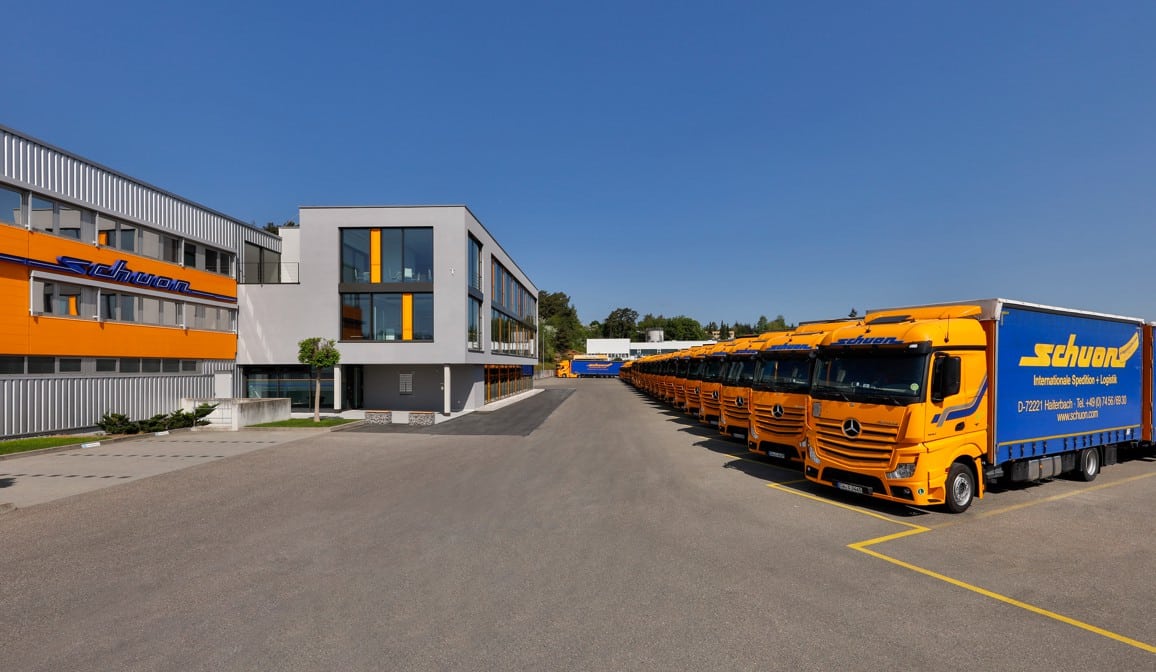
Schuon Continues Growth Path in 2022
Feb 16, 2023 at 4:45 PM
DB Schenker and MSC Launch Extensive Use of Biofuel
Feb 16, 2023 at 5:00 PM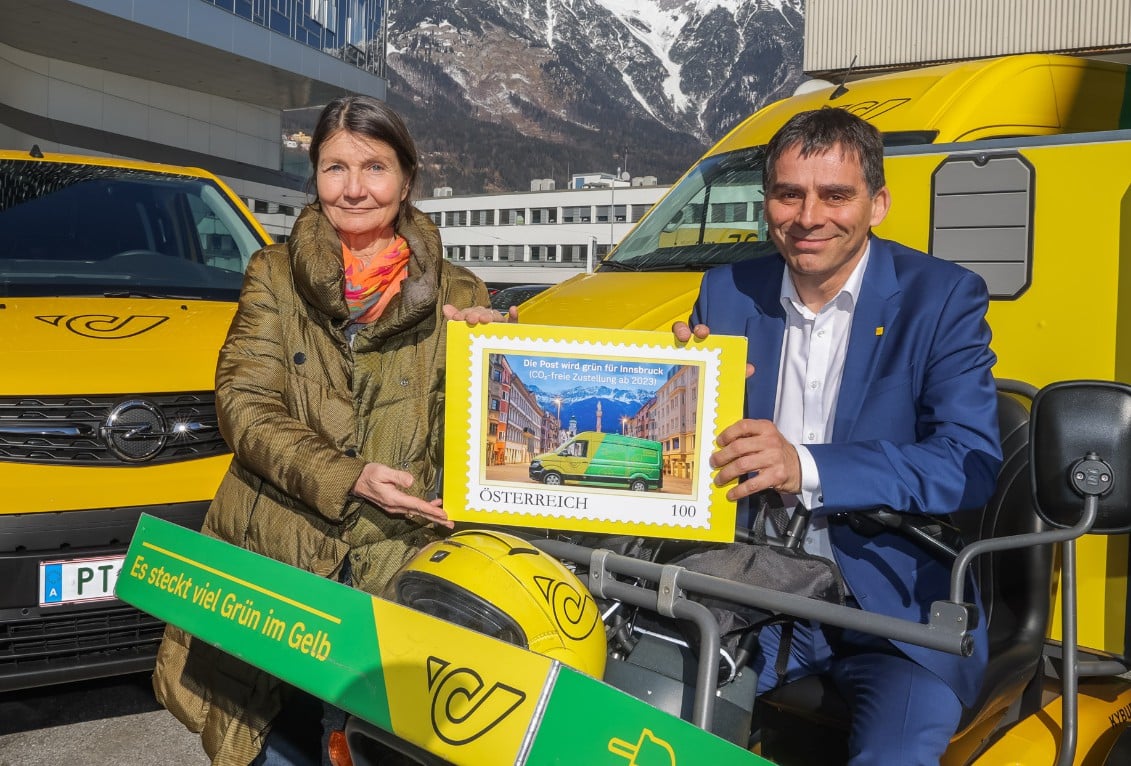
The Austrian Post already operates over 3,000 electric vehicles and aims to deliver completely CO2-free nationwide by 2030. A significant first step is now being implemented by the Post in the Tyrolean capital Innsbruck, where it will fully convert its delivery fleet to electric mobility this year.
(Innsbruck) “In Innsbruck, we are laying an important foundation for CO2-free delivery in Tyrol with the conversion to electric mobility. We are not only acquiring 70 additional electric vehicles but also expanding the charging infrastructure and photovoltaic systems at our logistics locations. Overall, the Post is investing around 3.3 million euros to ensure that all shipments – letters, advertising mail, packages – are delivered emission-free in Innsbruck this year,” says Peter Umundum, Director of Parcel & Logistics, Austrian Post AG.
“I am very pleased that Innsbruck is one of the first cities in Austria where the Post will deliver emission-free. The climate catastrophe, which particularly affects cities in the Alps, demands action from us now – the Post is setting a good example here,” says Uschi Schwarzl, Innsbruck City Councilor for Environment, Energy, and Mobility.
The Post has now begun the work on the conversion: In a total of four delivery bases – three in Innsbruck and one in Vomp – over 60 charging stations for the electric fleet will be installed in the coming months. This year, 70 new electric vehicles will be acquired solely for delivery in Innsbruck, bringing nearly 100 electric vehicles into operation by the end of the year.
The delivery of letters, advertising mail, and print media will take place from three delivery bases in Innsbruck itself, while package delivery will be from the logistics center Tirol in Vomp. Daily, around 130 delivery personnel will deliver CO2-free, whether on foot, with e-bikes, e-mopeds, or e-vans.
Electricity from Photovoltaics, Second Life for Vehicle Batteries
With over 3,000 electric vehicles, including about 1,200 e-bikes, e-cargo bikes, e-mopeds, and e-trikes, as well as nearly 1,900 e-vans, the Austrian Post already operates the largest electric fleet in the country today. By 2030, it will deliver all packages, letters, print media, and advertising mail emission-free throughout Austria. Since February 2022, only electric vehicles have been acquired for delivery, with around 1,000 additional electric vehicles planned annually.
The required electricity is already partially generated by the Post itself: 13 photovoltaic systems with a capacity of around 4.3 megawatts peak (MWp) have been installed across Austria. An additional 4.5 MWp is currently being realized, and the expansion of another 9 MWp is already planned. This includes the photovoltaic system of the logistics center Tirol, which is currently being expanded from the existing 500 kilowatts peak (kWp) to nearly 2.3 MWp. Only green electricity from Austria is purchased.
The Post’s electric vehicles have proven themselves not only in daily use since 2011 but are also ideal for stop-and-go operations and are very popular among delivery personnel. The life cycle of an electric vehicle is already more cost-effective for the Post than that of a comparable vehicle with an internal combustion engine, and they also exhibit significantly lower wear and lower energy costs.
The Post considers the entire life cycle of the electric vehicles and their batteries, relying on software-supported battery monitoring, including wear forecasting. With a focus on the second-life use of used vehicle batteries after upgrades, repairs, or recycling, these can also be used as stationary energy storage.
Photo: © Austrian Post AG / Caption: Uschi Schwarzl, Innsbruck City Councilor for Environment, Energy, and Mobility, and Peter Umundum, Director of Parcel & Logistics, Austrian Post AG, at the kickoff for “Green Innsbruck.”