



Panattoni Celebrates Groundbreaking for City Dock Hamburg Norderstedt
Dec 21, 2022 at 1:45 PM
Dachser Completes Acquisition of Two Joint Ventures in Hungary
Dec 21, 2022 at 1:47 PM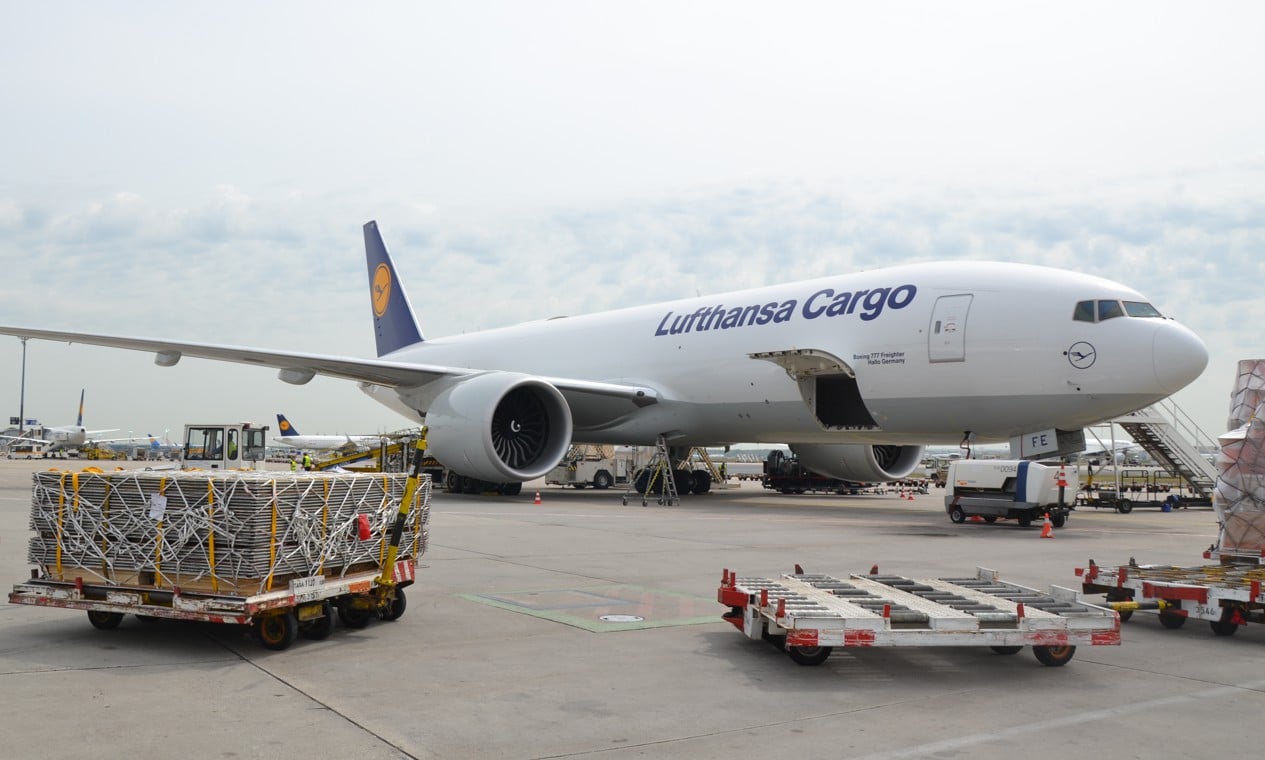
The global logistics market continues to experience turbulent times. However, after three years in crisis mode, a normalizing market is in sight. Lufthansa Cargo looks optimistically towards 2023 and has a positive stance on fundamental trends such as digitalization and sustainability, as well as the associated challenges in air freight.
(Frankfurt) The peak phases of the Covid pandemic have clearly demonstrated the importance of air freight in logistics. It is an indispensable component of global supply chains. The past crisis years have been particularly challenging for the industry. The temporary grounding of many passenger aircraft fleets led to a significant loss of cargo space, as approximately half of the global air freight tonnage is transported as belly cargo. Although there will continue to be strained supply chains due to global dynamics, Lufthansa Cargo expects that increasing freight capacities in the coming year will contribute to easing the situation. In particular, the continuous increase in passenger flights and the outlook for a reopening Asian market provide a hopeful perspective for the future.
“The past years have shown that global trade is resilient and that there are still growth markets. Air freight has always been dynamic and volatile. Flexibility is and will continue to be in demand,” says Dorothea von Boxberg, CEO of Lufthansa Cargo. The year 2023 will not require a fundamental change in strategy, but rather will advance ongoing measures and maintain a forward-looking willingness to learn, von Boxberg adds.
Digitalization and AI as Competitive Factors
The pandemic years have led to significant advancements in digitalization across various industries. According to Lufthansa Cargo, this trend will continue in the air freight sector at an accelerated pace. The networking through intelligent data usage and the increasing automation of processes will become performance and competitive factors for the industry.
“Even before the pandemic, topics like digitalization and AI were important. In air freight, there are still many opportunities to use data in a value-creating manner and to interact with partners in real-time. The industry is characterized by strong cross-sector collaboration. An example of this is the nationwide research project ‘Digital Test Field Air Cargo’ of the Federal Ministry of Transport and Digital Infrastructure (BMVI), coordinated by the Fraunhofer Institute for Material Flow and Logistics (IML). We are pleased to collaborate as a project partner to make the air freight location in Germany competitive for the international market,” says Dorothea von Boxberg.
Sustainability Remains a Major Topic
The future of air freight logistics will continue to be significantly driven by the topic of sustainability. Even today, the industry makes a diverse contribution to climate protection. In addition to achieving CO2 neutrality on the ground, through electrification or solar systems, it will be essential, according to Lufthansa Cargo, to further advance the sustainability of the aircraft as a mode of transport, for example through fleet modernization. It is also important that regulations regarding quotas for sustainable fuels (Sustainable Aviation Fuels) are designed to ensure fair competition. “For us, sustainability holds a very special significance. We have set ourselves the ambitious goal of halving our CO2 emissions per kilogram during flights by 2030. Efficient flying and expanding the use of sustainable fuels are our focus,” explains Dorothea von Boxberg. “To truly make a difference, we need to think about the topic holistically and take smaller measures such as optimizing loading equipment and recycling seriously. We are convinced – every contribution counts.”