
Loxxess Donates to the Children’s Project “Die Arche”
Dec 14, 2022 at 5:32 PM
Port of Hamburg Releases New ‘Port of Hamburg App’
Dec 14, 2022 at 5:44 PM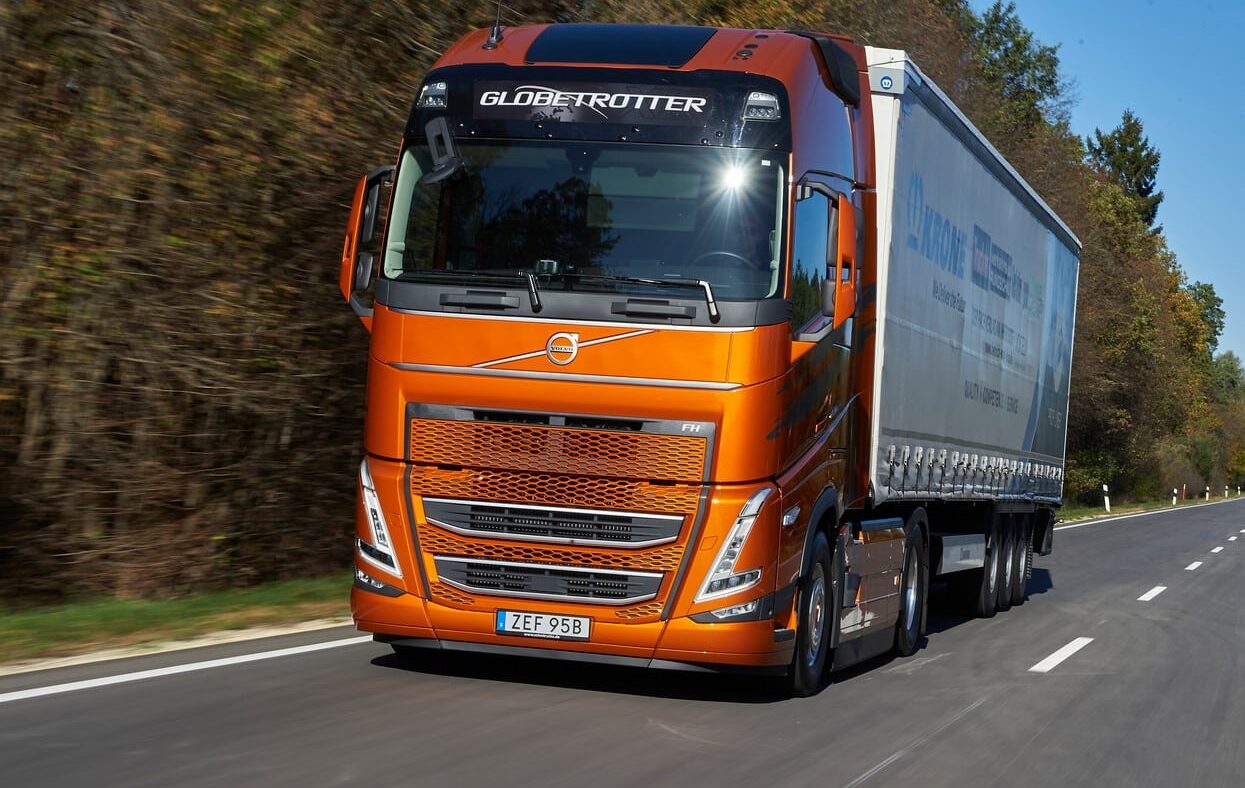
The test was conducted by the independent German magazine Trucker. The 32-ton Volvo FH 460 with I-Save was tested on a 343 km long route on public roads. The test route included various highways, hilly sections, and country roads.
(Ismaning) Compared to the same test from 2018, before Volvo introduced the I-Save fuel-saving package, the tested Volvo FH 460 with I-Save achieved an impressive reduction in combined diesel and AdBlue consumption of 18%. It consumed an average of only 21.48 l/100 km.
“The effects of the new I-Save package, which utilizes further improvements to the turbo compound engine, smarter new software, and refined aerodynamics, lead to a very efficient fuel consumption. This independent test is another solid proof of the significant and positive impact that I-Save has on fuel consumption,” says Helena Alsiö, Vice President Powertrain Product Management at Volvo Trucks.
Counteracting rising fuel costs
In the past, little attention was paid to the costs of AdBlue. This has changed drastically, as prices for this additive have risen by over 100% in many markets. In the new test, Volvo managed to keep the AdBlue consumption at a low level of 6% of diesel consumption.
“The total fuel consumption, which includes both diesel and AdBlue, is becoming increasingly important for the overall operating costs. We always focus on keeping the total fuel costs as low as possible,” continues Helena Alsiö.
Diesel engines will continue to play an important role
Although Volvo Trucks has set a goal that by 2030, half of its global truck sales will be electric trucks, the diesel engine will continue to play an important role in reducing CO2 emissions. The improved efficiency resulting from the new I-Save advancements in the powertrain is a significant contribution to lowering CO2 emissions. The turbo compound engine is also certified for operation with HVO100, a renewable diesel in the form of hydrogenated vegetable oil, which drastically reduces CO2 emissions.
Photo: © Volvo Trucks