



PostPlus Group Targets the German E-Commerce Market in 2023
Dec 4, 2022 at 4:21 PM
Sule Takes Over Representation for Port of Hamburg in Mumbai
Dec 4, 2022 at 4:55 PM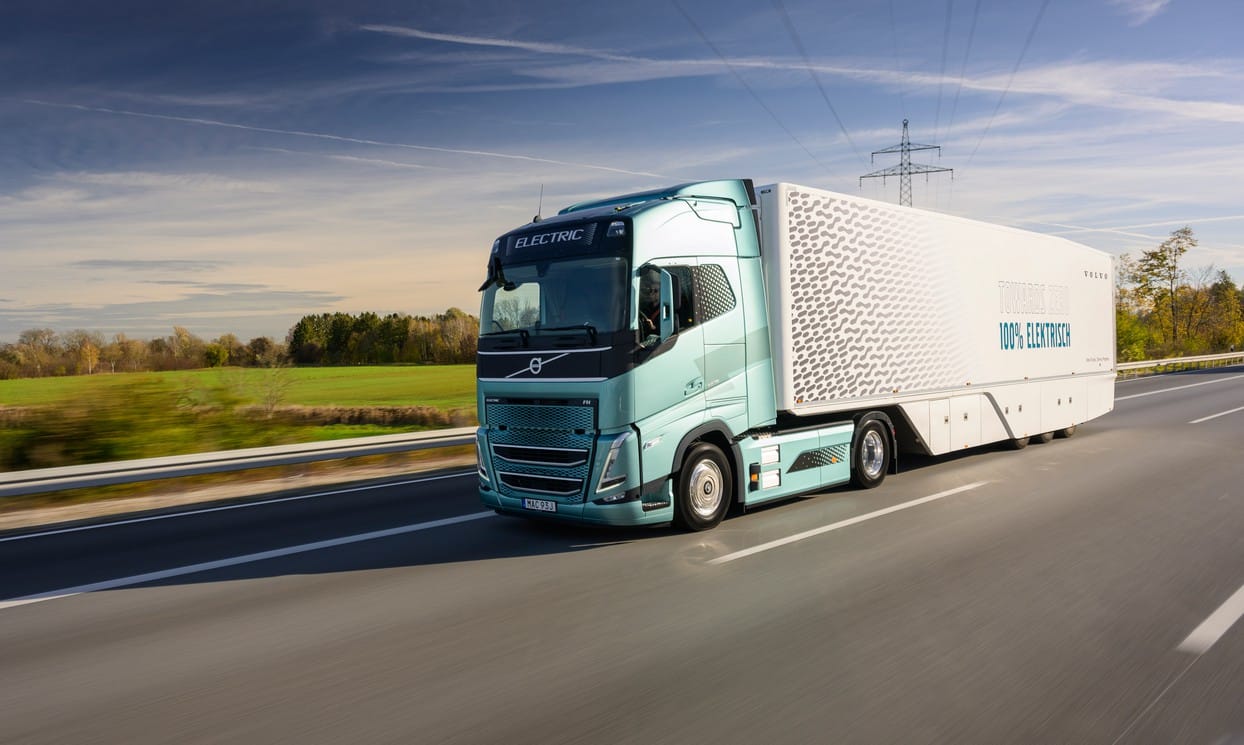
Volvo Trucks defies CO2 emissions on long distances during the so-called Miles Challenge. The challenge, verified by the independent testing organization DEKRA, proves that the Volvo FH Electric can easily cover the distance from Munich to Berlin with an intermediate charge in everyday testing.
(Ismaning) “That we can achieve over 600 km with the Volvo FH Electric brings us a significant step closer to the future and our goal of ZERO EMISSIONS, meaning zero emissions in operation,” says Christoph Fitz, Director New Vehicle Sales at Volvo Trucks. “With the Miles Challenge, we demonstrate that we can cover all technological areas and drive the technological transformation forward.”
The Miles Challenge for electric trucks, held for the first time in real-world use between Munich and Berlin, provides convincing evidence that Volvo’s new heavy electric trucks can cover over 600 km with an intermediate charge during normal freight transport operations. The test conducted by Volvo Trucks with a Volvo FH Electric, which has been available in series since September, was closely monitored by two DEKRA experts and officially verified after successful completion.
Average Consumption at 106 kWh/100 km
The challenge was completed during a driving time of one day over a distance of 606 km. The only intermediate charge of the Volvo FH Electric, with a total weight of 39 tons, was carried out at the Selbitz service area. The test was conducted under everyday conditions at a practical speed of 85 km/h, utilizing Volvo’s assistance systems such as I-See. I-See optimally utilizes performance based on topography, as the system intelligently controls this. The final result verified by DEKRA shows the performance of the 666 hp electric drive in the Volvo FH Electric. The average consumption over the distance was 106 kWh/100 km. A total of 119 kWh was recuperated, which represents 18% of the energy consumed on the route. Upon arrival in Berlin, the battery capacity was still at 35% with a remaining range of over 130 kilometers.
“Volvo Trucks aims to have at least a share of 15% to 20% electric trucks on the roads by 2025. Between 2028 and 2030, the majority of sold trucks should have an electric drive. This is how we want to break free from fossil fuels,” concludes Christoph Fitz.
Practical Results Confirmed by Journalists
The convincing practical results of the Miles Challenge were additionally confirmed by three test drives on the same route with leading German commercial vehicle journalists at the wheel. Here too, the electric Volvo ranked at the highest level of efficiency with only minor deviations between the different drivers. All drivers expressed their enthusiasm about the high driving comfort and performance of the new Volvo FH Electric after the tour. This demonstrates that the emission-free heavy Volvo can already compete with traditional diesel trucks on long distances today.
Series Production Since September
In September 2022, the heavy trucks Volvo FH Electric, Volvo FM Electric, and Volvo FMX Electric in the class up to 44 tons went into series production. The medium-duty models, such as the Volvo FL Electric and Volvo FE Electric, have been available since 2019.
Photo: © Volvo Trucks