


Consumer Sentiment Declines – Retail Sales Rise
Nov 1, 2022 at 7:54 PM
Lufthansa Cargo Restructures Sales Regions
Nov 2, 2022 at 5:41 PM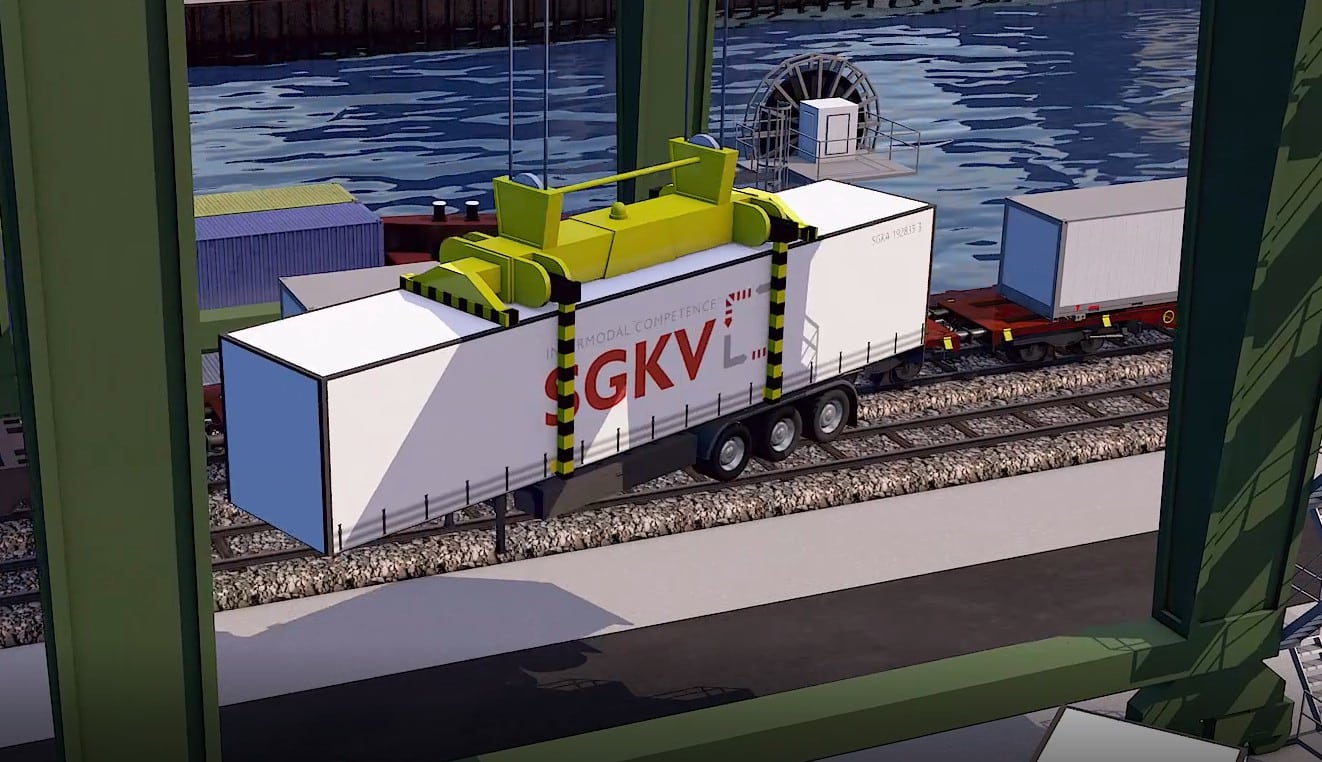
The Study Society for Combined Transport e.V. (SGKV) has been active for years as a non-profit association to bring together relevant stakeholders in intermodal freight transport. Dipl.-Geogr. Clemens Bochynek, managing board member of the SGKV, sees much potential for Combined Transport even with the existing infrastructure.
By: Andreas Müller
(Berlin) Sustainability along supply chains is currently a concern for shippers from industry and trade as well as logistics service providers alike. Since the war in Ukraine, the pressure on energy efficiency has intensified.
No wonder the call for more rail freight transport is becoming increasingly louder. In the short term, the Combined Road/Rail Transport sector has significant growth potential. For over 80 years, the Study Society for Combined Transport e.V. (SGKV) has been committed to intermodal transport. It brings together all participants, such as shippers, shipping companies, port operators, rail operators, terminal operators, or road transporters. The SGKV also participates in many studies and projects.
On the SGKV website, there are many tools to explain intermodal transport. For example, if a logistics service provider is interested in switching to Combined Transport, they will find the most important features to consider there.
What is multimodal, intermodal, or combined transport?
But what exactly is intermodal or combined transport? Clemens Bochynek, managing board member at SGKV, attempts to summarize it in a few words: “Multimodal transport generally refers to the switch between at least two modes of transport. This could be, for example, tree trunks that are loaded from a truck onto a train and then back onto a truck. Intermodal transport refers to the switch of transport modes of a cargo carrier, such as containers or swap bodies. Finally, combined transport refers to the switch of transport modes of a cargo carrier with a short pre- and post-haulage by road.”
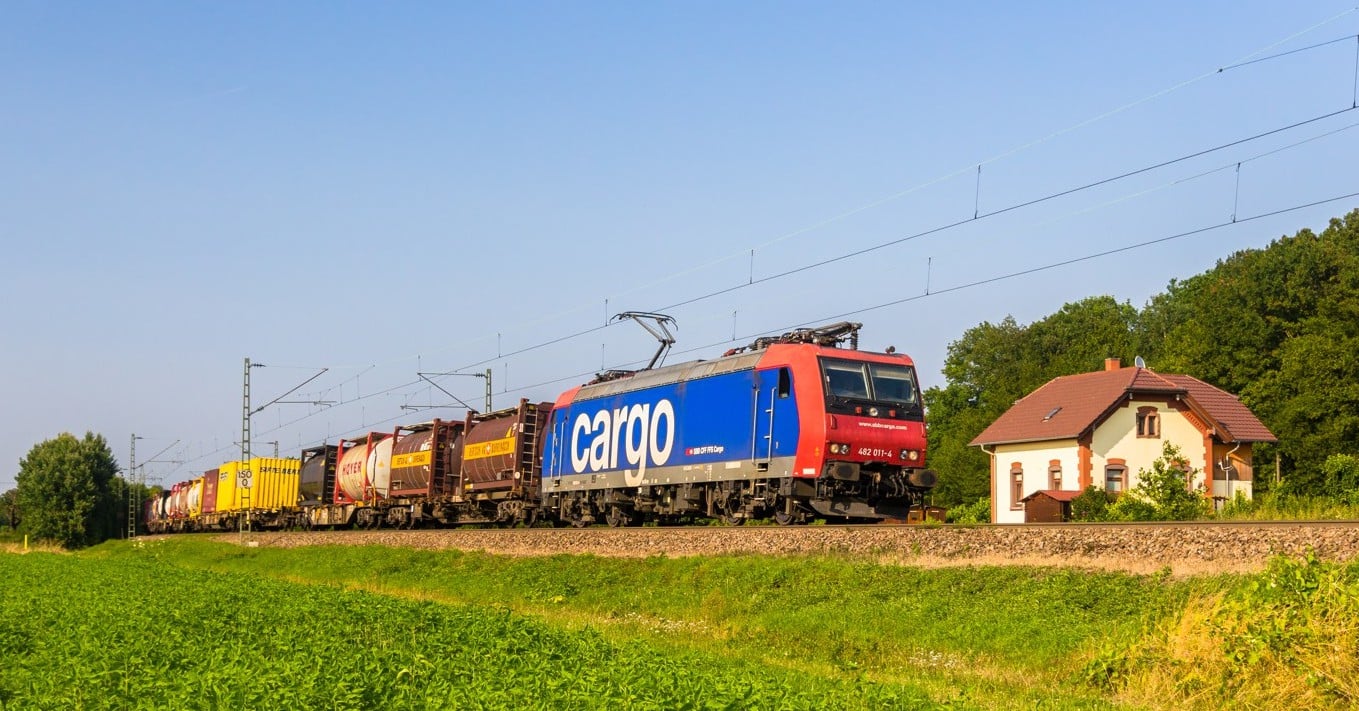 Combined transport is not a “Hauruck project”
Bochynek points out that switching transport to Combined Transport is not an ad hoc decision: “The switch to Combined Transport is primarily a strategic decision that requires comprehensive clarifications and, accordingly, a long preparation time.”
However, it is associated with investments in the appropriate equipment, such as swap bodies and containers or craneable semi-trailers. Smaller freight forwarders with predominantly local presence must clarify whether their previous partners still meet the requirements. The distance to the nearest terminal and much more must also be considered in the decision.
Intermodal transport is neglected during training
Bochynek mentions that in most companies, including logistics service providers, in-depth knowledge about intermodal transport is lacking. “In training and in courses, the chapter on intermodal transport is clearly neglected,” states Bochynek.
The lack of knowledge about this mode of transport is one of the barriers why many logistics service providers still hesitate to approach this topic.
 Pressure is increasing from all sides
Sustainability in general, but especially in transport and along supply chains, has been steadily increasing for the past two to three years. All parties involved are forced to respond. The call for more rail freight transport is becoming increasingly audible.
But there is also a need for action from another side. The shortage of skilled workers, especially among driving personnel, can be mitigated by entering Combined Transport. Attracting driving personnel can be easier if they finish work in the evening where they live. The issue of driving and rest times can also be a motivation.
Achieving 15 – 20 percent more through digitalization
Since the expansion of rail corridors and other railway infrastructure takes between 20 and 30 years from planning to completion, it is now about making better use of the existing infrastructure.
“Better utilization of existing corridors and terminals can only happen through digitalization. Various platforms offer opportunities to connect all partners in intermodal transport,” says Bochynek.
Through platforms, for example, remaining capacities on existing lines can be marketed. All market partners can also access existing data, which facilitates processing. Transparency is also increased; participants can track their containers or shipments and plan better.
Bochynek further states: “With optimal utilization of digitalization opportunities, an increase in Combined Transport of 15 to 20 percent in Germany and across Europe is possible.” This must happen in parallel with the urgently needed infrastructure expansion.
The increase in utilization is also important when considering the development of freight transport in Europe. In Germany alone, there were 47 billion ton-kilometers in rail Combined Transport in 2020, and a volume of 66 billion ton-kilometers is expected for 2030, without considering the targets for further shifting from road to rail and inland shipping. The share of Combined Transport in rail freight transport in Germany is already 40 percent today, with a rising trend. This alone makes it necessary to better utilize the existing infrastructure for Combined Transport.
Combined Transport remains advantageous even with road electrification
The efforts of commercial vehicle manufacturers and customers in producing vehicles with alternative drives (fully electric, hydrogen, CNG/LNG, etc.) are progressing rapidly. But even if the road becomes 100 percent CO2-neutral, Combined Transport remains the cleaner option.
“Intermodal transport has the advantage of bundling capability and higher energy efficiency, and that will remain. Additionally, the pre- and post-haulage will also be CO2-neutral, further improving the emissions balance,” Bochynek sees the sustainability advantages remaining long-term with rail.
Terminal Day on November 10, 2022, in Berlin
For more information and to register, please click on the image below:
 The SGKV participates in many projects, provides assistance in entering intermodality, offers all necessary information and tips on Combined Transport on its own website, and also organizes relevant events.
On November 10, 2022, the 7th Terminal Day will take place in Berlin. A rich program with experts from Combined Transport as speakers awaits the participants. Another opportunity to deepen the topic.
Dipl.-Geogr. Clemens Bochynek, is the managing board member of the SGKV. After his work as a research associate at DLR – German Aerospace Center at the Institute for Transport Research in the field of economic transport, he has been with the SGKV since 2010 and has been a managing board member since 2016.
As part of the National Climate Protection Initiative of the BMUB, he was involved in the projects “ERFA –KV” and “SYSLOG+” and promoted the integration of knowledge about Combined Transport into vocational training and the exchange of experiences between companies for future traffic shifts.
Bochynek continues to advise the BMDV on specialist issues of Combined Transport and is also involved in the assessment of applications for the new and expansion of transshipment facilities for Combined Transport in Germany (EBA, GDWS) and Switzerland (BAV).
For the B.I.C. in Paris (https://www.bic-code.org/) he takes on the role of National Registry Organization (NRO) for the German-speaking area (D, CH, AT) and is a member of the Board of Directors of the B.I.C.
He is also a member of the Round Table on Rail Freight Transport of the industry and the BMDV and the working group for the implementation of the Master Plan for Rail Freight Transport as well as MoU Peer of the European Association of Combined Transport Rail-Road (UIRR, https://www.uirr.com/) for strategic European issues regarding the development of Combined Transport.
Photos and graphics: © SGKV