



Rhenus with Climate-Neutral Full Container Load Transport (FCL)
Oct 19, 2022 at 4:52 PM
Liebherr Installs Two Mobile Harbor Cranes at the Port of Dover
Oct 20, 2022 at 12:41 PM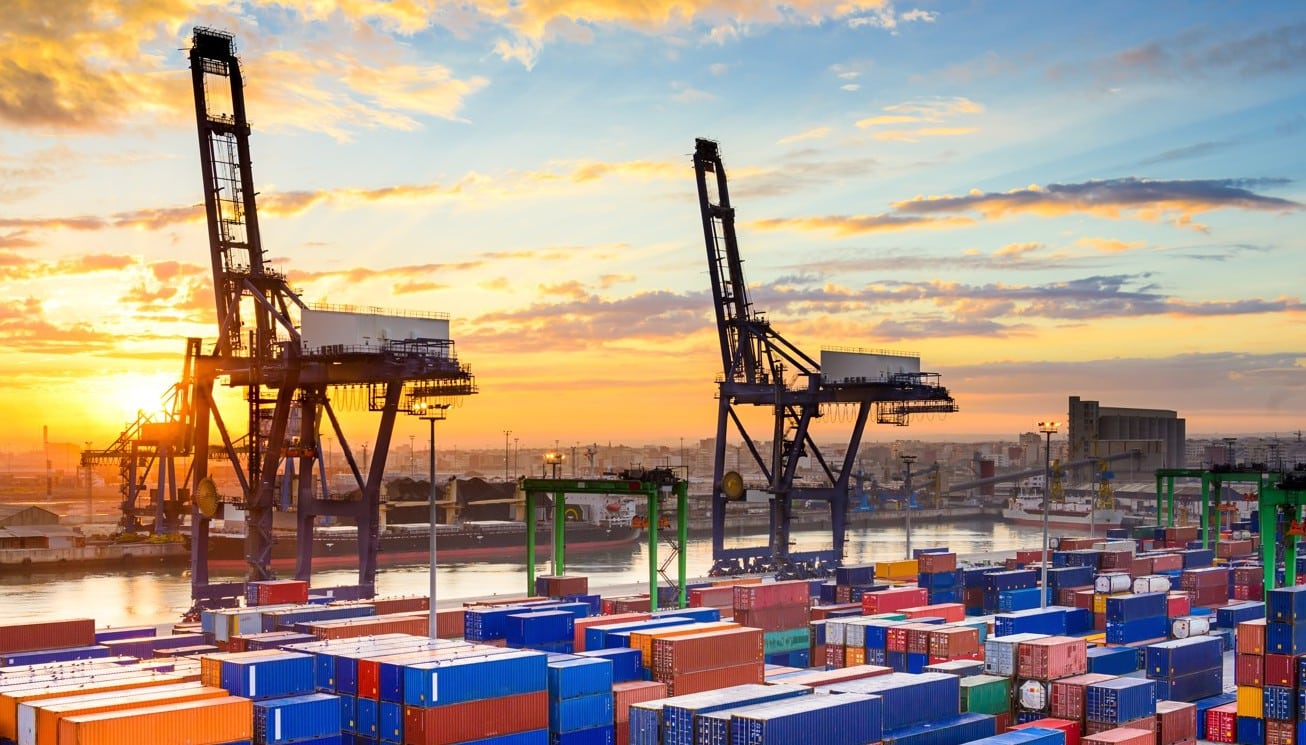
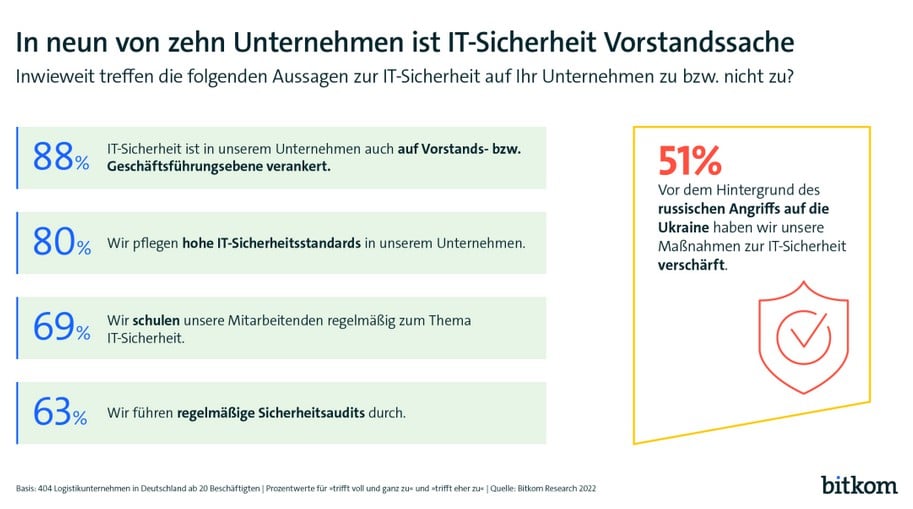
In light of the Russian war of aggression against Ukraine, additional measures are being taken in logistics to protect against cybercriminals: Every second logistics company in Germany (51 percent) has tightened its IT security measures for this reason. The management of IT security is positioned at a high level in most companies: In almost nine out of ten companies (88 percent), the IT security department is anchored at the board or executive management level.
(Berlin) Eight out of ten (80 percent) logistics companies report maintaining high IT security standards, and seven out of ten (69 percent) regularly train their employees on this topic. 63 percent conduct regular security audits. This is shown by a representative survey of more than 400 logistics companies in Germany commissioned by the digital association Bitkom. “Logistics companies are increasingly becoming targets of cyberattacks. Companies are ramping up their security measures – and that is the right thing to do,” explains Bitkom CEO Dr. Bernhard Rohleder. “The biggest weakness is the human factor. Employees must be regularly made aware of security risks, and they need tools to protect themselves and their companies.” Overall, IT and data security pose problems for seven out of ten logistics professionals (70 percent) in the context of digitalization.
 Shortage of Skilled Workers Slows Down Digitalization
However, the shortage of skilled workers is hindering these efforts for greater cybersecurity as well as the overall digitalization of logistics. Nine out of ten logistics companies in Germany (89 percent) see the shortage of skilled workers or lack of know-how as the biggest obstacle to the use of digital applications in logistics. In three out of five companies (62 percent), IT specialists are currently lacking, and 87 percent complain about a lack of digital competence among the workforce. “Digitalization is crucial for an industry that supplies us all with essential goods in everyday life,” says Rohleder. “To enable digital technologies to be deployed more quickly and comprehensively, systematic strengthening and targeted investments in digital know-how are needed.” 64 percent of logistics companies are already actively promoting the digital skills of their employees. A corporate culture that is open and positive towards digitalization is actively promoted in eight out of ten companies (79 percent). Seven out of ten companies (71 percent) estimate that they will need even more IT specialists by 2030 than they do today. One fifth (20 percent) believes that the demand will not change. Only seven percent think they will need fewer IT specialists in the future. In addition to IT specialists, the logistics sector is particularly lacking drivers or delivery personnel (85 percent). However, dispatchers (59 percent) and warehouse specialists (55 percent) are also in demand. Sales (36 percent) and administrative professionals (32 percent) are less in demand but are still sought after in about one in three companies.
Challenges in Handling Data
In addition to the shortage of skilled workers, difficulties in handling data are hindering the progress of digitalization in logistics. Concerns about losing control over their own data (52 percent) are seen as a major obstacle to digitalization in logistics. Furthermore, 56 percent complain about regulations regarding data protection, and 46 percent see insufficient data availability as a hindrance.

Nine out of Ten Logistics Companies See Digitalization as an Opportunity
In logistics, digital technologies can create a multitude of advantages. Four out of five companies (81 percent) see improvements in end-customer service due to digitalization, and nearly two-thirds (64 percent) see better communication with business partners or customers. Digitalization also creates greater transparency in the supply chain (61 percent), reduces environmental impact (55 percent), and improves supply in rural areas (37 percent). Another advantage is efficiency gains: Digitalization speeds up processes and saves time (84 percent) and costs (60 percent), reduces error and failure rates (44 percent), and leads to a lower need for the already scarce workforce (30 percent).
Since the beginning of the COVID-19 pandemic, digitalization in logistics has gained greater importance: In two-thirds of companies (67 percent), it has become more significant. On the one hand, digital technologies have helped to manage the pandemic (55 percent), and on the other hand, COVID has accelerated overdue digitalization projects (55 percent). In only one in eight companies (12 percent) were digitalization projects put on hold. Additionally, 55 percent state that digital technologies make their supply chains more resilient to crises. Nearly half of the companies (49 percent) have gained new customers as a result of digitalization. Almost as many believe that their revenue will grow significantly in the long term (46 percent). Overall, nine out of ten logistics companies (88 percent) see digitalization as an opportunity for their business. Only seven percent see a risk in digital transformation, and three percent believe that digitalization has no impact on their company.
64 Percent of Companies Are More Sustainable Thanks to Digital Technologies
Digitalization is an important lever for more sustainability and climate protection in logistics. Almost two-thirds of companies (64 percent) say that digital technologies help them make logistics more sustainable. More than half (52 percent) use digital technologies to reduce empty trips, and another 30 percent plan to do so or are discussing it. Similarly, a comparable number optimize their route planning digitally (48 percent) or are working on it (32 percent). Furthermore, a quarter of companies use sustainable transport options (25 percent) or utilize emission-free fuels or emission-free vehicle drives (24 percent). Many logistics professionals also pay attention to climate protection and sustainability in energy consumption. Four out of ten companies (42 percent) already use digital building technologies for energy savings, and another 36 percent are addressing the topic. One third (34 percent) report using predominantly green electricity – 39 percent plan to do so or are discussing it. One in four companies (26 percent) digitally measures its CO2 emissions, and one in five (20 percent) compensates for its own CO2 emissions.
In more than half of the companies (57 percent), sustainability and climate protection are anchored in the corporate strategy. In 51 percent of companies, there are specific responsibilities for these topics. In the future, their importance could continue to grow. Three out of five companies (62 percent) plan to focus more on sustainability and climate protection in the coming twelve months. “The logistics industry has recognized that sustainability and climate protection are some of the most pressing issues of our time and is acting correctly and consistently,” comments Rohleder. “The concrete implementation of climate protection measures is also directly linked to digitalization for this industry. These two areas of action must be considered and addressed together.”
The Future of Logistics: Drones and Autonomous Vehicles
The future of logistics, from the companies’ perspective, is also shaped by autonomous vehicles and drones. Every third logistics company (33 percent) can imagine that by 2030, goods will be transported to the end customer by drones. Deliveries between companies using autonomous transport means on roads, rail, water, or in the air are also seen as a likely future scenario by two out of five companies (39 percent). Furthermore, more than half of the companies (57 percent) believe that combined transport will be widespread by 2030 – meaning goods will be transported within a transport chain using various modes of transport. Two out of five companies (39 percent) expect that in the future, many goods will be transported together with people in one vehicle, such as in long-distance buses or taxis. Rohleder: “Logistics must and wants to become more sustainable, while at the same time it is suffering massively from a shortage of skilled workers. With digital technologies, companies in logistics are countering this and simultaneously gaining competitiveness.”
Photo: © Loginfo24/Adobe Stock
Graphics: © bitkom