


Logistics is Ahead of the Overall Economy in Digitalization
Oct 5, 2022 at 3:11 PM
Panattoni Takes the Lead in the bulwiengesa Ranking
Oct 5, 2022 at 6:25 PM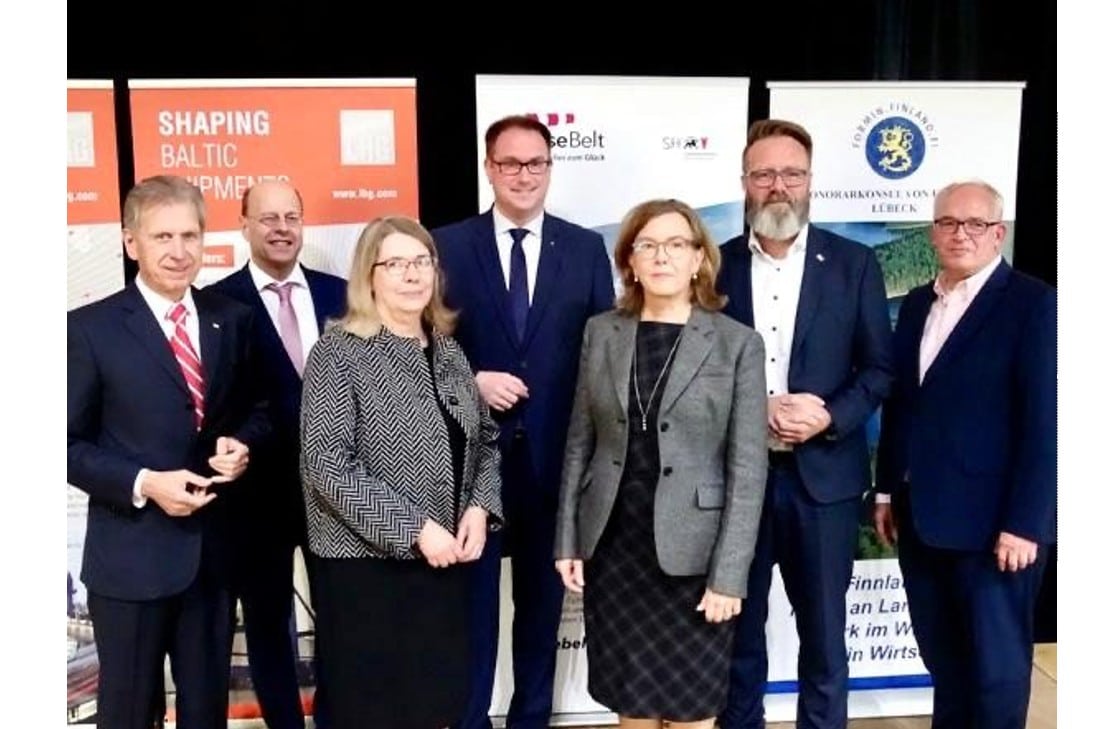
The war in Ukraine and its impact on members of the European Union are bringing the Baltic Sea back into focus. Due to the well-developed infrastructure in the Baltic Sea ports and the close partnership of the ports in the western neighboring countries, the exchange of goods is functioning smoothly. The ports in Finland and Lübeck are already looking to the future and are working on intensifying their cooperation.
(Lübeck) This was made clear at the seventh German-Finnish Port Day in Lübeck, which was jointly organized by Bernd Jorkisch, Honorary Consul of the Republic of Finland in Lübeck, Sebastian Jürgens, Managing Director of the Lübeck Port Company (LHG), and Jan Lindenau, Mayor of the Hanseatic City of Lübeck.
More than 300 representatives from the port industry from several countries participated in the conference on Tuesday at the Music and Congress Hall in Lübeck. The Ambassador of the Republic of Finland in Germany, Anne Sipiläinen, also attended the event in the Hanseatic city. “Innovation dynamics, digitalization, and sustainability play an increasingly relevant role alongside security and peace – in all areas, the Baltic Sea region has gained importance for Europe,” said Bernd Jorkisch. “Especially the Republic of Finland, with its special geopolitical position in Europe, demonstrates solidarity, initiative, and foresight through its current actions.” The Lübeck port remains the hub for the exchange of goods between Finland and Central Europe.
Kiel State Government Aware of Lübeck’s Importance
The state government in Kiel is very aware of the role of the Lübeck port as a central hub within European transport networks, emphasized Schleswig-Holstein’s new Minister of Economic Affairs and Transport, Claus Ruhe Madsen: “The long-standing partnership with Finland is based on trust and reliability on both sides. Lübeck’s port is well positioned despite the crisis and continues to modernize its infrastructure efficiently and environmentally friendly,” said Madsen, who participated in the German-Finnish Port Day in Lübeck for the first time. Shipping companies in Finland and Germany will also contribute to offering Baltic Sea traffic efficiently and environmentally friendly.
Adaptation of New Ship Construction to Port Infrastructure
However, Madsen also reminded that shipping companies must accept the existing port infrastructure when building new ships in the future. “Ports cannot endlessly adapt to the ever-growing ships, especially since new environmental requirements pose enormous challenges,” said the minister. “It is good that Lübeck is part of the trans-European core network of the TEN-T. It would make sense for the corresponding ports in Finland to remain on board as well,” said Madsen.
This is where LHG CEO Sebastian Jürgens emphasized: “Lübeck is the bridgehead and core network port for this corridor within the European TEN-T transport system, which connects the Mediterranean with Scandinavia. Finland, with its ports, is a strong partner in this important transport axis. Therefore, we demand that the two partner ports Pietasaari and Käskinen continue to be maintained as corridor ports and not be excluded from this well-established system in favor of some Mediterranean ports.”
Lübeck Port Development Plan 2030
Lübeck’s Mayor Jan Lindenau emphasized at the Port Day: “The Hanseatic city is addressing future challenges with its Port Development Plan 2030, ensuring the continuity of transport networks by rail, waterway, and road as the largest ferry and RoRo port in the Baltic Sea. In 2023 alone, we are investing more than 16 million euros in port infrastructure. We can learn from our collaboration with our Finnish partners in digitalization and create intelligent logistics chains together.”
Photo: © LHG / Image Caption: IHK zu Lübeck; from left: Bernd Jorkisch, Sebastian Jürgens, Anne Sipiläinen, Jan Lindenau, Annaleena Mäkilä (CEO Finnish Ports), Claus Ruhe Madsen, Michael Berlemann (Scientific Director Hamburg Institute of International Economics)