


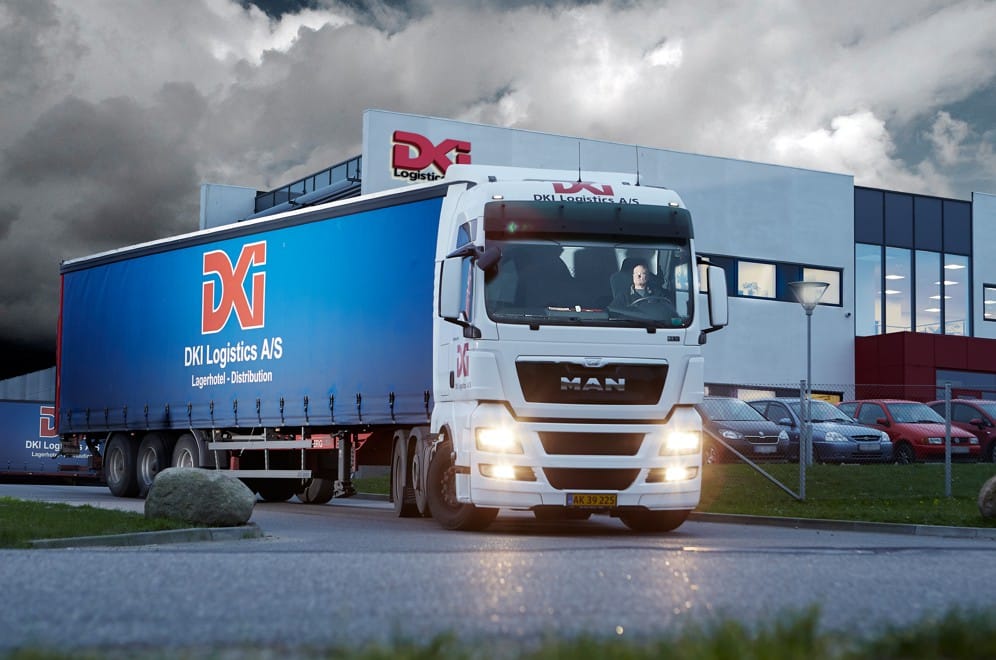
Rhenus Acquires Danish Third-Party Logistics Provider DKI
Aug 21, 2022 at 11:45 AM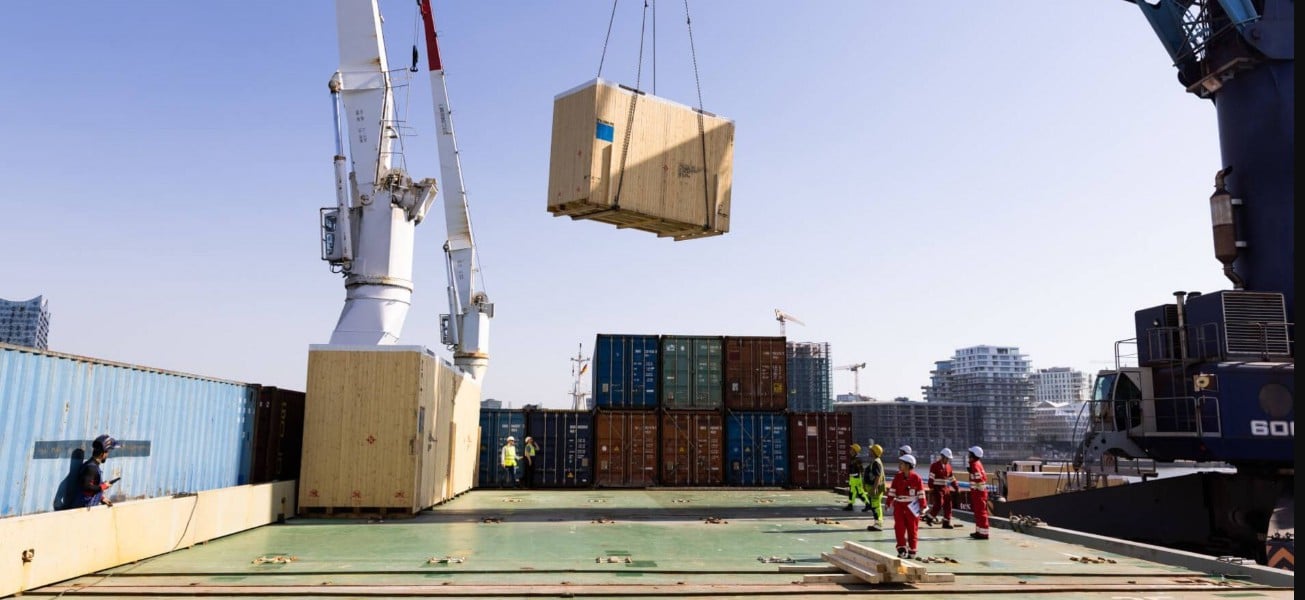
Supply Crisis: TRUMPF Charters Deep-Sea Container Ship
Aug 21, 2022 at 11:55 AM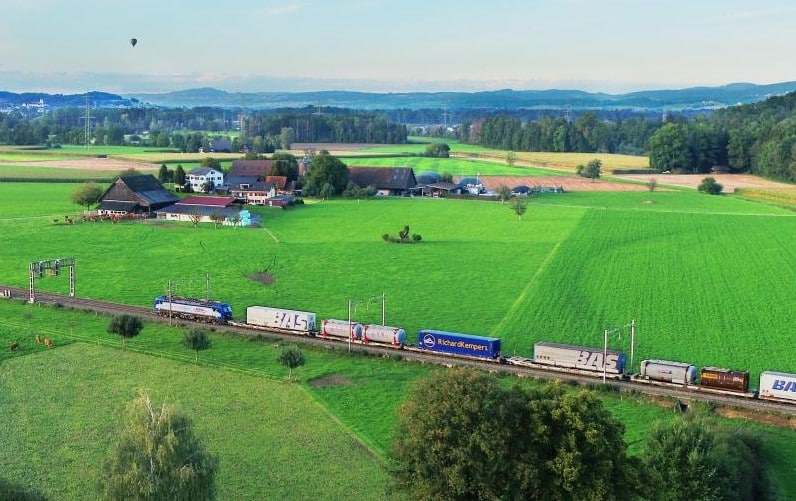
The completion of the Rhine Valley Railway between Karlsruhe and Basel is not expected until the period of 2040-2045. Until then, functional alternative solutions must be realized. The contractually agreed expansion of the Rhine Valley Railway as part of the NEAT concept is progressing slowly. With the upgrade to four-track operation, a train length of 740 meters, and a train weight of 2000 tons, the capacity and performance of the route are to be significantly increased. The Swiss railway industry explicitly welcomes the infrastructure expansions and expects a swift implementation, as they are crucial for achieving the shift and climate goals.
(Karlsruhe/Basel) The current capacity bottlenecks, on the other hand, are becoming increasingly severe and represent a worrying constant. Construction sites, technical disruptions, and insufficient diversion routes burden operations to such an extent that regular freight transport is hardly possible anymore, as was recently highlighted during the event “Five Years After the Rastatt Incident: Learned Nothing?” (NEE, Link). This has serious consequences for supply and traffic shift. Even today, shippers are showing a tendency to revert to road transport, especially for time-sensitive goods.
The Swiss railway industry therefore demands targeted measures to secure capacity and stabilize operations. The focus is particularly on the left bank railway line via France. Thanks to its flatland routing and favorable conditions regarding the track profile, it represents an ideal complement and alternative to the right bank Rhine Valley Railway via Germany. It was already evident during the Rastatt closure in 2017 that the Alsace route could be utilized due to the rapid codification of the northern branch Lauterbourg-Strasbourg and the technical examination of the southern branch Strasbourg-Basel for the clearance profile P400. The upgrading of the Gäubahn between Stuttgart and Singen also provides relief.
Measure No. 1 – Rapid Upgrading of the Wörth-Lauterbourg-Strasbourg Route
The expansion of the left bank north-south axis is currently one of the most important prerequisites for the stable use of the NEAT and for the further shift of transalpine freight traffic in anticipation of the full expansion of the right bank route.
The Swiss Parliament has paved the way for Switzerland’s active participation in the expansion of the north-south corridor on the French side with Motion 20.3003 for the conclusion of a state treaty for the expansion of the left bank route and with Motion 22.3000 for the financing of the electrification of the Wörth-Strasbourg section. A parallel route is to be created that puts an end to the construction chaos and ensures both transit and the import and export traffic important for the Swiss economy.
The Swiss authorities should now advance negotiations with neighboring countries to achieve the earliest possible electrification and upgrading of the Wörth-Strasbourg route as an alternative route. With relatively modest means, an additional capacity of 60 freight train paths per day can be realized within a few years.
Measure No. 2 – Facilitate Access to Diversion Routes via France
Further extensive construction work is planned on the Rhine Valley Railway, for example, in the summer of 2024 with a four-week total closure. The left bank diversion route via France is passable, but only with disproportionately high operational effort and only for a limited number of trains per day. To avert another capacity crisis, access to the diversion routes must be facilitated. Temporary solutions should be found so that German-speaking train drivers can operate via France, for example, by establishing German-French communication with language apps or by employing bilingual personnel in the control centers. The procedures for obtaining the necessary route knowledge should also be temporarily simplified.
Moreover, an internationally coordinated path management on the left bank route is of central importance. The involved infrastructure operators in Germany, France, and Switzerland should create a common continuous path catalog to guide as many freight trains as possible smoothly and stably through this bottleneck. Simply lifting the night travel restrictions can noticeably increase capacity.
Measure No. 3 – Corridor Renovation in Germany: Secure Diversions First, Then Build
Rail freight transport must be able to roll continuously on the major international axes. Therefore, infrastructure operators must ensure that there is construction-free access, disturbance-free facilities, and the necessary equipment (overhead line, train length, parking areas, etc.) for the full number of trains on the routes designated for diversion before closures. It is in Switzerland’s interest that the announced comprehensive renovation of heavily loaded rail corridors in Germany includes the development of efficient diversion concepts from the outset. First, diversion routes must be operationally and infrastructurally upgraded, and only then can comprehensive track renovations begin.
Measure No. 4 – Bring Corridor Infrastructure Operators of the Rhine-Alps to the Table
We can only master the challenges in freight transport on the Rhine-Alps corridor through international cooperation. The coming years of intensive construction activity are crucial to ensure that the previous successes of traffic shift are not jeopardized. We propose the establishment of an international working group of the corridor’s infrastructure operators, involving the transport ministries. The goal is to actively coordinate the requirements of infrastructure expansion on one hand and a marketable transport offer on the other. Switzerland, as a central transit country in the Rhine-Alps corridor, is predestined to play a driving role in implementing the aforementioned measures. Together, we will ensure that the NEAT meets expectations and that the shift from road to rail can continue steadily.
Photo: © Hupac