



Transporeon Acquires Berlin-based Sustainability Start-Up ‘Tracks’
Aug 18, 2022 at 4:15 PM
LIP Invest Market Report “Logistics Real Estate Germany” Q2 2022
Aug 18, 2022 at 4:25 PM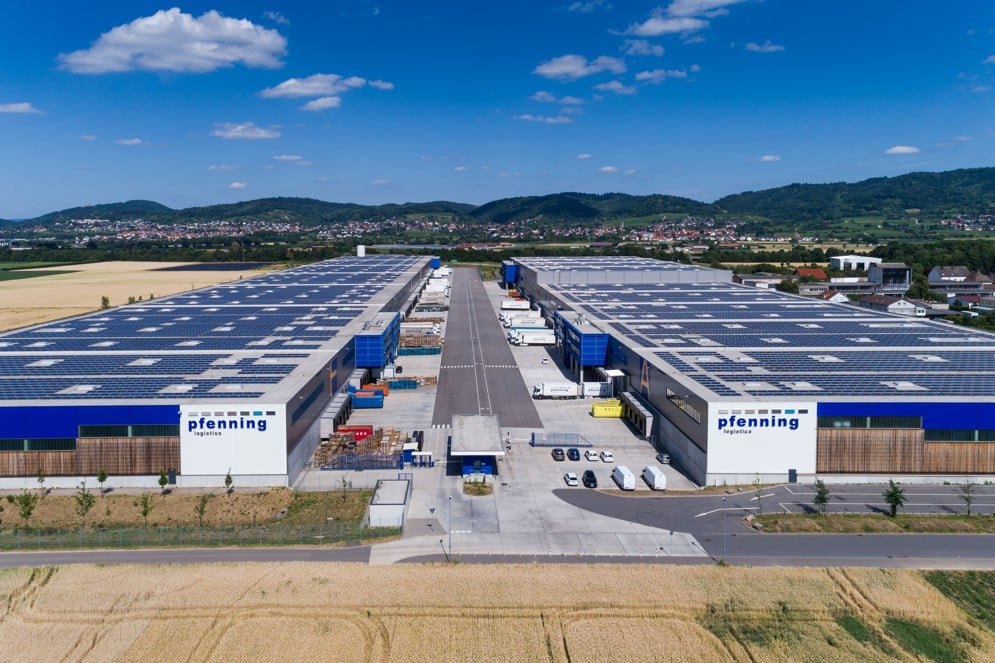
In addition to the climate balance, energy management and the search for energy alternatives play a central societal role today. The logistics sector can contribute to the urgently needed energy transition. The potential lies not only in the efficiency and climate optimization of supply chains, transports, and buildings – rather, the extensive logistics areas and properties themselves offer opportunities for energy generation, including through solar and wind power. Thus, logistics can contribute to supply, benefiting both users and municipalities.
(Frankfurt/Munich) Every year, several million square meters of logistics real estate building space are created in Germany. The extensive roof and facade areas provide ample space for thousands of solar panels per property. Equipped with photovoltaics, these can produce a significant amount of energy that far exceeds the property’s own needs, allowing the surplus to flow into the public grid. In the new construction sector alone, the potential for contributing to the energy transition is considerable, but upgrading the existing building stock is also possible.
“A rule of thumb for calculating the maximum system performance of photovoltaics assumes one kilowatt peak per ten square meters of area,” explains Alexander Nehm, Professor of Logistics at DHBW Mannheim. “I estimate that about 100 million square meters of new logistics space have been created in the last twenty years. If we were to equip just these properties with photovoltaics, the achievable output would be around 10 terawatt hours per year. That is nearly two percent of the net electricity consumption in Germany.”
In addition to photovoltaics, large commercial parks are also suitable locations for wind turbines, especially since they occupy very little ground space. Other technologies such as combined heat and power plants, water heat pumps, and geothermal energy further support the energy transition. Frauke Heistermann, spokesperson for the initiative “Die Wirtschaftsmacher,” describes the opportunity that logistics locations can offer municipalities: “The topic of energy supply now plays a central role for municipalities in the upcoming realignment. Instead of using large areas of green space for photovoltaics, existing logistics properties offer ideal conditions. In new constructions, it is already predominantly part of the standard. Logistics locations will therefore not only contribute to goods supply but also to the supply of green energy.”
Logistics Engagement: Establishing Dialogue, Showing Perspectives
The trend among developers and users clearly points towards sustainability. This is also demonstrated by the Logix Award, which the Initiative Logistics Real Estate (Logix) awards every two years for outstanding logistics real estate projects. The four finalists of 2021 all stood out for their special measures regarding sustainability, CO2 neutrality, and social aspects in building design.
How far the move towards a “green” building goes depends on the selection of the respective sustainability components – from the photovoltaic system on the roof to e-charging stations for cars, cisterns for rainwater utilization, as well as roof and facade greening, to wildflower meadows in the outdoor area.
Detailed information on sustainability efforts in the logistics sector can be found in the thematic issue “Climate Protection and Ecological Sustainability in Logistics” at: https://die-wirtschaftsmacher.de/themenhefte
Photo: © pfenning logistics/Die Wirtschaftsmacher / Image caption: Logistics properties as an energy source