



Fines Are the Wrong Approach to the EU Supply Chain Act
Mar 21, 2022 at 4:54 PM
UPS Completes First Expansion of the Hub in Langenhagen
Mar 21, 2022 at 5:05 PM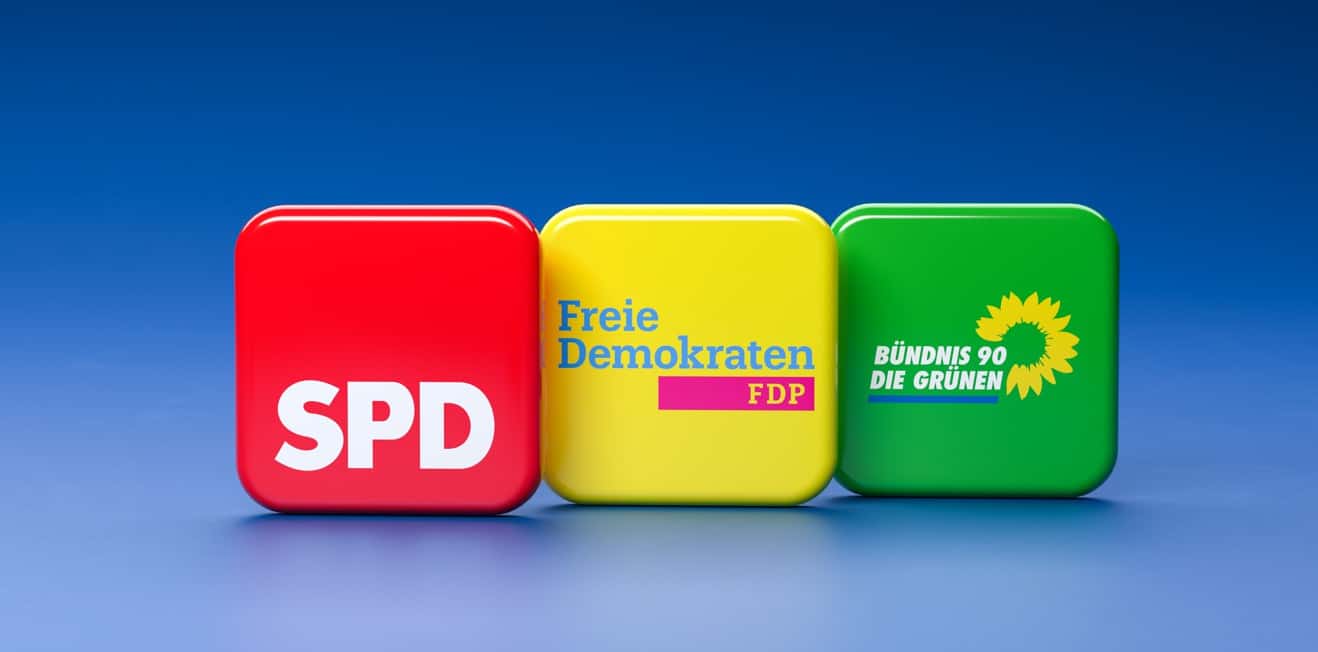
The Network of European Railways NEE criticizes the Traffic Light government in Germany. The tightening of climate protection goals decided under the previous government in June 2021 is now being softened by the current Traffic Light government (Red-Green-Yellow), or rather, the status quo is being accepted. NEE calls on the government to finally act in favor of rail.
(Berlin) The climate protection law of the grand coalition from June 2021 tightened the climate protection goals. Maximum values for greenhouse gas emissions were established, compliance with which is the responsibility of the respective government departments. The Federal Constitutional Court triggered the tightening and may examine whether it is sufficient. The transport sector has already missed its target in 2021. The main culprit is the increase in road freight transport.
The green-led Federal Ministry of Economics now states that it accepts the exceedance and apparently the immediate program prescribed in § 8 does not need to be implemented. First, there must be “structural changes.”
“We would like to know from Ministers Habeck and Wissing why the shift of freight transport to rail is not finally becoming a subject of government action? There is a shift target in the Traffic Light coalition agreement, but as has been the case for many years, realpolitik does nothing to realize it,” criticizes Peter Westenberger, Managing Director of the Network of European Railways.
Decisions Against Climate Protection
Currently, it is increasingly evident that the government is making decisions against rail and thus against climate protection:
- The rejection of the climate protection goals means a “continuation” for more road freight transport, while rail has been suffering declining market shares since 2019 due to strong economic competition from trucks.
- The draft budget presented yesterday differs little from that of the previous government. Changes had to be searched for with a magnifying glass by the freight railways. Above all, the necessary infrastructure investments would continue to be delayed if this plan were confirmed by the Bundestag.
- The debate about fuel subsidies impressively shows where the focus of transport policy lies: subsidies that would further strengthen the position of road freight transport are being pursued under the pretext of social compensation. The fact that the significantly increased rail electricity prices weaken freight railways in competition and also put some companies in existential difficulties has not yet been recognized by the two ministries or prompted them to consider competition-neutral aid for freight transport.
No Difference from the Previous Government
Westenberger: “For us, there is currently no difference from the previous government. No reactions, just management of the status quo. The frustration level is high after the coalition agreement seemingly held some good points for road freight transport.”
About 650,000 tons of CO2 savings per year could be achieved through every percentage point of traffic shift to rail in freight transport. “We can only hope that the government finally recognizes the seriousness of the situation – and then finally acts,” concludes Westenberger.
Photo: © NEE