


UPS Completes First Expansion of the Hub in Langenhagen
Mar 21, 2022 at 5:05 PM
Logivest brokers over 20,000 m2 of logistics space to BLG LOGISTICS
Mar 22, 2022 at 2:25 PM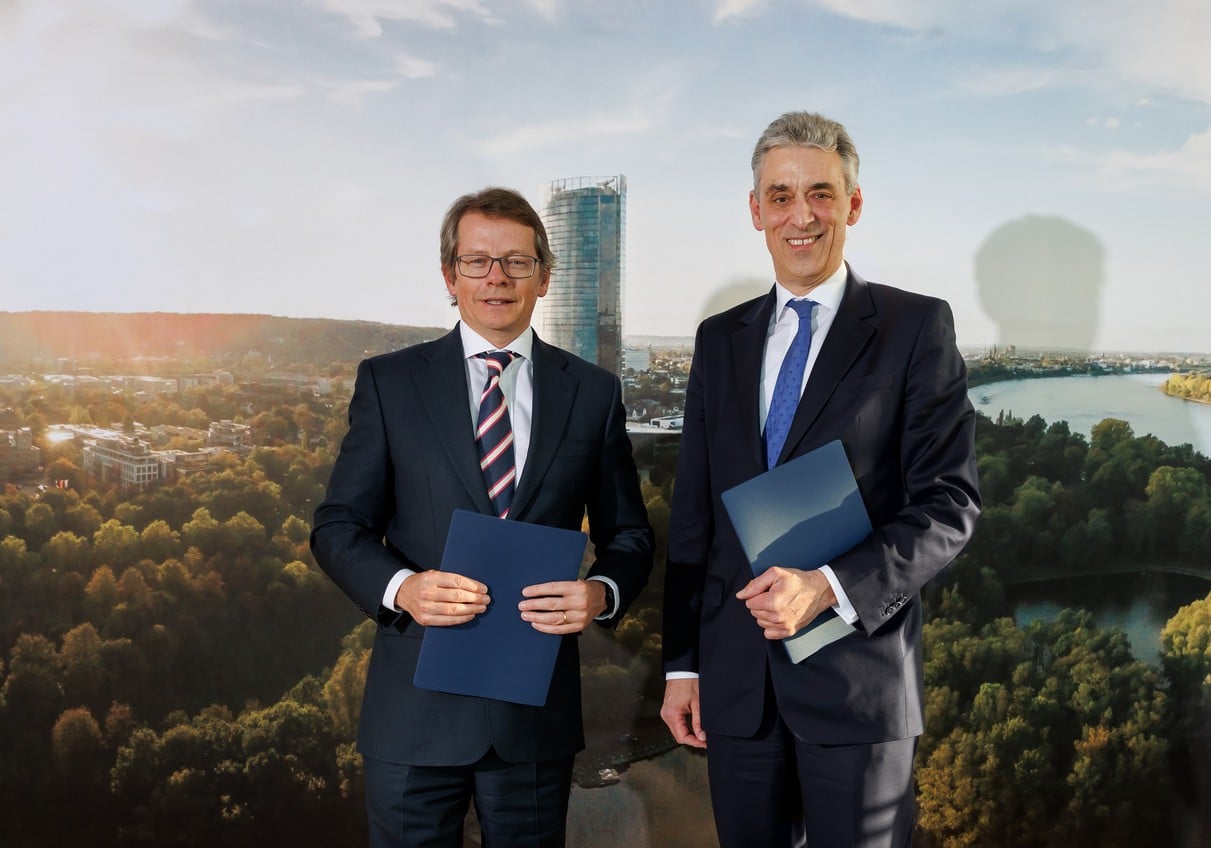
DHL Express has announced an important step towards increased decarbonization of air freight logistics and greater sustainability. In this context, DHL confirmed new strategic partnerships with bp and Neste. The two companies will supply DHL Express with more than 800 million liters of sustainable aviation fuel (SAF) over the next five years.
(Bonn) The agreement represents one of the largest SAF deals in the history of aviation. Combined with the previously announced introduction of the innovative new fuel in the DHL network at the airports of San Francisco (SFO), East Midlands (EMA), and Amsterdam (AMS), this will achieve 50 percent of DHL Express’s goal of covering ten percent of its fuel needs in air freight with sustainable fuels by 2026. The logistics provider expects that the strategic cooperation will save approximately two million tons of carbon dioxide emissions over the entire lifecycle of the aviation fuel – equivalent to the annual carbon dioxide emissions of around 400,000 cars1.
DHL Express transports more than 480 million urgent documents and shipments per year in its global network, which spans 220 countries and territories. Simply put, the approximately 1,000 DHL flights that operate annually between Cincinnati in the USA and the Leipzig hub with Boeing 777 aircraft could be fully powered by the agreed 800 million liters of bio-kerosene for twelve years2 – assuming a 100 percent use of sustainable aviation turbine fuel3. This corresponds to a total of 12,000 CO2-neutral long-haul flights.
Commitment to Sustainable Solutions
“As the world’s leading logistics provider, we are committed to offering our customers environmentally friendly and sustainable solutions. The groundbreaking SAF agreements with bp and Neste are a significant step for the aviation industry and further underscore the goals of our sustainability roadmap,” says Frank Appel, CEO of Deutsche Post DHL Group. “The use of sustainable aviation fuels is currently one of the most important levers in aviation to reduce CO2 emissions with the currently available aircraft types over their entire lifecycle.”
Proud of the Partnership
“We are proud of the significant partnership that further deepens our strategic relationship with Deutsche Post DHL Group. As bp transforms into an integrated energy company, we leverage our entire value chain, which includes raw materials, global production, logistics, and airport infrastructure. Not many companies have the trading and business expertise in SAF required to develop and deliver solutions for complex customer needs,” says Martin Thomsen, SVP, Air bp. “Our goal is to work even more closely with airports and airlines on decarbonization options, and we are actively promoting SAF to support global air travel in achieving its ambitions to reduce carbon emissions.”
In its sustainability roadmap, Deutsche Post DHL Group has committed to using over 30 percent SAF blends in its air freight business by 2030. Both producers supply sustainable aviation turbine fuels made from used cooking oil. By utilizing SAF derived from waste products and residues, greenhouse gas emissions can be reduced by up to 80 percent over the lifecycle compared to fossil kerosene, thereby decreasing DHL’s CO2 footprint. To ensure that the fuel is indeed sustainable, the use of raw materials that compete with food production or indirectly alter land use is avoided.
Frequently Asked Questions from Customers about Sustainable Solutions
“With each SAF deal, we are increasingly aware of the enormous tasks ahead of us to support our customers with sustainable solutions. Practically every day, customers ask us for CO2-neutral logistics solutions and support in jointly shaping a more sustainable future,” says John Pearson, CEO of DHL Express. “The new SAF agreements with bp and Neste are a milestone on this path. We are primarily focused on bringing more SAF suppliers on board to close the current supply gap. At the same time, we urge policymakers to create the right framework for the accelerated market introduction of SAF in the European Union as well as worldwide.”
“Our most comprehensive cooperation in the SAF sector sets the course and underscores the increasing necessity and urgency – as well as the required commitment – to address aviation-related emissions. We are excited to take this significant step together with DHL. It demonstrates the shared ambitions of both companies and represents progress on our journey to create a healthier planet for our children,” says Peter Vanacker, President and CEO of Neste. “Today’s announcement also shows how we can concretely help our customers reduce greenhouse gas emissions by at least 20 million tons of CO2 annually by 2030. Sustainable aviation fuels are a cornerstone in the aviation industry’s efforts to achieve net-zero emissions by 2050. Achieving this goal requires joint efforts across the entire aviation value chain, involving all stakeholders and utilizing all available raw materials and solutions.”
Expanding Partnerships
DHL Express is committed to further expanding its partnerships with suppliers of sustainable aviation fuels and continuously increasing the SAF share in air freight transport. DHL also commits to continuing to promote innovative technologies to significantly reduce greenhouse gas emissions in air freight, as outlined in the sustainability roadmap of Deutsche Post DHL Group.
1 Source: EPA, Calculation: 8.89 × 10⁻³ tons CO2/gallon gasoline × 11,556 VMT car/truck average × 1/22.5 miles per gallon car/truck average × 1 CO2, CH4, and N2O/0.993 CO2 = 4.60 tons CO2E/vehicle/year
2 Distance between Cincinnati and Leipzig: 7,145 km, approx. 1,000 DHL Express flights per year on the route, consumption of approx. 67,600 liters of fuel per flight | 800 million liters/67,600 liters = 11,834 flights/1,000 flights per year = 11.83 years
3 For illustration: According to current standards for aviation fuels, a SAF blend of up to 50 percent is currently permitted.
Photo: © DHL Express / Photo caption: Martin Thomsen (left) SVP Air bp and Frank Appel, CEO Deutsche Post DHL Group at the signing of the contract