


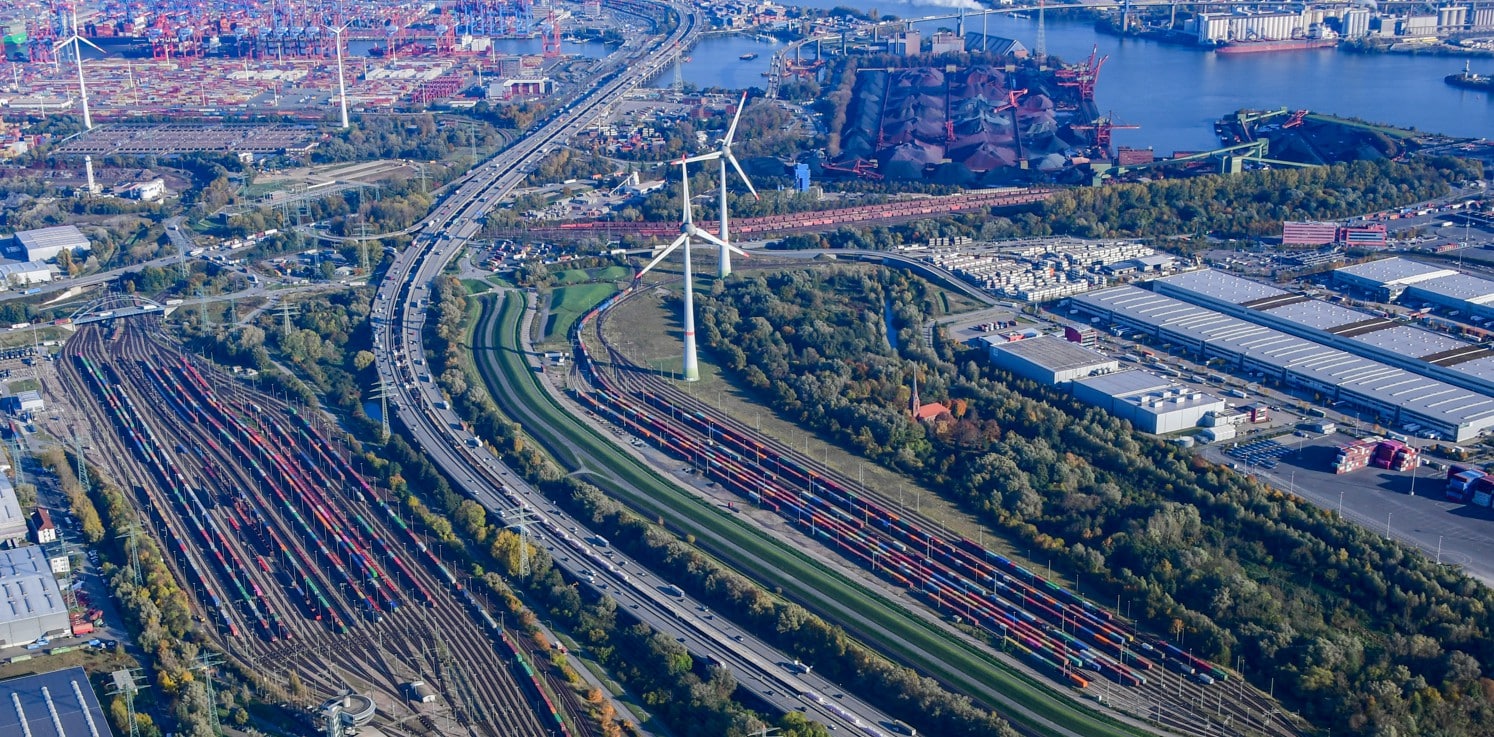
Seaport Cargo Handling in Hamburg Recovers in 2021
Feb 28, 2022 at 7:19 PM
Waves Brings Transparency to Sustainability in Transport
Feb 28, 2022 at 7:39 PM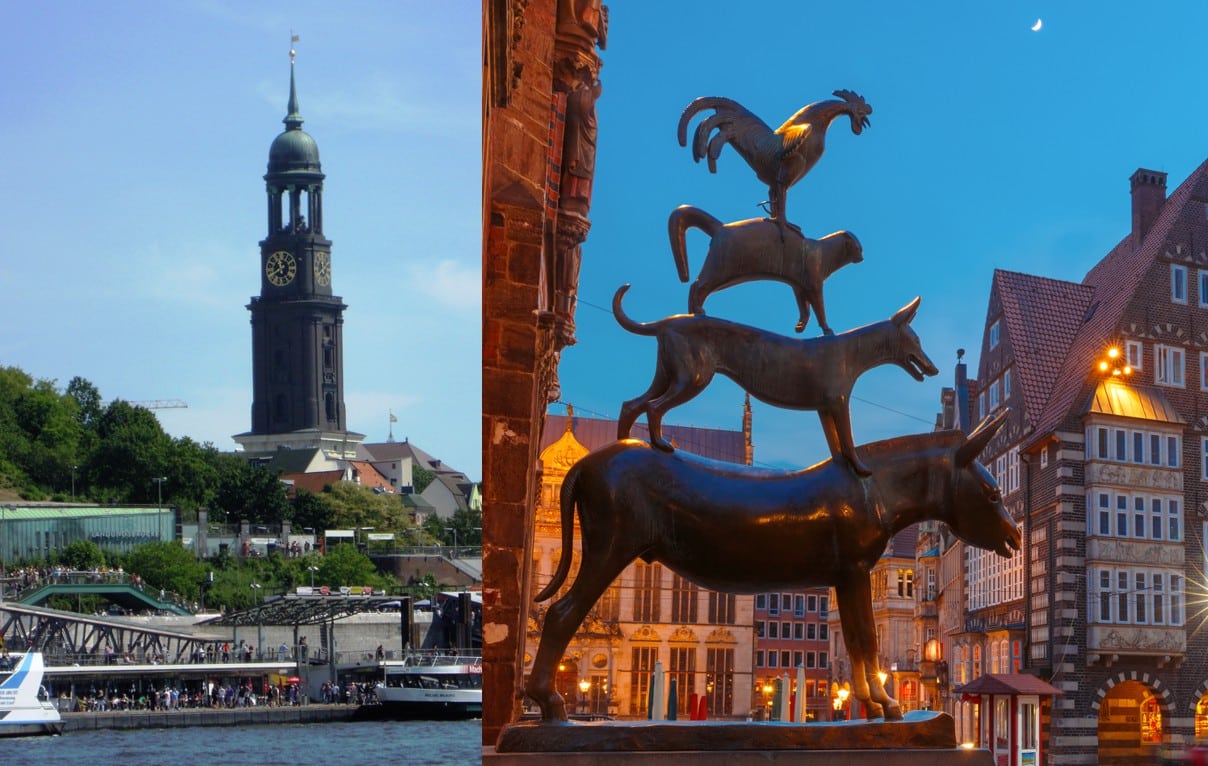
The challenging competitive environment of the northern German seaports requires, according to the Chambers of Commerce of Bremen and Hamburg, a stronger cooperation among the northern German seaport locations. A joint positioning on this was presented today by Eduard Dubbers-Albrecht, President of the Bremen Chamber of Commerce – IHK for Bremen and Bremerhaven, Prof. Norbert Aust, President of the Hamburg Chamber of Commerce, as well as the two managing directors Dr. Matthias Fonger (Bremen) and Dr. Malte Heyne (Hamburg).
(Bremen/Hamburg) “German seaports must be strengthened through the realization of synergies in the tough international competition so that they can better fulfill their central function for our foreign trade nation,” emphasized Prof. Aust, President of the Hamburg Chamber of Commerce: “Currently, the focus of the port policy debate is on a possible merger of the two major container terminal operators Eurogate and HHLA. However, this does not necessarily lead to an increase in productivity; rather, the efficiency-enhancing effects of competition must be utilized regardless.
Direct political intervention would mean an interference in market economic mechanisms. Regardless, the northern German seaport locations can expand their cooperation in other areas, for example, by stronger joint lobbying for northern German infrastructure projects, joint marketing of the northern German seaports, and strengthening the role of the ports in the CO2-neutral orientation of the economy.”
Only Together Can Market Shares Be Regained
The Chambers of Commerce of Bremen and Hamburg see a particular urgency in increasing efficiency and productivity, especially in handling, as well as improving overall price competitiveness to regain already lost market shares. Eduard Dubbers-Albrecht, President of the Bremen Chamber of Commerce, said: “Only through joint efforts can the northern German seaports regain market shares and secure employment in the increasingly fierce competition. This urgently requires measures for the extensive automation of processes in port handling. Reducing port call costs is an important lever for increasing the competitiveness of German seaports. Furthermore, we urgently need a comprehensive reform in the collection of import VAT towards a true offset model based on our European neighbors.”
Competitive Disadvantage of Planning Law
Both economic representatives see a crucial brake in the current planning law. “The construction of infrastructure projects must not become a generational task,” said President Dubbers-Albrecht: “Here it is decided who wins the competition. Projects like the A20, the A26, the further expansion of the rail infrastructure to strengthen the port hinterland connection, and the adjustment of the Weser riverbed are prerequisites for the port location of northern Germany.”
The two presidents emphasize: “Our seaports fulfill an important function for Germany’s foreign trade location. We therefore explicitly declare the support of our two Chambers of Commerce in the development of the ‘National Port Strategy’ anchored in the coalition agreement of the federal government.”
Download the Position Paper
Photo montage: © Loginfo24