


IAA Commercial Vehicles Debuts as IAA TRANSPORTATION
Feb 3, 2022 at 6:42 PM
Jungheinrich among the world’s most sustainable companies
Feb 6, 2022 at 1:56 PM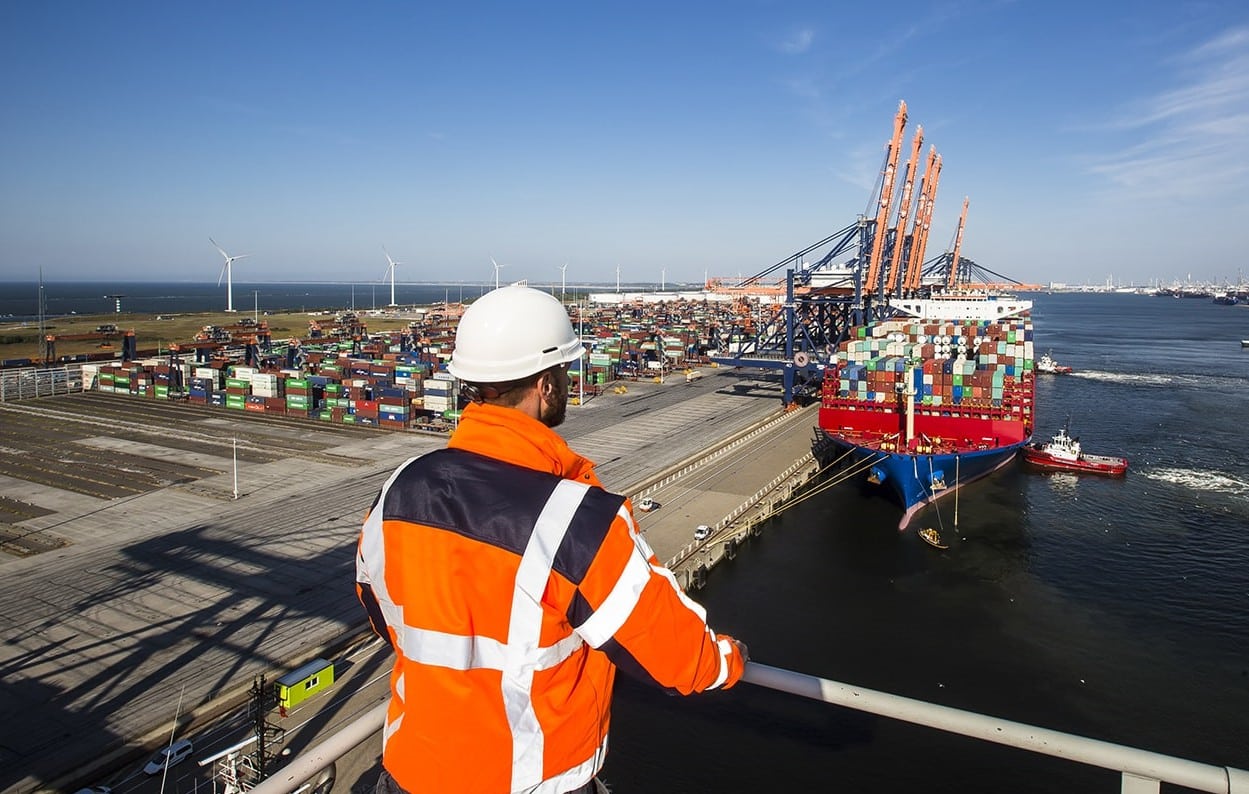
The Port of Rotterdam and BigMile are jointly developing a digital platform that captures, visualizes, and prepares for in-depth analysis the transport emissions associated with all activities in the port area. The emissions platform thus supports the port operation and the industry in implementing their strategy to create a CO2-neutral port.
(Rotterdam/Karlsruhe) With millions of transport movements per year, Rotterdam is the largest port in Europe. Accordingly, its significance for logistics activities in an extensive economic region is immense. The countless transport processes associated with port operations enable management to have a significant impact on the sustainable design of logistics. The port authority is working on a series of interconnected projects to advance this goal in industry and logistics: from illustrating strategies for optimal connections using sustainable transport modalities to producing alternative fuels in Rotterdam and promoting a fast and efficient handling of port activities.
In collaboration with BigMile, the Port of Rotterdam is taking an important step to implement this sustainability strategy into concrete solutions based on sound data. BigMile offers a calculation and analysis platform based on the SaaS principle, allowing shippers and logistics service providers to optimize and report multimodal transport-related CO2 emissions. The solution, which already has more than 200 users, enables companies to comply with the upcoming reporting obligations for CO2 emissions and future CO2 taxes.
The software system developed in collaboration with the Port of Rotterdam combines data from various sources, including AIS (a system for registering all ship movements), with calculation models from the Dutch Organization for Applied Scientific Research TNO. This platform provides insights into the emission events at an operational site, giving companies more information about the amounts of CO2 and other substances emitted across their entire transport chains.
Initially a Pilot Project
The solution is currently operational, for example, to illustrate how many emissions a ship emits while it is docked. This information can be used in the development of shore power projects: docked ships turn off their generators and connect to the onshore power supply. In this case, the BigMile platform can illustrate how much air pollution a shore power connection can prevent.
Initially, the joint solution is still a pilot project, within which the ship movements of maritime and inland shipping in Rotterdam can be calculated. In a subsequent phase, emissions from road and rail transport will be added. The goal is to include the emission quantities of the transport chains before and after the Rotterdam port operation in the next half year, so that the emission events of the entire transport route from door to door become visible. In the second half of 2022, the digital platform and the insights gained will be shared with shipping companies and terminals.
Initially Focusing on Area Emissions
“In the first project phase, we focus on the area emissions in the Rotterdam administrative area, from 60 kilometers outside the port to Brienenoordbrug. For maritime and inland shipping, we are literally ‘mapping’ the emissions based on the actual movements of ships and vehicles,” explains Wouter Nering Bögel, project manager at BigMile. The analyses allow for direct action on concrete improvement opportunities based on reliable data. This makes it clearer in advance what impact certain measures will have. This should enable companies to work towards CO2 reduction, both in the port and throughout the entire transport chain.
Rotterdam could be the first step towards a broad sustainable transformation of major seaports, as Tobias Häßler, CEO of BigMile Germany, explains: “What we are testing and implementing in Rotterdam should serve as a model for similar measures in other ports like Hamburg or Bremerhaven. It is a pioneering project that can be flexibly adapted to the conditions of numerous port infrastructures. This brings the achievement of decarbonization goals in maritime logistics closer to reality.”
Photo: © Port of Rotterdam/Eric Bakker