


BNP Paribas Reports Record Investment in Logistics Real Estate
Jan 22, 2022 at 5:58 PM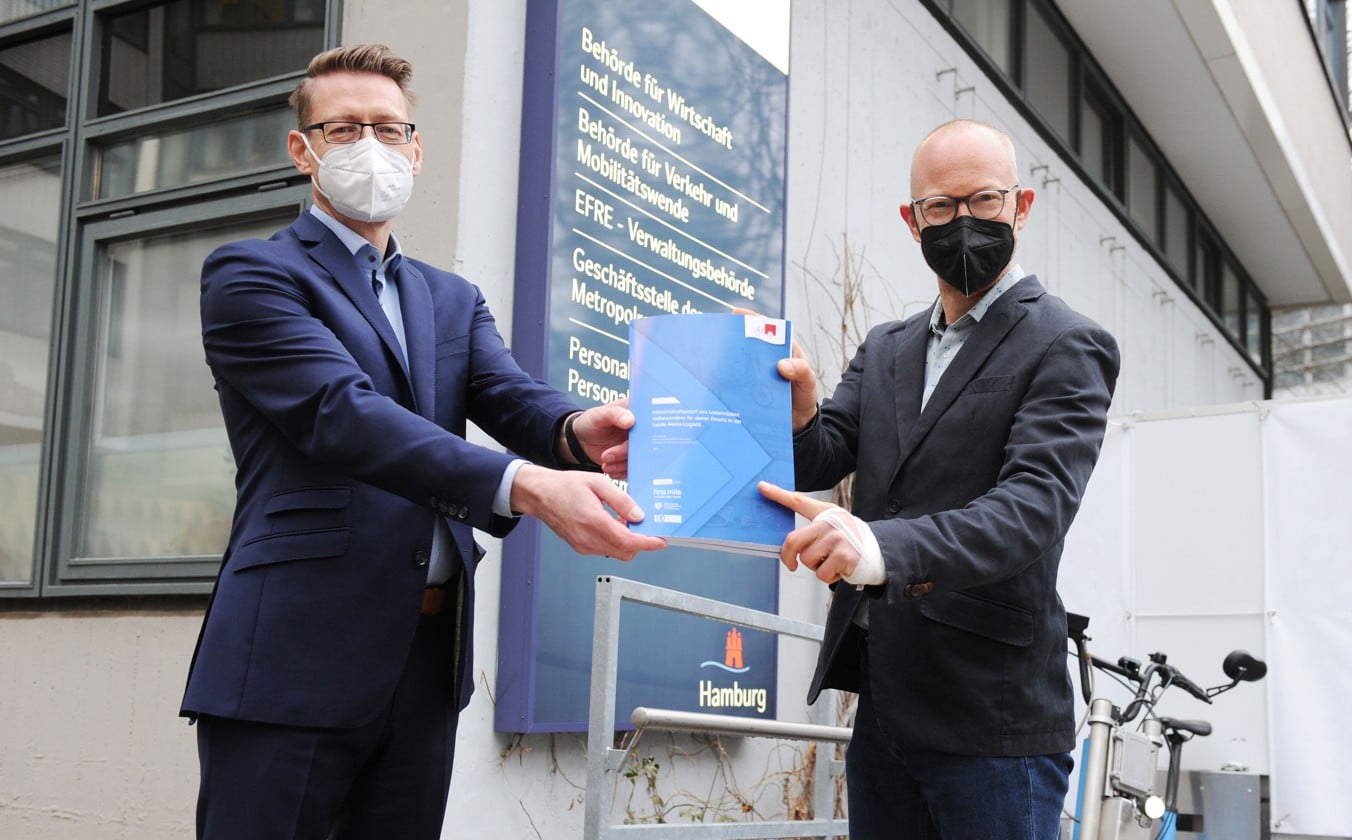
Study on Infrastructure Needs for Cargo Bikes Submitted
Jan 22, 2022 at 6:20 PM
With the “Innovation Lab for Battery Logistics in E-Mobility” (short: InnoLogBat), researchers from the Fraunhofer Institute for Material Flow and Logistics IML are working together with the University of Leipzig, Remondis Industrie Service GmbH & Co. KG, Rhenus Automotive SE, and Mercedes-Benz Energy GmbH on the environmentally friendly use of batteries in a circular economy.
(Dortmund) The growing electromobility presents new challenges for industry and science: What happens to the batteries for electric vehicles when they are nearly empty or in the event of accidents? How can the batteries be reused or the individual parts recycled? What requirements must be met for environmentally friendly storage and transportation? The new research project “InnoLogBat” aims to consider the relationships between producers and suppliers in the automotive industry not only in terms of production processes and the end product but also in terms of the entire cycle. In the so-called circular economy, the utilized raw materials are used as long as possible without waste and emissions.
“The circular economy can make a significant contribution to environmental protection. However, the scarcity of technologically specific raw materials in batteries poses a particular challenge. Therefore, within the framework of the project, we are placing a special focus on the return and recycling of old and defective batteries,” says Dr. Arkadius Schier, head of the innovation lab and scientific staff member at Fraunhofer IML. Fraunhofer IML is the consortium leader of the project and is responsible for the establishment and operation of the innovation lab. Additionally, the researchers support the industry partners with their expertise in the areas of circular economy and hazardous goods transport in technology developments.
Safety in Storage, Handling, Transport, and Reuse
The focus of the technological developments is on safety in the storage, handling, transport, and reuse of batteries. For example, old batteries could be used in power plants or robots in logistics for energy storage. In addition to new technologies, the staff of the innovation lab also aims to develop approaches for recycling-friendly product designs as well as new business models and logistics concepts.
The project runs until September 2024 and is funded with approximately 4.3 million euros by the Federal Ministry of Education and Research.
Graphic: © Fraunhofer IML