


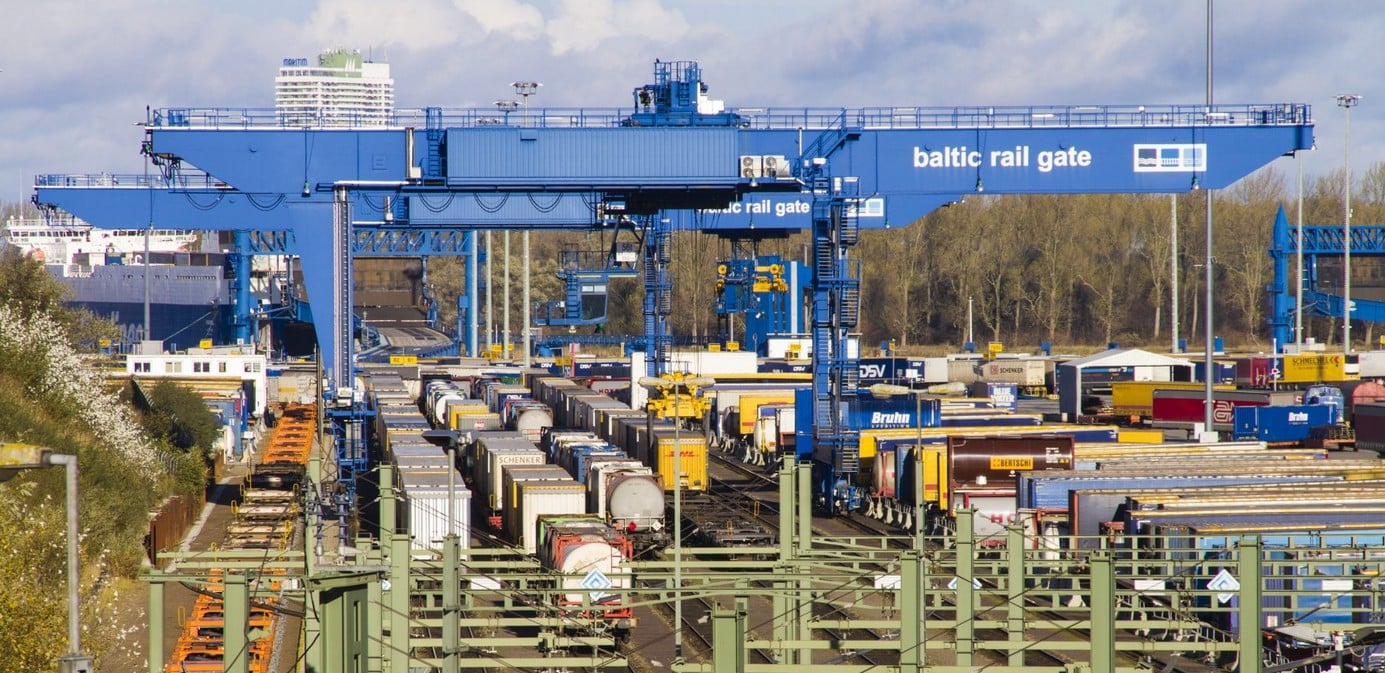
LHG subsidiary ECL connects Lübeck with Milano-Melzo
Dec 1, 2021 at 4:37 PM
Network of European Railways NEE with Strong Accusations Against Politics
Dec 1, 2021 at 6:00 PM
On December 8, 2021, the launch of STAFFEL will take place. The research project aims to halve transport times in truck freight transport and reduce wasted driving time. The project partners FIR at RWTH Aachen, MANSIO GmbH, PEM Motion GmbH, and the German Institute for Standardization e. V. (DIN) are jointly developing an AI-supported internet platform for inter-company convoy traffic.
(Aachen) The research project STAFFEL is intended to significantly contribute to the efficient design of truck transport, driving, and rest times. The STAFFEL project is funded by the Federal Ministry of Transport and Digital Infrastructure as part of the innovation initiative mFUND with a total of 1.5 million euros and is expected to be completed by May 2024.
Using AI algorithms, long distances will be broken down into segments and subsequently mediated and optimized via a driving time marketplace between freight forwarders and carriers based on real-time data (e.g., traffic, infrastructure). Smart technologies for theft protection ensure the secure handover of trailers.
Compliance with driving and rest times leads to transport interruptions in road traffic. Especially on long distances, this results in a significant extension of transport time and an increased need for parking spaces. The new platform helps to avoid such interruptions with AI support and to hand over trailers to rested drivers at the end of the driving time. At the same time, truck drivers are enabled to drive more segments and stay more often at their home location. Driving time violations, search traffic for parking, and resident complaints due to illegal parking are significantly reduced. The AI-supported synchronization of driving routes also has positive effects on CO2 emissions.
30,000 Parking Spaces Missing on German Highways
According to Federal Minister of Transport Andreas Scheuer, approximately 30,000 truck parking spaces are missing on German highways. Illegally parked trucks cause accidents, disturb residents, and contribute to cargo thefts with annual damages amounting to 300 million euros according to GDV (German Insurance Association). “The logistics industry is undergoing constant change and faces complex challenges. We are pleased to contribute to the more effective design of road freight transport as part of the STAFFEL project,” comments Tobias Schröer, project manager on behalf of FIR and head of production management at FIR at RWTH Aachen.
After the kick-off on December 8, 2021, the project partners will start with a detailed requirements analysis. Subsequently, the platform and the theft protection system will be prototypically developed and validated in two field trials: In the first field trial, regional transport companies will be connected via a driving time marketplace, while in the second, exchange stations along a main traffic route will be established and convoy traffic will be practically tested. The goal is to identify effects, potentials, and challenges for truck freight transport and to prepare for a Europe-wide implementation, also considering standardization.
About the mFUND of the BMVI
As part of the innovation initiative mFUND, the BMVI has been funding data-based research and development projects for digital and connected mobility 4.0 since 2016. Project funding is complemented by active professional networking among stakeholders from politics, business, administration, and research, as well as by providing open data on the mCLOUD portal.
For more information about FUND: www.mFUND.de
About FIR at RWTH Aachen
FIR is a non-profit, cross-industry research and training institution at RWTH Aachen in the field of operational organization, information logistics, and corporate IT, aimed at creating the organizational foundations for the digitally connected industrial company of the future.
By researching and transferring innovative solutions, FIR contributes to increasing the competitiveness of companies. This is done in the appropriate infrastructure for experimental organizational research, methodologically sound, scientifically rigorous, and with direct involvement of experts from the industry. The focus is on industrial verticals as application cases. Currently, these are: Future Logistics, Smart Services and Smart Maintenance, Smart Commercial Buildings, and Smart Mobility.
The institute supports companies, conducts research, qualifies, and teaches in the areas of service management, business transformation, information management, and production management. As a member of the Association of Industrial Research Associations, FIR promotes research and development for small, medium, and large companies.
Since 2010, the managing director of FIR, Professor Volker Stich, has also been leading the Smart Logistics cluster at the RWTH Aachen Campus. In the Smart Logistics cluster, FIR enables a previously unique form of collaboration between representatives from research and industry. FIR is funded by the state of North Rhine-Westphalia, supports the research strategy of the state as the Johannes Rau Research Institute, and participates in the corresponding state clusters to strengthen the NRW location.
For more information about STAFFEL: staffel.fir.de
Photo: © FIR e. V.