


LIP Invest leases 4,000 m2 in the Fürth logistics center to gbl
Nov 24, 2021 at 3:53 PM
Werner Späth takes over FAB Fördertechnik und Anlagenbau GmbH
Nov 24, 2021 at 6:31 PM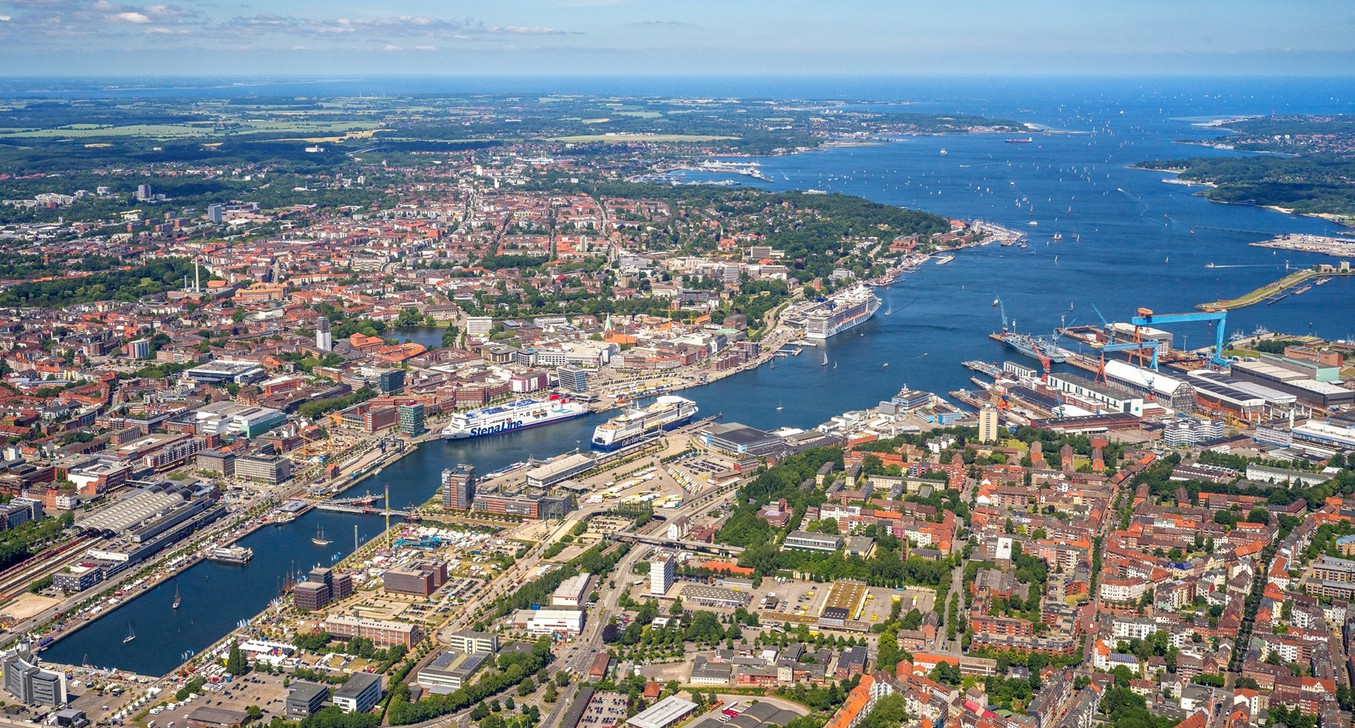
The PORT OF KIEL has set the goal of reducing all CO2 emissions it generates to zero by the year 2030. The path to climate neutrality is outlined in a three-step plan that specifies the BLUE PORT concept of the port and was presented for the first time on November 24 with the release of the environmental report.
(Kiel) A three-step plan specifies the BLUE PORT concept of the Port of Kiel. Dr. Dirk Claus, Managing Director of PORT OF KIEL: “We support the climate protection goals of the state capital Kiel and take a pioneering role in terms of CO2 reduction. The port will operate climate-neutrally by the end of this decade.” The port’s three-step plan aims to cover 60 percent of the energy needs of ships calling at Kiel with green electricity as early as next year. By 2025, this should increase to 80 to 90 percent, before achieving climate neutrality for all activities of PORT OF KIEL by 2030 through a combination of various measures. Emissions of nitrogen oxides and particles will also be further reduced through the measures implemented. These are already below the applicable limit values in the background load.
According to the environmental report, over 6,200 tons of CO2 were already avoided at PORT OF KIEL in 2020, while nearly 18,800 tons were still emitted. Dirk Scheelje, Chairman of the PORT OF KIEL Supervisory Board and member of the council faction of Alliance 90/The Greens: “With the presentation of the environmental report, emissions are quantified for the first time and thus made transparent. It shows that the BLUE PORT strategy initiated in 2018 is having an effect. Based on this, we will also assess further progress.” Measures for 100 percent climate-neutral supply of all port facilities with green electricity have already been implemented. In addition, energy consumption at the terminals has been sustainably reduced by switching to energy-efficient LED technology and increasing energy efficiency, while photovoltaic systems deliver approximately 290,000 kilowatt-hours of solar energy each year. PORT OF KIEL compensates for the footprint of its business flights and is gradually converting its own fleet to electric drive. Incentives are being provided to customers to promote the decarbonization process.
Shore power is a central element
Shore power is a central element for emission reduction in Kiel. After the first shore power facility went online at the Norway Quay in May 2019, a second, larger facility was put into operation at the Baltic Sea Quay in June of this year. From there, the Stena Line ferries are regularly supplied with green electricity, and for the first time, two cruise ships, the “AIDAsol” and the “AIDAprima,” were also connected. Dirk Claus: “We have created the infrastructural basis for ferries and cruise ships to lie in the city harbor without emissions. Next year, we want to handle 60 to 80 cruise calls climate-neutrally at the Baltic Sea Quay and are starting the construction of a shore power facility for the East Side Harbor as well.” To simultaneously make processes at the freight terminals even more efficient, the Federal Ministry of Transport and Digital Infrastructure (BMVI) is promoting the establishment of a digital test field in the port. Based on a 5G campus network, operational processes will be optimized and made more sustainable. This is intended to support climate-neutral growth of port handling through innovative IT technology.
Individual measures to reduce emissions:
- Shore power supply at the Baltic Sea Quay, Sweden Quay, Norway Quay, and soon East Side Harbor
- Green electricity sourced exclusively from renewable climate-neutral sources
- Electrification of fleets including warehouse vehicles
- Alternative energy generation through the operation of own photovoltaic systems
- Switching to LED lighting technology at all terminal facilities
- Increasing efficiency of operational processes through digitalization
- Compensation for business flights through Atmosfair
- Tariff environmental discounts as an incentive for climate-friendly transformation
Photo: © Port of Kiel/Tom Körber