



DSV and New Balance Expand Collaboration
Nov 5, 2021 at 4:42 PM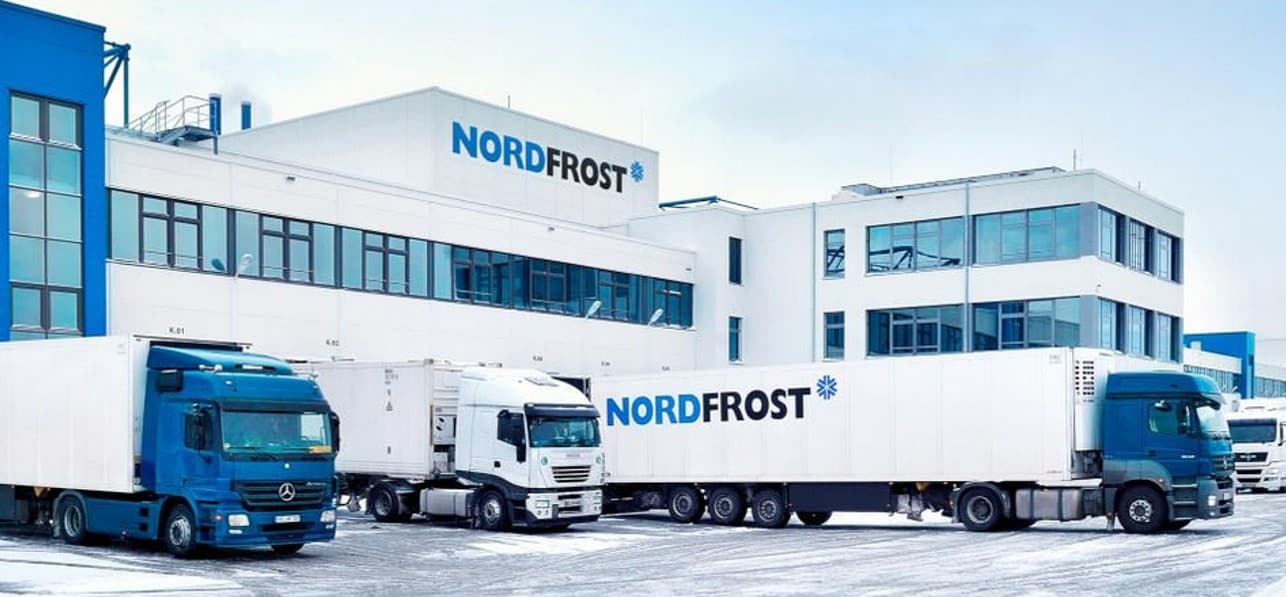
NORDFROST takes over operations of RS reefer service
Nov 5, 2021 at 5:03 PM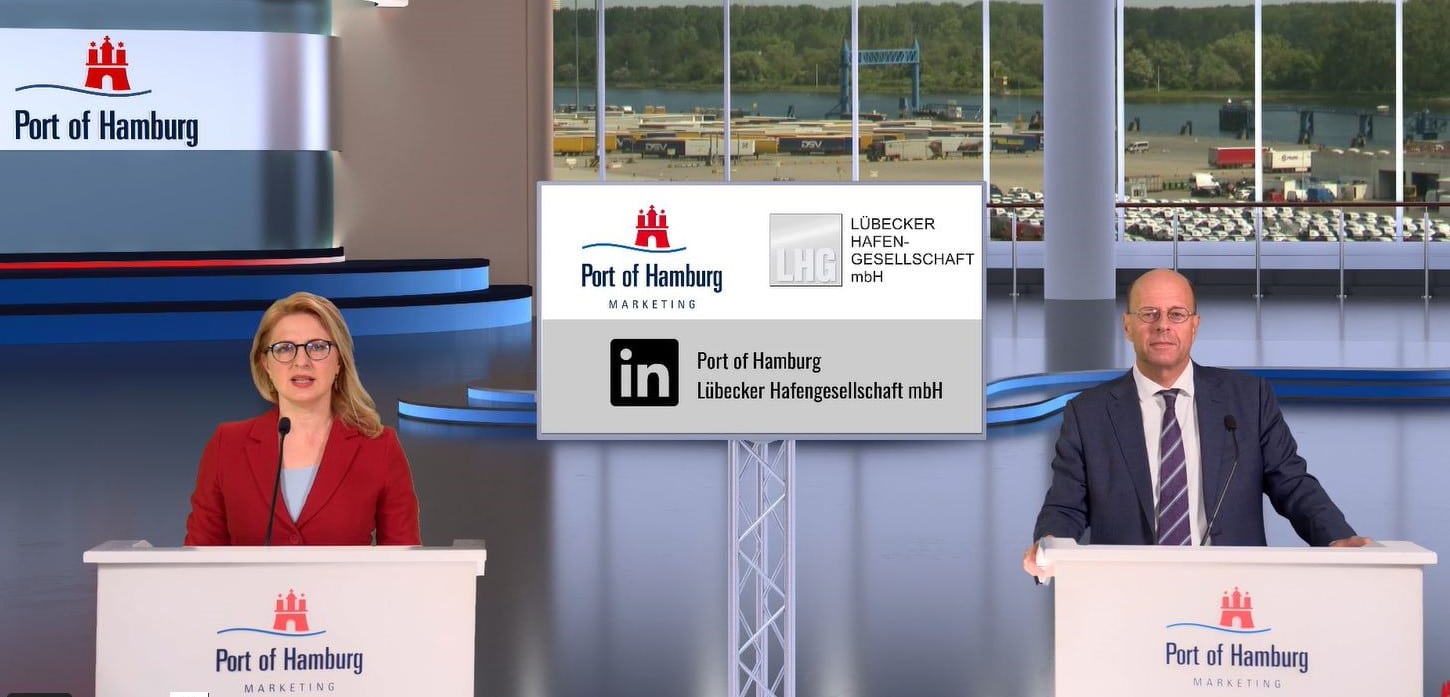
Ports and their transport partners are on the way to climate-neutral transport chains. Experts discussed the necessary measures in the port and transport sector to achieve this goal at the invitation of Lübecker Hafen-Gesellschaft (LHG) and Hafen Hamburg Marketing (HHM). 375 participants followed the presentations and Q&A sessions during a digital event titled “Climate-Neutral into the Future – What Can We Do?”.
(Hamburg) Today, global freight transport, including port and logistics locations, is responsible for eleven percent of global CO2 emissions. A change in existing transport chains and logistics processes is being discussed and demanded internationally. On the path to climate neutrality, the EU has set a target with the adoption of the European Green Deal. By 2050, Europe aims to become the first climate-neutral continent.
Sebastian Jürgens, spokesperson for the management of LHG, moderated the professional exchange between experts and participants from Germany and abroad together with Marina Basso Michael, who is responsible for market development in the Baltic Sea region and Europe at HHM. “With our event, we want to contribute ideas to the discussion on climate-friendly transport chains and ports. The exchange between the port and transport industry and science brings us new approaches and motivates us to expand the already successfully initiated cooperation at all levels. The LHG plays an important role at the interface of land and sea transport,” said Jürgens.
Carlos Jahn from the Fraunhofer Center for Maritime Logistics and Services addressed significant optimization potentials for greater sustainability in the port of the future. He believes that the synchronization of sea and land transport through digital networking of logistics partners should be advanced. According to Jahn, the use of artificial intelligence and the utilization of large data sets can reduce waiting times and make port areas more efficient. Real-time data around the ship and its deployment planning provide significant added value for improving route and schedule optimization for ships. Reducing fuel consumption, shorter waiting times, less space requirement, and adjusted equipment use ultimately also benefit a more sustainable organization in the hinterland transport of ports.
Sustainable Fuels and Drives
Erik Lewenhaupt from Stena Line informed about the further development of ship drives and the use of sustainable fuels in shipping. “Fuels like hydrogen, green methanol, and the increasing electrification are examples of how we can move towards greener logistics. For shorter distances, electrification is currently preferred, while for long distances, green methanol is favored,” explained Lewenhaupt. To promote their use, extensive investments are needed not only for existing ships but also for a supply infrastructure in the ports. Renewing fleets, retrofitting engines, and increasing efficiency are necessary tools to ensure structural improvements in the logistics chain and reduce the CO2 footprint. “We at Stena Line want to be pioneers and are committed to sustainable transport logistics,” said Lewenhaupt.
Jan Weiser from Kombiverkehr informed how intermodal transport chains in the inbound and outbound traffic of ports can be made more environmentally friendly. He made it clear that in the intermodal network operated by Kombiverkehr, a reduction of 80 percent CO2 compared to road transport is achievable. The use of “green” electricity and the precise recording of emissions in rail freight transport help in this regard. Customers already receive all basic information for evaluating climate-friendly transport through existing tools, such as the CO2 calculator. Additionally, Weiser expressed the desire for better standardization and crane compatibility of semi-trailers on the path to more sustainability in freight transport. Furthermore, it is necessary to convince freight forwarders of intermodal transport. “Freight forwarders need to rethink towards rail,” he said.
Optimization Potentials in Hinterland Transport
Jörg Ullrich, managing director of European Cargo Logistics (ECL) and Nordic Rail Service (NRS), also commented on optimization potentials in hinterland transport by rail. “Freight transport by rail must be as easy for users in transport bookings through a one-stop-shop as it is in road freight transport. While maintaining competition, we strive for cooperation between operators and freight forwarders that facilitates new connection offers by rail,” Ullrich said. In addition to vertical cooperation, ECL also sees great opportunities in horizontal cooperation to achieve more transparency among all parties through digitization and open sharing of transport data. “The port is the key in the transport chain at the interface of land and sea transport. The bundling, management, and control of all information and data along the transport chain should be efficiently handled by a so-called ‘Control Tower’. It is an important building block for the sustainable development of intermodal transport. Ports as interfaces of intermodal routes are well-suited for such a function,” Ullrich added.
From Ortwin Harms’ perspective, managing director at LHG, the expansion of port infrastructure, which must adapt to changed ship sizes and shore power usage, is of great importance. “With further optimization of loading and unloading processes and an adjustment of the port pre-staging areas, personnel and equipment deployment at LHG will be further improved,” said Harms. The use of new handling equipment, which will contribute to sustainability as part of further electrification, is also an important goal for LHG, he added. As a port handling company, LHG is very interested in equipment manufacturers focusing on electrification and believes that there should be government funding for the development of new technologies.
Innovations as a Central Key
Basso Michael concluded the event organized together with LHG by saying: “The Port of Hamburg, with its large number of handling and transport companies as well as partner ports in the region, is already successfully developing measures to make seaport cargo handling and hinterland transport efficient and environmentally friendly. In this context, we see innovations and technological excellence as central keys to developing sustainable solutions and being able to act ecologically and operate successfully. In the long run, the consistent pursuit of decarbonization in the transport sector is the key to positive changes.”
Photo: © Hafen Hamburg Marketing / Caption: Cooperation is the key to more environmentally friendly transport. Sebastian Jürgens (right), spokesperson for the management of LHG, moderated the professional exchange between experts together with Marina Basso Michael, responsible for market development in the Baltic Sea region and Europe at HHM.