Rail-Flow Launches Innovative Entry Portal for Combined Transport
Aug 30, 2021 at 6:30 PMLogivest leases warehouse space in Hamburg-Harburg
Aug 31, 2021 at 5:26 PMThe upward trend in the universal port of Hamburg continues in the first half of the year. This resulted in a record for container traffic by rail. Additionally, the Port of Hamburg recorded more calls from Megamax-class ships in this segment. There was also an increase in bulk goods, primarily driven by the import of ore.
The seaport traffic in the Port of Hamburg developed positively overall in the first half of 2021.
The breakbulk and bulk handling accelerated significantly in the second quarter. In the first six months, total seaport traffic reached 63.5 million tons, an increase of 3.8 percent. Container handling amounted to 4.3 million TEU (20-foot standard containers), marking an increase of 5.5 percent.
After a cautious start in the first two months, March and the second quarter provided a significant boost for container handling. With a total of 19.3 million tons, bulk handling also continued to develop positively, achieving an increase of 3.3 percent.
The ongoing global effects of the Corona pandemic particularly influenced the handling development in the Port of Hamburg during the first months of 2021. “We observe that the total handling in the Port of Hamburg has developed positively and has entered a recovery process. However, the decline in handling observed last year due to the pandemic’s effects in Hamburg has not yet been fully recovered. The increasing imports and exports of the economy, strong consumer demand, and our extensive range of liner services in the Port of Hamburg put us on a stable growth path,” explained Axel Mattern, Executive Board of Port Hamburg Marketing e.V. (HHM).
Mattern is particularly pleased during the online press conference organized by HHM that a record result was achieved in container transport by rail. In the first six months of the year, a new record was set with a total of 1.4 million TEU on the network of the Hamburg Port Railway. “This is an increase of 11.3 percent and underscores Hamburg’s position as Europe’s leading railway port,” added Axel Mattern.
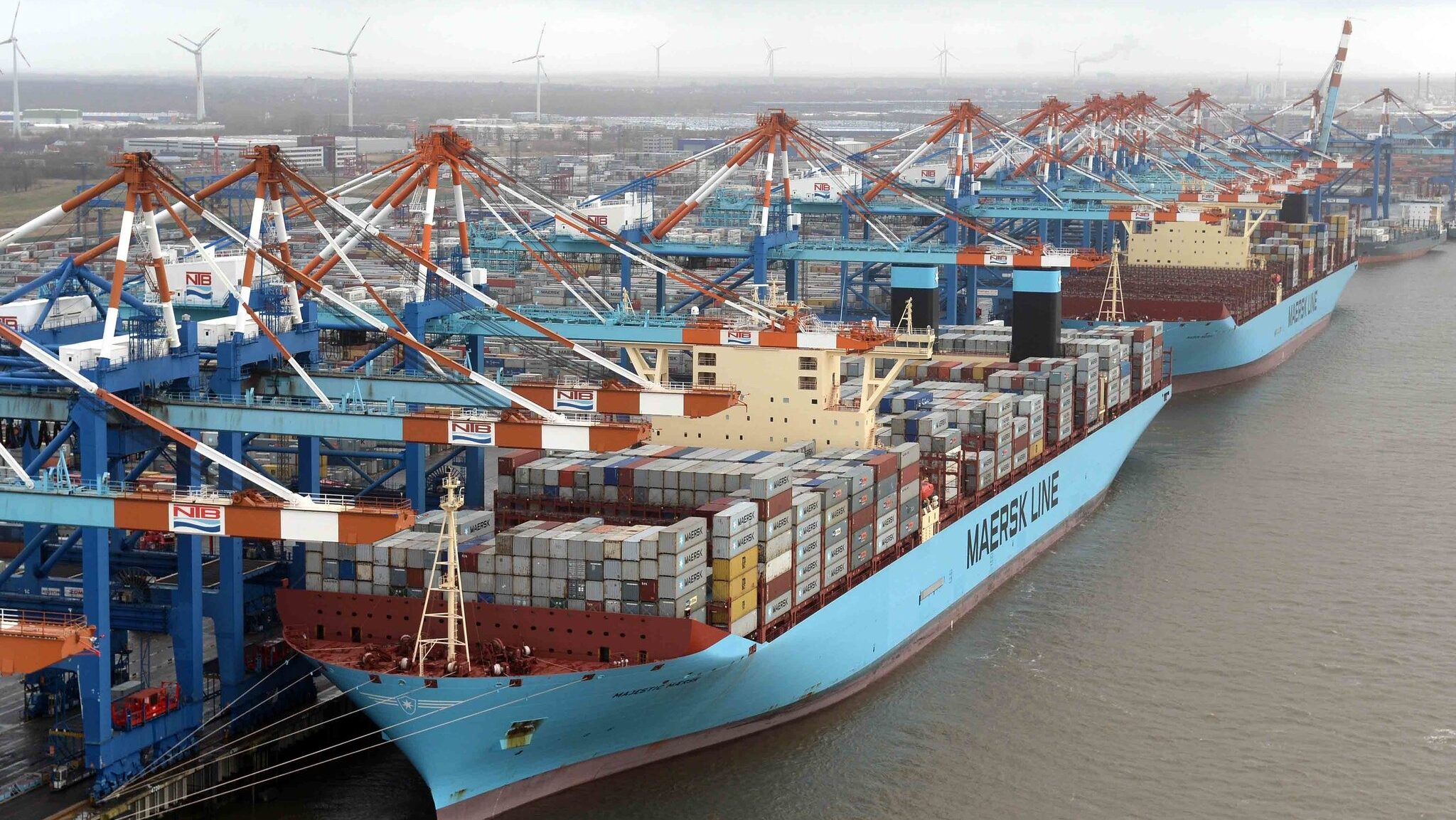
The first stage of the fairway adjustment in the Elbe has also had a positive effect. Jens Meier, CEO of the Hamburg Port Authority (HPA), pointed out that with the completed first release of the fairway adjustment of the Elbe, traffic and the encounter of large ships have become significantly easier. “The Port of Hamburg is now also more accessible for the particularly large container ships of the Megamax class, which have a capacity of 18,000 to 24,000 TEU. In the first half of the year alone, 107 of these Megamax container ships came to Hamburg. This is an increase of 24.4 percent and clearly shows that the fairway adjustment is a successful project for the port, shipping, and the economy,” explained Meier.
Seaport Traffic in the First Half of 2021
In the first six months of the year, 63.5 million tons of seaport goods were loaded or unloaded at the terminals in the universal port of Hamburg. This is an increase of 3.8 percent compared to the previous year’s results. Breakbulk handling reached 44.2 million tons, an increase of 4.0 percent. Container handling in Hamburg also showed a significant upward trend with a total of 4.3 million TEU (20-foot standard containers), marking an increase of 5.5 percent compared to the previous year. In exports, container handling (2.1 million TEU) increased by 6.1 percent, outpacing imports. In this segment, 2.2 million TEU (+5.0 percent) were handled. The growth in handling loaded containers, which are particularly interesting for value creation in the port, was very strong at 6.9 percent (a total of 3.8 million TEU). In contrast, empty container handling saw a decline of 4.5 percent compared to the previous year, with 464,000 TEU.
Bulk handling reached a total of 19.3 million tons, an increase of 3.3 percent. Within the bulk segment, the handling of grab cargo developed very strongly with a total of 10.5 million tons, achieving an increase of 20.0 percent. This growth was particularly driven by the import of ore, which accounted for a significant share of the very good results in the bulk sector with 5.0 million tons (+26.3 percent). In the segments of suction goods and liquid cargo, the handling development remained below the previous year’s results with 3.2 million tons (-22.6 percent) and 5.6 million tons (-3.3 percent).
A look at the container shipping areas also presents a positive picture. “With the exception of Australia/Pacific, the other shipping areas of America, Asia, and Africa all showed positive handling development. In European traffic, only transshipment handling with Scandinavian countries developed positively with an increase of 6.4 percent. Overall, European traffic in the first half of the year showed a slight increase of 0.5 percent,” said Mattern.
Different Developments Among the Top 10 Partner Countries in Sea Container Handling
The development of container handling with the ten most important trading partners of the Port of Hamburg varied in the first six months of 2021. In seaborne container handling with China, Hamburg’s largest trading partner by far, an increase of 14.2 percent was achieved with 1.3 million TEU. Despite the significant operational restrictions in some Chinese ports, almost all ports recorded growth in container handling for the first half of the year. A total of 22.9 million TEU were handled in Chinese ports in the first six months, an increase of 14.9 percent.
The USA, still Hamburg’s No. 2, remained on a growth path with 303,000 TEU (+5.3 percent). Other countries among the top 10 with positive container handling development in the first six months included Sweden (+5.3 percent), South Korea (+2.4 percent), Poland (+14.4 percent), Brazil (+16.1 percent), and Denmark (+6.4 percent). These positive developments in seaborne container handling were able to offset declines with other countries in the first half of the year. “Among the top 10 trading partners of Hamburg in seaborne container traffic, a clear upward trend is evident, and seven countries are already on a growth path. Among the three countries with declines, we observe stabilization and slight recovery. Overall, we expect that growth in seaport traffic will continue in the second half of the year for the universal port of Hamburg,” emphasized Mattern.
More Security Required for Global Supply Chains
Despite the positive development of handling figures in the Port of Hamburg, the logistical challenges for global transport chains remain very significant. Difficulties arise from a lack of transport capacities, uncertainties related to the further course of the pandemic, and other events, such as the recent grounding of a container ship in the Suez Canal. The effects are also visible at the interface of land-sea transport and thus in Germany’s largest seaport. “Together with the port industry, the Hamburg Port Authority, and our port customers, we have so far been able to maintain 24/7 operations in the port and are working on optimizing the logistical processes in the port and the incoming and outgoing traffic. Our goal is the smooth and efficient handling of global goods traffic in the Port of Hamburg,” said Axel Mattern. Knut Alicke, a partner at McKinsey & Company, emphasized during the online press conference of Port Hamburg how vulnerable global supply chains have become. This not only concerns the weeks-long delays of many ships but also involves digital security and, last but not least, structural occurrences such as climate change or crisis situations in individual countries. To address such dangers, continuous analysis is necessary. Because only those who quickly grasp a new situation can adapt to it, Alicke emphasized. Many companies have reacted since March 2020 and intensified their own supply chain risk management. Only with such necessary resilience in companies will global supply flows be kept flowing.
Record in Container Transport by Rail
In the first six months, 1.4 million TEU were transported on the tracks of the Hamburg Port Railway. This is an increase of 11.3 percent. “We are pleased with this record. Despite partly difficult conditions, the incoming and outgoing traffic of the Port of Hamburg in container transport by rail was further increased. This joy is further amplified by the also very good result of 23.7 million tons (+4.4 percent) of goods transported by rail,” said HPA Chief Jens Meier. On the efficient rail network of about 300 kilometers in length, the Hamburg Port Railway operates over 200 freight trains with more than 5,500 wagons daily. According to Meier, the system has also proven to be reliable during the Corona pandemic. “We regret that there were delays in the first half of the year at times in the railway handling in the Port of Hamburg due to the large number of ship delays. However, the terminal operators and railway operators, together with the many inland terminals, have made significant efforts to avoid bottlenecks in handling,” added Meier. For example, the utilization of container trains was further advanced. In the hinterland traffic of the Port of Hamburg, the railway share of the modal split is also increased by better utilization of routes and equipment used. Last year, the railway already accounted for 50.7 percent of the leading mode of transport in land transport in Germany’s largest seaport.
In addition to the positively developing seaport hinterland traffic by rail, new Silk Road container train connections between Hamburg and China were also established in the first half of 2021. Additional continental container transports were facilitated by new train connections between Hamburg and the Chinese cities of Shijiazhuang (Hebei) and Wuhei (Gansu Province). Existing connections with Suzhou and Xi’an were also expanded by additional providers. The ancient Silk Road began in the ancient Chinese imperial city of Xi’an. Hamburg has the most train connections with Xi’an, and cargo from Xi’an reaches the terminals in the port almost every week. Zhengzhou, the capital of Henan Province, follows in terms of the number of connections. Since the beginning of the year, goods from Hanoi in Vietnam have also regularly reached Hamburg via this connection.
Outlook for 2021
For the year 2021, the marketing organization of the Port of Hamburg expects an upward trend in seaport traffic. With the stabilization of liner service departures and new services, a handling result of around 130 million tons and 8.7 million TEU is achievable in a globally improving situation.
Photo: © Hafen Hamburg Marketing