


Three Lively Digital Logistics Days by BVL.digital
Mar 28, 2021 at 7:26 PMSwiss Association SWISS SUPPLY Begins Its Activities
Mar 29, 2021 at 7:43 AMWhat significance does the Suez Canal have for global trade and specifically for the Swiss economy? What comes to Switzerland via the Suez Canal? What is shipped from Switzerland? What does the development look like? A summary by Leon Zacharias, a project employee at the Institute for Supply Chain Management (ISCM-HSG).
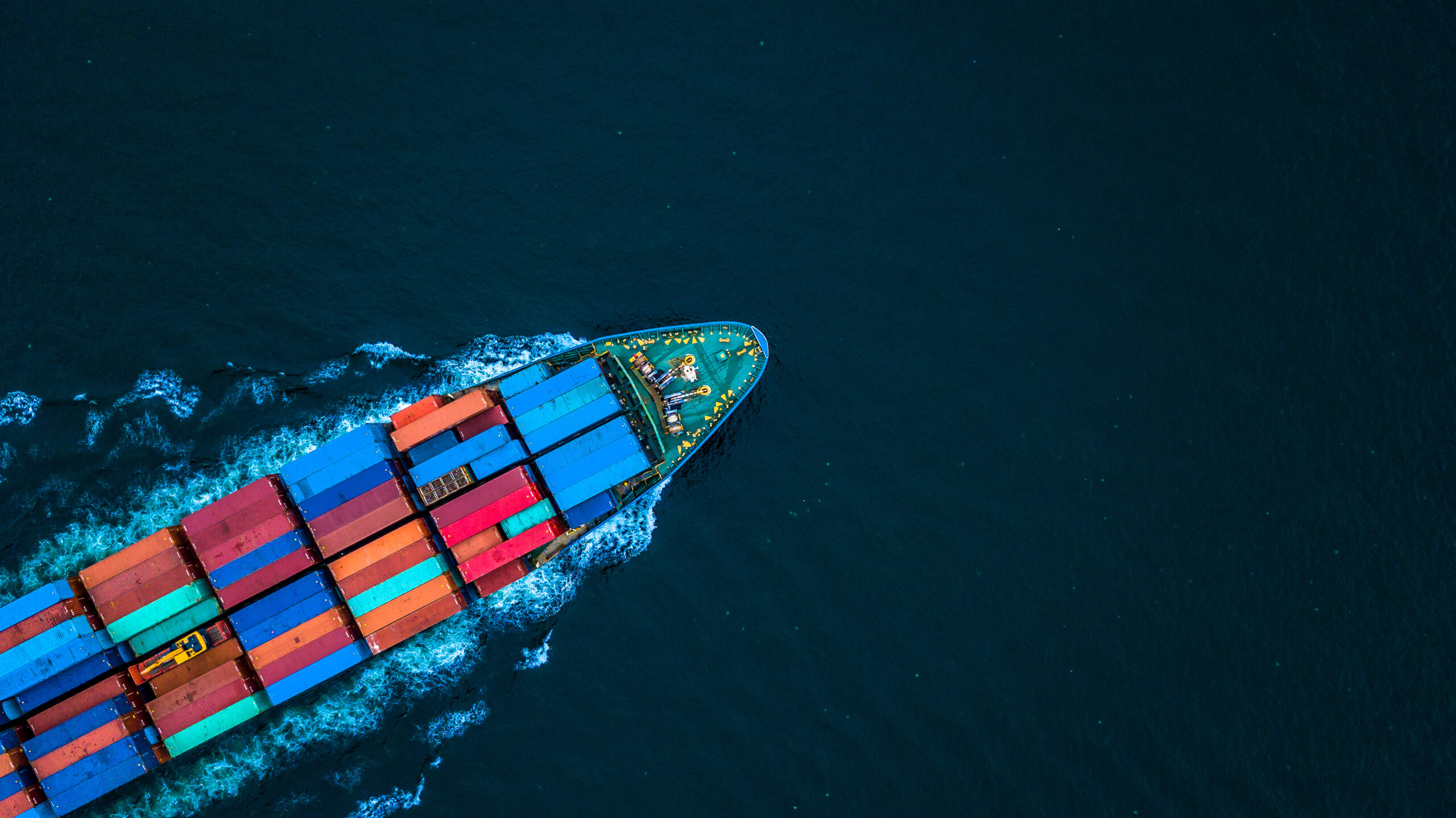
(Suez/Egypt; St. Gallen/Switzerland) The Suez Canal is one of the most important waterways in maritime trade. The artificially constructed and recently expanded connection between the port city of Suez in the Red Sea and Port Said in the Mediterranean Sea shortens the distance by sea between Asia and Europe by about 7000 km and several days of travel time, depending on speed. For this reason, the canal is crucial for the global economy and particularly for the economy on the European continent. Approximately 10-15% of global trade volume “passes” through the Suez Canal, but nearly 100% of the sea-bound volume in trade between European and Asian countries. The alternative sea route, i.e., the southern bypass around Africa, has not been an option due to bunker prices and extended travel times. Transport via the rail-bound Silk Road remains a niche product due to its limited capacity.
Dependence of Supply Chains on Maritime Shipping
In international, non-European trade, about 94% of imported and 92% of exported goods are transported by sea. Expanding the view to the entire supply chain and taking the import of German cars into Switzerland as an example, the importance of maritime shipping can increase even further. The vehicle components assembled in Germany by BMW, Daimler, and others come from all over the world. In short: Switzerland is extraordinarily dependent on maritime shipping and the Suez Canal despite lacking direct sea port access. In principle, all Swiss entrepreneurs expecting goods from Central and Far East must anticipate delays.
This applies, of course, only to cargo on the ships that are south of the Suez Canal. Already now, ships are piling up behind the blockade, meaning that at this point, there have been no ship arrivals at European ports for nearly 5 days. In the worst case, the canal could remain closed longer, and ships would have to calculate an additional travel time of up to 20 days.
It remains to be seen whether pure towing power from the summoned tugboats and the “dredging” of the ship has been effective. Additionally, discharging ballast water or lightening the load may be possible. Lightening by reloading or offloading containers is likely the last, but perhaps necessary, resort.
When Will the Suez Blockade Affect Switzerland?
The nearly two-day blockade will soon impact imports. With a travel time of about three days between the Suez Canal and Genoa and about eight days between the Suez Canal and Rotterdam, arrivals from Near and Far East are already absent in Genoa, and in Rotterdam, they will be missing “only” in about two to three days. The duration of the blockade is crucial for the economic damage in Switzerland and Europe. Shipping companies are already evaluating various scenarios and considering the detour around the Cape of Good Hope. For ships currently in the Indian Ocean or even still in the Strait of Malacca, routes may be proactively altered, and a bypass around the Cape of Good Hope planned. Even with a short-term lifting of the blockade in the next hours or days, valuable days, and in the worst case, even weeks, could be lost for transport to Europe.
This is akin to the partial breakdown of supply chains at the beginning of 2020 following the outbreak of the Corona pandemic in China. For recipients of individual goods deliveries, it is worthwhile to inquire with the relevant logistics provider or shipping company. For example, Kühne + Nagel proactively informs its customers about delays and possible changes in arrivals or departures.
There will initially be no restrictions on the supply of raw and product oils such as gasoline, diesel, or heating oil, as demand can be substituted by rescheduled deliveries from Russia, North America, or North Africa. However, a rise in prices at gas stations can be expected, with the extent of the price increase depending on the duration of the Suez Canal’s closure. Restrictions on the delivery of food are not anticipated.
Does the Blockade Intensify Price Increases for Certain Goods?
Particularly companies in Europe, including Switzerland, have been restocking their crisis-depleted inventories more than ever since autumn, aiming to create security against possible further, pandemic-related supply chain disruptions (increased safety stock). This surge in demand, combined with a broad recovery of the Asian economy, has led to a tremendous increase in costs for various goods. Particularly construction materials and consumer goods are currently being traded with a price increase, with costs in some cases doubling within a year. This immense surge in demand has also led to significantly increased freight rates for containers, especially in the Europe-Asia trade. Freight rates have quadrupled in some cases, and the “blockade” of the Suez Canal will further exacerbate the shortage of cargo space. Simply put, there is not enough cargo space available for the transport of goods (following a significant overcapacity in the shipping market since the financial crisis of 2008/2009). In the medium term, supply and demand will balance out again, but in the short term, no new tonnage can be brought to market.
Waterways Remain Bottlenecks
Bottlenecks will continue to be waterways such as the Suez Canal or the Panama Canal – when these are blocked, global trade is immediately affected. The Silk Road would be a potential option for transferring cargo to land transport. However, our study has shown that the shift of volume is simply impossible. If all containers from the stranded ship were to be transferred to trains, it would result in a length of about 300 – 340 km (rounded), equivalent to an extension like Switzerland in the west-east direction. Transport by sea vessels cannot be dispensed with – dozens of mega-ships are already waiting before the canal.
Switzerland may seem far removed from the maritime world as a landlocked country – however, a study by Logistics Advisory Experts GmbH has shown something different.
Photo: © Suez Port Authority
https://files.basekit.com/90/06/90064158-bb0b-432e-a994-1f3caf66c45c.pdf
Leon Zacharias is a trained shipping merchant and a master’s student at the University of St. Gallen. As a project employee, he works at the Institute for Supply Chain Management (ISCM-HSG) and at Logistics Advisory Experts GmbH.