


Parcel Association BIEK: Expected Record Result Surpassed
Jan 20, 2021 at 5:56 PM
For Freight Railways, Digitalization is the Key to the Future
Jan 20, 2021 at 5:59 PM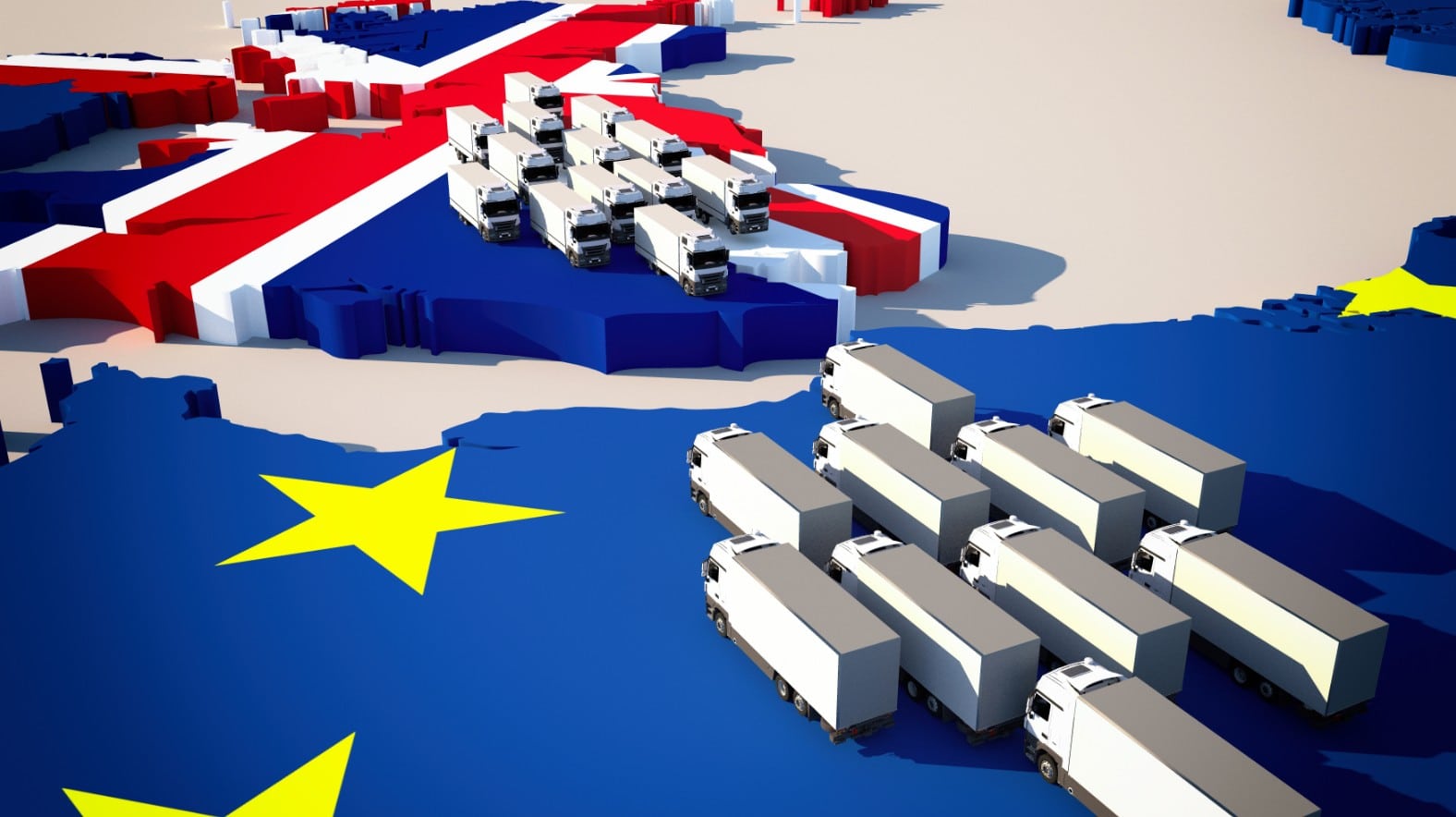
The German Freight Forwarders and Logistics Association (DSLV) reports that there are implementation problems with the trade agreement between the European Union (EU) and the United Kingdom (UK). Up to 80 percent of shipments in goods traffic are accompanied by inadequate or even no documentation. The customers of logistics service providers are evidently insufficiently prepared for Brexit.
(Berlin) The trade agreement between the European Union (EU) and the United Kingdom (UK), which came into effect on January 1, 2021, is leading to increasing operational implementation problems. Currently, up to 80 percent of shipments in goods traffic between the UK and the European mainland are incorrectly or not declared at all and do not comply with customs regulations, states the DSLV.
So far only trade within the EU internal market
“Many companies have only traded within the EU internal market so far. Most of the British logistics customers still seem unaware that the regulations for traffic with the European continent no longer correspond to those of the internal market,” says Frank Huster, Managing Director of the DSLV. “While freight forwarders and customs agents have continuously prepared for the consequences of Brexit over the past years, many of their customers from the shipping industry are only now beginning to adapt their processes and deal with export and import declarations and the necessary procedures and documents. At the same time, there is often a lack of understanding that the additional administrative burden on freight forwarders can lead to a noticeable increase in logistics costs.”
Although there was only a week between the conclusion of the nearly 1,500-page agreement and its entry into force, the customs rules agreed upon by the EU and the United Kingdom on December 24, 2020, as part of the joint trade agreement are not fundamentally new. The German customs authorities have been providing information about Brexit online for years. Huster: “Freight forwarding companies are predominantly professionally familiar with international trade agreements and the customs clearance of goods from third countries.”
19 percent import VAT applies for imports from the UK
It should be clear that when importing goods from the United Kingdom, 19 percent import VAT is now due, and only goods with a UK certificate of origin can be imported duty-free into the EU. For goods from Asia, such as textiles and electrical components that reach Germany via the UK, customs duties apply here, even if customs clearance has already taken place in the UK. “For specialized freight forwarders, customs business is not uncharted territory, but for many logistics customers, it obviously is,” says Huster, adding: “Unresolved shipping procedures can significantly increase the liability risk for freight forwarders.”
The current massive problems in goods traffic with the UK are also affecting the system networks of logistics across Europe. Transport with consolidated cargo, i.e., shipments from multiple shippers for different recipients, cannot be cleared by customs authorities if individual shipments are incorrectly declared or if certificates of origin and veterinary certificates are missing. Truck tours to and from the UK now take up to five days instead of three, unnecessarily tying up cargo space capacities for extended periods. The current categorization of the United Kingdom as a virus variant area, which also requires employees in the goods transport sector to present a negative Covid-19 test before leaving the UK, further exacerbates the clearance situation.
In contrast to Switzerland, the UK isolated itself
Unlike, for example, the third country Switzerland, the British government was equally unwilling to agree to the recognition of EU law and standards, as well as to an extension of the transition period beyond December 31, 2020. As it is not expected that the knowledge deficits regarding customs law and the UK Border Operating Model, particularly among companies in the shipping industry, will be resolved in the short term, trade and transport of goods across the English Channel can only be maintained without disruption if the EU and the United Kingdom suspend the trade agreement until further notice.
“As service providers, freight forwarders will continue to support their customers from industry and trade, but such significant productivity losses cannot be easily absorbed economically. Under the current conditions, logistics can no longer meet its performance commitments,” warns Huster. “It is understandable that the first freight forwarding companies are now carefully reviewing their business activities and even removing UK traffic from their offerings.”
About the DSLV
As the leading and federal association, the DSLV represents the cross-transport interests of the 3,000 leading German freight forwarding and logistics companies through 16 regional state associations, which, with a total of 604,000 employees and an annual industry turnover of 113 billion euros, are a significant part of Germany’s third-largest industry (as of July 2020). The membership structure of the DSLV ranges from globally operating logistics corporations, 4PL and 3PL providers to larger, owner-managed freight forwarding companies (SMEs) with their own truck fleets, as well as charterers of inland vessels and railways, to sea, air freight, customs, and warehousing specialists. The DSLV serves as a political mouthpiece and central contact for the federal government, the institutions of the Bundestag and Bundesrat, as well as for all relevant federal ministries and authorities in the legislative and implementation process, as far as logistics and freight transport are concerned.
Photo: © Adobe Stock