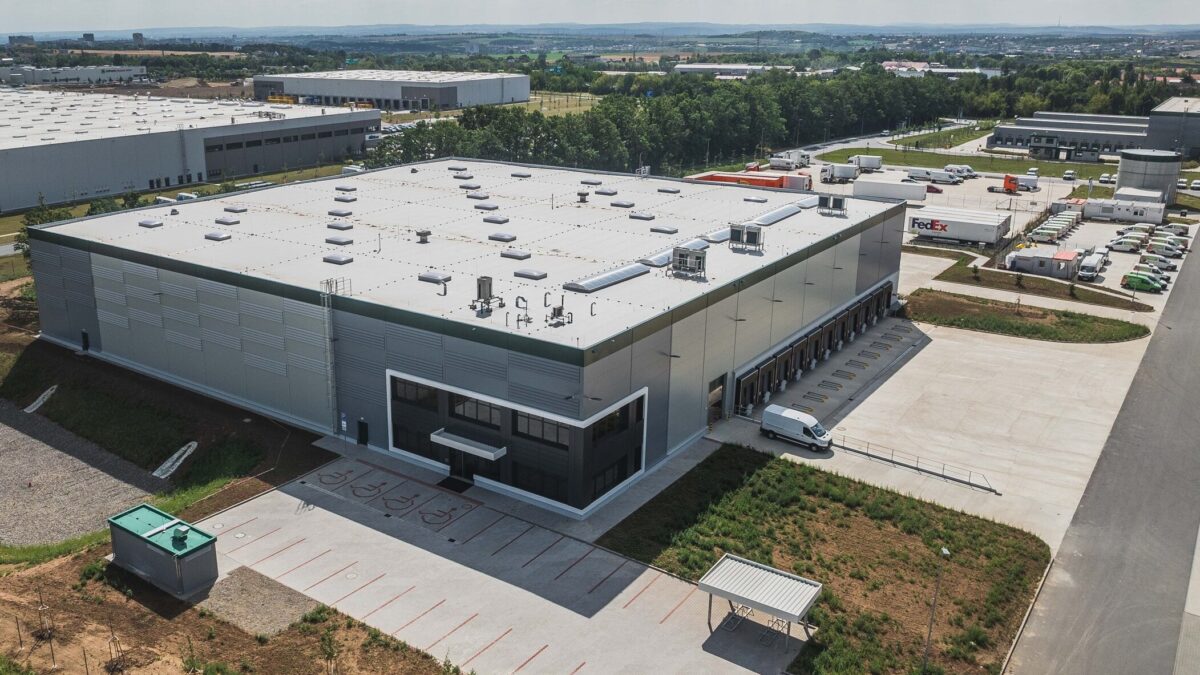



PARCEL.ONE Moves Location and Creates More Logistics Space
Nov 26, 2020 at 6:55 PMSWAN Project House Rewards Its Employees with a Corona Bonus
Nov 29, 2020 at 5:41 PMThe rail logistics company VTG has successfully retrofitted its entire fleet in Germany and Switzerland with quiet brake shoes. This ensures compliance with the limits of the new rail noise protection law and relieves residents near heavily trafficked routes.
(Hamburg) For strong rail freight transport: VTG has retrofitted its entire fleet of cars used in Germany and Switzerland with so-called quiet brake shoes. Noise-intensive cast iron shoes are now a thing of the past; in the future, only composite or disc brakes will be used on VTG cars in Germany and Switzerland. The completion of this multi-year process coincides with the change of the network timetable on December 13, 2020, and the coming into force of the rail noise protection law, which prohibits the operation of noisy freight cars. This implements a central measure to reduce noise emissions in rail freight transport, which particularly alleviates the burden on residents of heavily frequented sections of track.
Nearly 30,000 freight cars retrofitted
Almost 30,000 cars have been retrofitted at VTG alone, requiring millions in investments. “With the conversion to quiet brake shoes, we have accomplished a monumental task – both financially and organizationally,” says Sven Wellbrock, Chief Operating Officer Europe and Chief Safety Officer of VTG AG. “Our explicit thanks go to our customers, without whose flexibility this major task would not have been manageable. Together, we have made a significant contribution to greater acceptance of rail transport among the population.”
Noise retrofit as a building block for the future of the industry
“The comprehensive transition to quiet brake shoes is an important step for the entire industry towards a future-proof rail freight transport,” says Dr. Heiko Fischer, Chairman of the Board of VTG AG. “The rail transport mode is key to greater sustainability and lower CO2 emissions in the transport sector. But for that, everyone must pull together. We as a company do this by continuously investing in technical innovations and pioneering digitalization approaches. Furthermore, the rail sector also needs the necessary support from politics and administration. It can only leverage its strengths if the legal and regulatory framework conditions are right – in all nation-states and at the European level.”
Photo: © VTG