Jungheinrich and Neumaier Collaborate on Tow Train Solutions
Jul 9, 2020 at 6:47 AMHow Should the Logistics Industry Prepare for Future Disruptions?
Jul 9, 2020 at 6:49 AMThe Rostock Overseas Port is celebrating its 60th anniversary this year, and the Rostock Freight and Fishing Port is even turning 70. A grand port birthday celebration was supposed to take place on May 1st in honor of these two anniversaries. However, due to the Corona crisis, the festivities were canceled. Now, the anniversary is taking place virtually on the websites of both ports.
By Andreas Müller
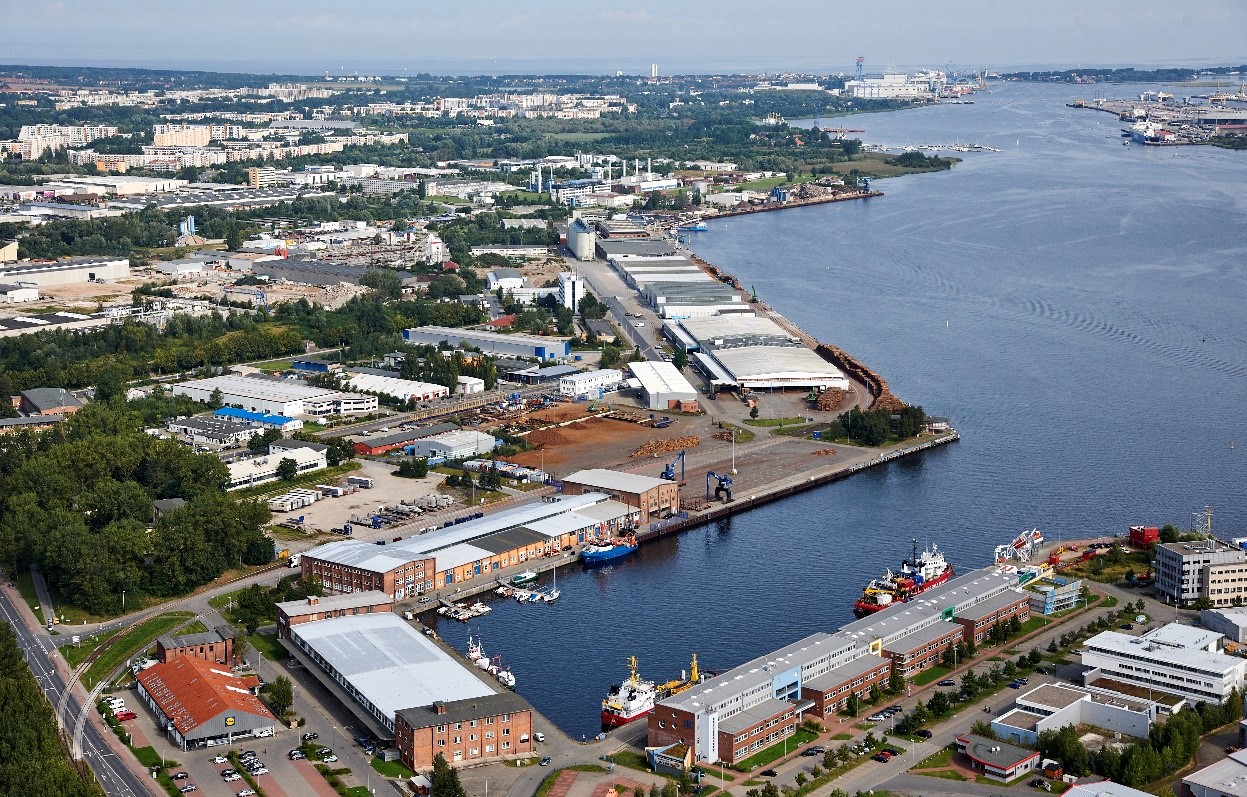
The Rostock Freight and Fishing Port
The GDR was not even a year old when the first ship call took place on June 19, 1950, at what is now the Rostock Freight and Fishing Port. From 1950 to 1990, the Rostock Fish Combine, with over 9,000 employees, was one of the most significant enterprises in the city of Rostock. A decree from January 11, 1946, established the development of the fishing industry in the then Eastern Zone to ensure a contribution to the supply of fish for the population.
In 1952, the port was completed, and over 40 ships were already out fishing. Twelve years later, the fleet had grown to over 100 ships. Throughout the 1980s, the port and fleet were continuously modernized and expanded. Fishing activities extended to overseas waters.
From Fishing Port to Universal Port with Business Park
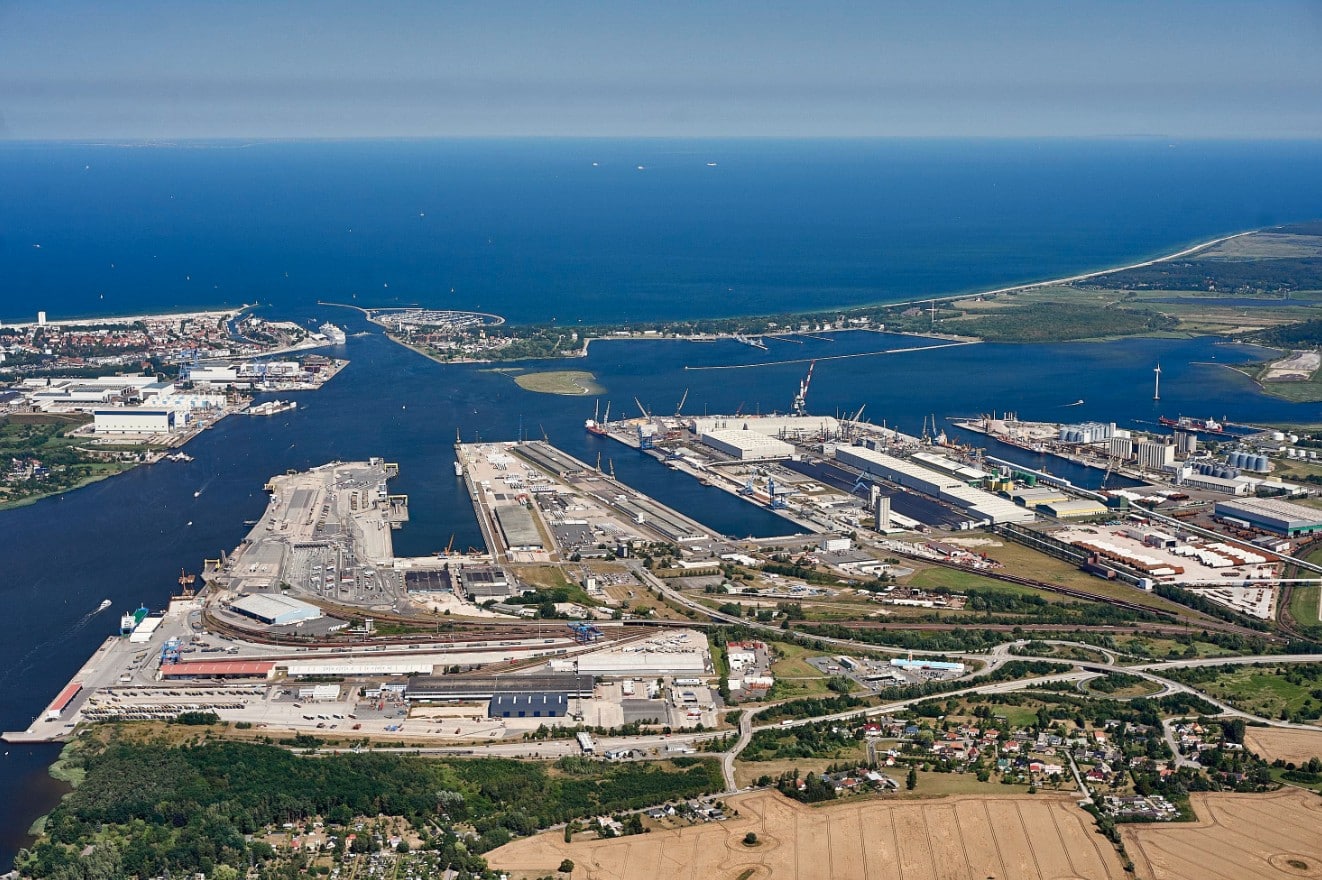
With the reunification of Germany, large-scale fishing came to an end. The former fishing port had to reinvent itself, and thus in 1990, the Rostock Freight and Fishing Port emerged from the fish combine. Through multi-million investments, the former fish transshipment point became a universal port with a thriving business park. Its portfolio includes port management, the operation of a 10,000-ton cold storage facility, and real estate and land development.
Today, around 70 companies of various kinds are located in the port. On a total area of 60 hectares, approximately 1.2 million tons of bulk, breakbulk, and liquid goods are handled. The business park has developed into a center for maritime services.
Today, around 70 companies of various kinds are located in the port. On a total area of 60 hectares, approximately 1.2 million tons are handled.
The Rostock Overseas Port is Built in a Short Construction Time
The history of the Overseas Port actually began on October 26, 1957, with the first groundbreaking. The first call took place on January 15, 1960. The honor fell to the FDGB holiday ship VÖLKERFREUNDSCHAFT (built in 1948). From the beginning, a universal port developed. In the 1960s, the port grew rapidly, and in 1967, a shopping street was inaugurated with a pharmacy, post office, and other shops. Shortly thereafter, the first large office building in the GDR was inaugurated.
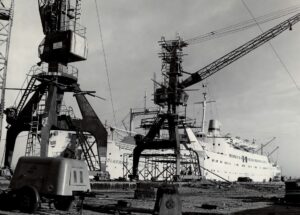
In the 1970s, the Overseas Port was connected to the Berlin-Rostock motorway (1978), marking another milestone in its history.
Second Expansion Phase in the Late 1970s
One of the most important projects of the second expansion phase of the Overseas Port was the construction of spacious and modern facilities for roll-on/roll-off and container traffic. The goal was to bring the transshipment points to a higher technical standard and to create sufficiently large storage areas in close proximity. Thus, in May 1978, the Rostock Industrial Construction Combine began development work for a new RoRo complex on the southern edge of the port, covering an area of 200,000 square meters.
In the 1980s, a chemical port was additionally constructed, and the port railway station was inaugurated.
Transition to a Ferry Port
With the turnaround at the end of 1989, a new purpose had to be found for the Overseas Port. The purpose of independent supply for the GDR was obsolete, and the western ports of Hamburg, Bremen, and the Benelux ports were virtually no longer in “enemy hands” overnight. Goods bound for overseas sought their way through these ports.
In the 1990s, the Overseas Port developed into a ferry port and a large industrial and business park. Bulk cargoes still go to and from overseas today, but they account for a small share of the total transshipment.
Ferry traffic to Scandinavia and the Baltic States has steadily increased. Today, Rostock connects Denmark, Sweden, and Finland with ferry and RoRo services. In the terminal associated with the ferry port, 87,000 units were handled in 2019.
A Cruise Terminal is Being Built
In parallel, a cruise terminal was developed in Warnemünde, which has continuously evolved to this day. With the founding of the AIDA shipping company in Rostock, additional momentum was added to Rostock’s cruise shipping. Today, Rostock is a significant cruise port in Germany, with around 190 calls recorded at the Cruise Port Terminal in Warnemünde.
A big day for the Rostock port was September 16, 2003. 200 honored guests and builders gathered at Pier III North. Company owner Willi Liebherr, then Chancellor Gerhard Schröder, Mecklenburg-Vorpommern’s Prime Minister Harald Ringstorff, and Mayor Arno Pöker performed the first groundbreaking for the construction of the Liebherr plant on the newly created site. There, ship and port cranes are built. The plant has since been massively expanded.
Thus, the Overseas Port lives up to its designation as a universal port today. Various industries have settled, and various goods are transported and transshipped. The total transshipment amounted to approximately 16.2 million tons in 2019. The total area is a remarkable 7.5 million square meters.
Photos: from top to bottom:
Photo 1: © Rostock Port / Nordlicht
Photo 2: © Rostock Freight and Fishing Port (Caption: View over the Freight and Fishing Port on the Warnow)
Photo 3: © Rostock Port / Archive (Caption: On January 15, 1960, the “Völkerfreundschaft” was the first ship to call at the Rostock Overseas Port)
Photo 4: © Rostock Port / Nordlicht
Links to the Pages:
Freight and Fishing Port
https://www.rfh.de/de/geschichte.html
Rostock Overseas Port
https://www.rostock-port.de/hafen-rostock/hafengeburtstag
https://www.rostock-port.de/hafen-rostock/geschichte